How Contractors Get on the First Page of Google in 2026
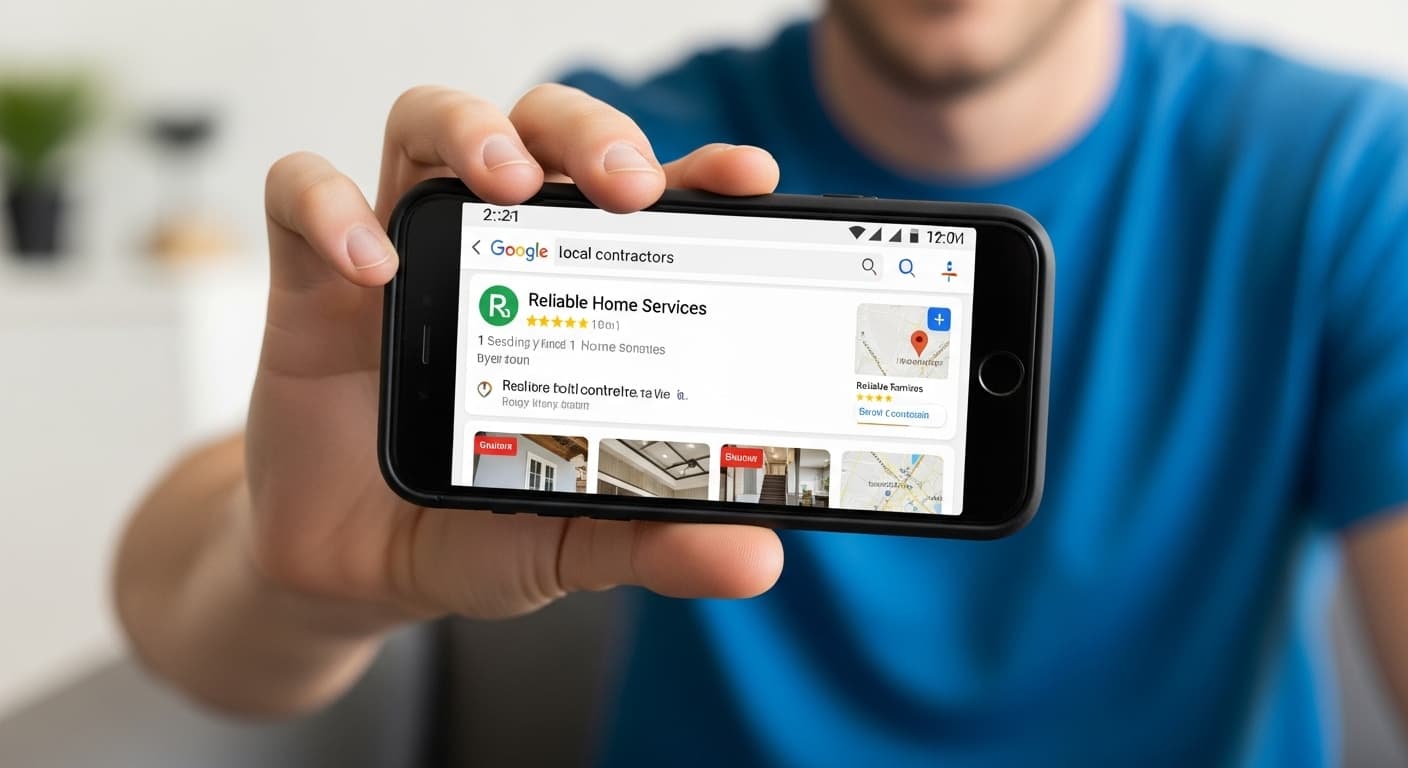
Every contractor we talk to wants the same thing: page one of Google for their trade and their city. For good reason — about 75% of searchers never scroll past page 1. If you're not there, you don't exist online.
Getting there isn't a trick, and anyone selling you a shortcut is selling you a penalty. Page one in 2026 is fundamentals, executed better and longer than the guy across town: profile, site, reviews, content, links.
Here's the exact roadmap, in the order we run it for our own clients.
Understanding Where You Need to Show Up
Before diving into tactics, you need to understand the three places a contractor can appear on page 1 of Google:
The Google Map Pack (Local 3-Pack)
This is the map section showing the top 3 local businesses. For searches like "plumber near me" or "roofing contractor Seattle," the Map Pack appears above organic results. It gets the most clicks and the most calls for local service businesses.
Ranking factors: Google Business Profile optimization, reviews (quantity and quality), proximity to the searcher, NAP consistency across the web.
Organic Results
These are the traditional blue-link results below the Map Pack. They're driven by your website's content, authority, and technical SEO. Organic rankings are harder to earn but incredibly valuable because they generate consistent, free traffic.
Ranking factors: On-page SEO, content quality and depth, backlinks, site speed, mobile experience, domain authority.
Google Ads (Paid Results)
These appear at the very top of the page with a "Sponsored" label. You pay each time someone clicks your ad. It's the fastest way to get on page 1 but costs money for every lead.
Ranking factors: Bid amount, ad quality score, landing page relevance, click-through rate.
The most successful contractors I work with appear in all three sections simultaneously. That kind of dominance makes your brand feel ubiquitous and trustworthy to homeowners.
Step 1: Optimize Your Google Business Profile
Your Google Business Profile (GBP) is the single most important asset for getting into the Map Pack. If you do nothing else on this list, do this.
Complete every field:
- Business name (exact legal name, no keyword stuffing)
- Primary category (be as specific as possible -- "Plumbing Contractor" beats "Contractor")
- Secondary categories (add every relevant one)
- Service area (list every city and zip code you serve)
- Hours of operation (including holiday hours)
- Phone number (use a local number, not a toll-free)
- Website URL
- Description (750 characters, naturally include your top keywords)
- Services list with descriptions
Post weekly: Google rewards active profiles. Post photos from job sites, share before-and-after shots, announce seasonal promotions. Every post signals to Google that your business is active and engaged.
Q&A section: Seed your profile with common questions and answers. "Do you offer free estimates?" "What areas do you serve?" "Are you licensed and insured?" This adds keyword-rich content directly to your profile.
Contractors who invest in professional GBP management typically see a 40-60% increase in Map Pack visibility within 90 days.
Step 2: Build a Review Engine
Reviews are the second most important factor for Map Pack rankings and the #1 factor for conversion. A contractor with 200 five-star reviews will outrank and outconvert a competitor with 15 reviews almost every time.
The system that works:
- Automate the ask. Send a text or email to every customer within 2 hours of completing a job. Use a tool that sends a direct link to your Google review page.
- Make it frictionless. One click should take them directly to the review form. No logins, no searching, no extra steps.
- Follow up once. If they don't leave a review within 48 hours, send one gentle reminder. Never send more than two requests.
- Respond to every review. Thank customers for positive reviews. Address negative reviews professionally and offer to make things right. Google explicitly states that responses show you value your customers.
Your goal: 10+ new reviews per month, consistently. This compounds over time into an unbeatable competitive advantage. A solid review management system can automate this entire process.
Step 3: Build a Website That Ranks
Your website is the foundation of your organic rankings. A properly structured, content-rich, fast-loading website sends hundreds of relevance signals to Google. Here's what matters most:
Individual Service Pages
Every service gets its own page. Not a bullet point on a "Services" page -- a full, dedicated page with 500-800 words of unique content.
Example for a plumber:
- /services/drain-cleaning
- /services/water-heater-repair
- /services/water-heater-installation
- /services/sewer-line-repair
- /services/gas-line-repair
- /services/bathroom-plumbing
- /services/emergency-plumbing
Each page should include: a keyword-rich H1, a clear description of the service, your process, pricing ranges (if possible), FAQs, testimonials, and a strong CTA.
Location Pages
If you serve multiple cities, create a page for each one. A plumber serving the Seattle metro should have pages for Seattle, Bellevue, Tacoma, Redmond, Kirkland, and every other city they serve.
Each location page needs unique content -- not just the same template with the city name swapped. Include local details, neighborhoods served, local regulations, and area-specific information.
Content That Answers Questions
Blog content drives organic traffic from informational searches. The homeowner searching "how much does a new roof cost" today is the lead calling for a quote next month.
Target questions your customers actually ask:
- "How much does [service] cost in [city]?"
- "How long does [service] take?"
- "Signs you need [service]"
- "[Service A] vs [Service B]: which is right for you?"
- "How to choose a [trade] contractor"
A website built by specialists who understand contractor SEO makes a massive difference. Contractor website design should always prioritize search performance alongside visual appeal.
Step 4: Get Your Technical SEO Right
Technical SEO is the behind-the-scenes infrastructure that helps Google crawl, understand, and rank your site. Most contractor websites have significant technical issues that silently suppress their rankings.
Speed: Your site should load in under 3 seconds on mobile. Compress images, use modern formats (WebP), minimize code, and choose fast hosting. Test with Google PageSpeed Insights.
Mobile experience: Over 60% of contractor searches happen on phones. Your site must be fully responsive, with clickable phone numbers, easy-to-tap buttons, and readable text without zooming.
Schema markup: Add LocalBusiness schema markup to your site. This structured data helps Google understand your business name, address, phone, hours, services, and service area. It can also enable rich snippets in search results.
SSL certificate: Your site must load over HTTPS. Any site still on HTTP is penalized by Google and shows a "Not Secure" warning to visitors.
XML sitemap: Submit a sitemap to Google Search Console so every page gets discovered and indexed.
Fix crawl errors: Check Google Search Console for 404 errors, redirect chains, and indexing issues. Fix them promptly.
Step 5: Build Local Citations and Backlinks
Citations are mentions of your business name, address, and phone number (NAP) on other websites. Backlinks are links from other websites to yours. Both are powerful ranking signals.
Priority Citations for Contractors
Start with these directories and make sure your NAP is identical across all of them:
- Google Business Profile
- Yelp
- Better Business Bureau (BBB)
- Angi / HomeAdvisor
- Thumbtack
- Your local Chamber of Commerce
- Industry-specific directories (e.g., PHCC for plumbers, NRCA for roofers)
- Facebook business page
Earning Backlinks
Backlinks from relevant, authoritative websites are the strongest off-page ranking signal. Here's how contractors can earn them:
- Sponsor local events or sports teams (usually gets you a link on their website)
- Join local business associations that list members on their site
- Get featured in local news by offering expert commentary on weather damage, seasonal maintenance, etc.
- Create linkable content like cost guides, checklists, or infographics that other sites want to reference
- Partner with related businesses (realtors, property managers, home inspectors) for mutual referrals and links
Step 6: Use Google Ads for Immediate Visibility
While SEO builds over months, Google Ads puts you at the top of page 1 within hours. For contractors, Google Ads is especially powerful because you can target people actively searching for your services right now.
Google Local Service Ads (LSAs): These "Google Guaranteed" ads appear above regular Google Ads and show your reviews, hours, and a click-to-call button. You pay per lead, not per click. LSAs are the highest-converting ad format for contractors.
Google Search Ads: Traditional pay-per-click ads that appear at the top of search results. Target high-intent keywords like "emergency plumber near me" or "roof replacement quote."
Best practices for contractor Google Ads:
- Target specific services, not broad terms
- Use location targeting to focus on your service area
- Create dedicated landing pages for each ad group (don't send ad traffic to your homepage)
- Track calls and form submissions as conversions
- Start with your highest-margin services
- Test ad copy variations and optimize based on data
The ideal strategy runs Google Ads for immediate leads while building SEO for long-term, sustainable traffic. Over time, as your organic rankings improve, you can strategically reduce ad spend.
Step 7: Track Everything and Optimize
Getting to page 1 isn't a one-time project. It's an ongoing process of measurement and improvement. Set up these tracking tools from day one:
- Google Analytics 4: Track website visitors, page views, and user behavior
- Google Search Console: Monitor keyword rankings, impressions, clicks, and technical issues
- Call tracking: Attribute phone calls to specific marketing channels (SEO, Google Ads, GBP)
- CRM or lead tracking: Follow every lead from first contact to closed job
Review your data monthly. Which keywords are gaining? Which pages drive the most calls? Where are leads coming from? Use this data to double down on what works and fix what doesn't.
A robust contractor CRM ties all of this together, giving you a clear picture of your marketing ROI.
The 90-Day Quick-Start Plan
If you're starting from scratch, here's the priority order:
Days 1-30:
- Claim and fully optimize your Google Business Profile
- Set up an automated review request system
- Install Google Analytics and Search Console
- Fix critical technical issues (speed, mobile, SSL)
Days 31-60:
- Create individual service pages for your top 5 services
- Create location pages for your top 3 service areas
- Build citations on the top 10 directories
- Consider launching Google Ads for your highest-value service
Days 61-90:
- Publish 2-4 blog posts targeting high-value questions
- Build additional service and location pages
- Start earning backlinks through local sponsorships and partnerships
- Review data and adjust strategy based on results
Your Next Step
Getting on the first page of Google is the most impactful thing you can do for your contracting business. Every day you're not on page 1, you're losing leads to competitors who are.
For detailed strategy guides, read our complete contractor SEO guide, our local SEO Map Pack guide, and our contractor SEO checklist.
Start with a free SEO audit. We'll analyze your current Google presence, identify the biggest opportunities, and build a custom roadmap to get you on page 1. No fluff, no pressure -- just a clear plan built on data.
Ready to talk strategy? Contact us or see our pricing to get started.
Recommended Service
Want to Rank Higher on Google?
Contractor SEO is all we do: Map Pack, content, citations and links, tracked down to the booked job. Get a strategy built for your trade and market.
Explore Contractor SEORelated Articles
The Complete Contractor SEO Guide for 2026
Everything you need to know about ranking your contracting business on Google in 2026. From Google Business Profile to local SEO strategy.
Read more
Contractor SEO Checklist: 20 Steps to Rank on Google
A step-by-step SEO checklist built specifically for contractors. Follow these 20 actionable steps to improve your Google rankings and generate more leads from organic search.
Read more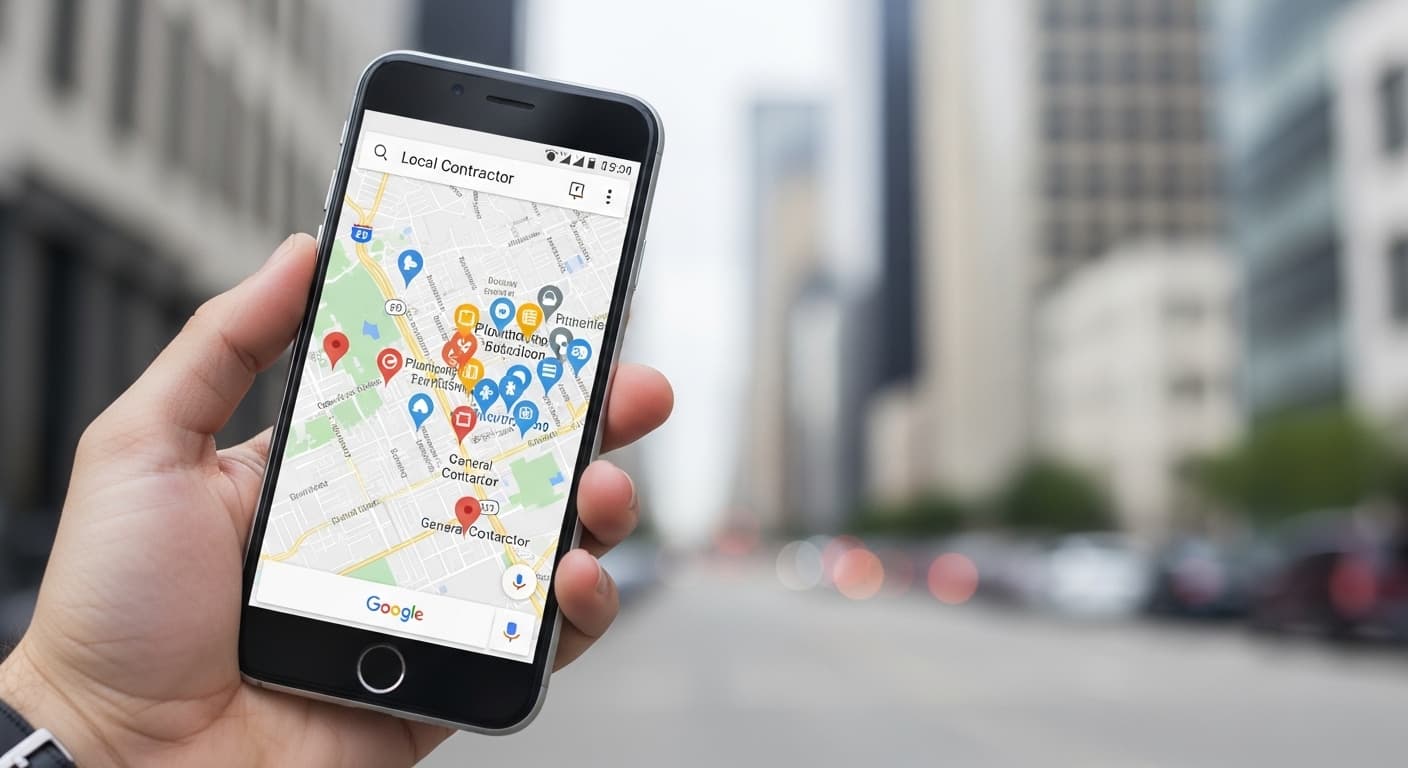
Local SEO for Contractors: How to Dominate the Google Map Pack
The Google Map Pack is where most contractor leads come from. This guide breaks down the exact local SEO strategies you need to rank in the top 3 — from citations and reviews to on-page optimization and content.
Read moreReady to Put This Into Action?
Get a free SEO audit and see exactly where your contracting business stands.