
How to Price Your Contractor Services to Maximize Profit

I'm going to say something that might sting: most contractors are dramatically undercharging for their work. Not by a little bit -- by 20-40%.
I know this because I see the financials. I work with contractors across every trade, and the pattern is always the same. They price their work based on what competitors charge, add a thin margin, and wonder why they're working 60-hour weeks with nothing left at the end of the month.
Pricing is not about being the cheapest option. It's about understanding your true costs, communicating your value, and building a pricing structure that lets you do excellent work, pay your team well, and actually profit from your effort.
Here's how to do it right.
Why Most Contractors Underprice Their Services
Before we get into strategy, let's understand why underpricing is so common in the trades.
You don't know your true costs. Most contractors know their material costs and their hourly labor costs. But they forget about insurance, truck payments, fuel, tools, licensing, training, marketing, office overhead, callbacks, unbilled time, and a hundred other expenses that eat into margins. When you price based on materials + labor alone, you're losing money on every job.
You price based on competitors. "Everyone else charges $X, so I charge $X." The problem? You have no idea if your competitors are profitable. Many of them aren't. Matching an unprofitable competitor's prices is a race to the bottom.
You fear losing bids. The fear of hearing "that's too expensive" drives contractors to preemptively lower prices. But price is rarely the only factor. Homeowners choose contractors based on trust, professionalism, responsiveness, reviews, and perceived quality. A strong brand makes price less important.
You don't communicate value. If you show up with a handwritten estimate on a scrap of paper, you're competing on price. If you show up with a branded proposal that explains your process, showcases your work, and highlights your reviews and guarantees, you're competing on value.
Step 1: Calculate Your True Costs
Every dollar you charge needs to cover three things: direct costs, overhead, and profit. Most contractors only account for the first one.
Direct Costs (Cost of Goods Sold)
These are the costs directly tied to a specific job:
- Materials and supplies
- Labor (wages, payroll taxes, workers' comp for field crew)
- Subcontractor costs
- Equipment rental specific to the job
- Permit fees
- Dump fees or disposal costs
Overhead (Fixed and Variable)
These are the costs of running your business, regardless of how many jobs you do:
- Your own salary (yes, pay yourself)
- Office rent or home office costs
- Truck payments, insurance, fuel, maintenance
- General liability and umbrella insurance
- Tools and equipment (purchase and maintenance)
- Software and technology (CRM, estimating software, accounting)
- Marketing and advertising
- Phone, internet, and communication
- Licensing and continuing education
- Accountant and bookkeeping
- Unbillable time (estimates, travel, admin, callbacks)
Here's the exercise: Add up ALL of your overhead costs for the past 12 months. Divide that by the number of billable hours or jobs you completed. That's your overhead cost per hour or per job. This number is usually much higher than contractors expect.
Profit
Profit is not what's left over after paying expenses. Profit is a deliberate, planned line item in your pricing. It's the return on your investment of capital, time, and risk.
A healthy contracting business should target:
- 35-50% gross profit margin (revenue minus direct costs)
- 10-20% net profit margin (what's left after ALL expenses including overhead)
If you're below 10% net margin, you're working too hard for too little return.
Step 2: Choose Your Pricing Model
There are three main pricing approaches for contractors. The right one depends on your trade, your market, and your brand position.
Cost-Plus Pricing
Formula: Direct Costs + Overhead Markup + Profit Margin = Price
This is the most common model. You calculate your direct costs for a job, add a markup to cover overhead (typically 25-50% of direct costs), and add your profit margin (10-20%).
Example:
- Materials: $2,000
- Labor: $3,000
- Direct costs total: $5,000
- Overhead markup (40%): $2,000
- Subtotal: $7,000
- Profit margin (15%): $1,050
- Price to customer: $8,050
Pros: Simple, ensures costs are covered, easy to explain Cons: Doesn't account for the value you deliver, penalizes efficiency (faster work = lower price)
Value-Based Pricing
Formula: Price based on the value delivered to the customer, not your costs
Value-based pricing sets prices based on what the work is worth to the customer, not what it costs you. An emergency plumber fixing a burst pipe at 2 AM delivers enormous value -- potentially saving thousands in water damage. The price should reflect that urgency and value, not just the cost of a pipe fitting and one hour of labor.
When to use value-based pricing:
- Emergency services (high urgency = high value)
- Specialized work that few competitors can do
- Projects where you bring design expertise or problem-solving
- High-end residential work where quality and reliability matter most
- Situations where your reputation and reviews justify a premium
Pros: Higher margins, rewards expertise and quality, decouples price from time Cons: Harder to justify to price-sensitive customers, requires strong branding and positioning
Tiered Pricing (Good-Better-Best)
Formula: Offer three packages at different price points
This is one of the most powerful pricing strategies available to contractors, and almost nobody uses it. Instead of giving one price, you offer three options:
Example for a bathroom remodel:
- Good ($15,000): Standard fixtures, basic tile, builder-grade finishes
- Better ($22,000): Mid-range fixtures, upgraded tile, custom vanity, improved lighting
- Best ($32,000): Premium fixtures, custom tilework, designer finishes, heated floors, smart features
Why tiered pricing works:
- Anchoring: The "Best" option makes "Better" look reasonable
- Choice: Customers feel in control, not cornered
- Upselling: 40-60% of customers choose the middle option, 10-20% choose premium
- Higher average ticket: Your average job value increases without pushy selling
Step 3: Build Your Pricing Structure
Now let's put it all together into a system you can use consistently.
Service-Based Rate Card
Create a rate card for your most common services. This doesn't mean you quote the same price for every job -- it means you have a baseline starting point.
Example for a plumbing company:
| Service | Base Price | Factors That Increase Price |
|---|---|---|
| Drain cleaning | $175-$350 | Camera inspection, main line, access difficulty |
| Water heater install | $1,800-$3,500 | Tankless vs. tank, location, code upgrades |
| Faucet replacement | $250-$500 | Fixture grade, wall-mount vs. deck-mount |
| Sewer line repair | $3,000-$10,000 | Length, depth, method (trenchless vs. dig) |
Having clear pricing ranges speeds up your estimating process and ensures consistency across your team.
Pricing for Profit Checklist
Before quoting any job, run through this checklist:
- Did I calculate all material costs including tax and delivery?
- Did I account for ALL labor hours including travel and setup?
- Did I include my overhead markup?
- Did I add my target profit margin?
- Does this price reflect the value I'm delivering?
- Am I offering tiered options when appropriate?
- Have I factored in the complexity and risk of this specific job?
Step 4: Present Your Pricing Like a Professional
How you present your price matters as much as the number itself. The difference between a contractor who closes at 30% and one who closes at 60% often comes down to presentation.
The Professional Estimate
Your estimate should be a branded, organized document that includes:
- Your company branding -- logo, colors, contact information
- Scope of work -- detailed description of what's included (and what's not)
- Timeline -- expected start and completion dates
- Materials list -- what materials you'll use and why (quality signals)
- Warranty/guarantee -- what you stand behind
- Payment terms -- deposit, progress payments, final payment
- Social proof -- 2-3 short testimonials or your Google rating
- Insurance and licensing -- proof of coverage
- The price -- presented clearly with line items or package options
Compare this to a scribbled number on the back of a business card. Which contractor do you think wins the job?
Handling Price Objections
"That's more than I expected" is not a rejection -- it's a request for justification. Here's how to handle it:
Never drop your price immediately. Instead:
- Acknowledge their concern: "I understand. Let me walk you through what's included."
- Highlight differentiators: your warranty, insurance, reviews, experience, quality materials
- Show social proof: "Here are reviews from customers who initially chose a cheaper option and came back to us to fix the work."
- Offer alternatives: "I can adjust the scope -- here's what a more budget-friendly option looks like." (This is where tiered pricing shines.)
The contractors with the strongest online reputation and professional branding face fewer price objections because trust is already established before the estimate.
Step 5: Review and Adjust Regularly
Your pricing is not set-and-forget. Markets change, costs fluctuate, and your value increases as you gain experience and reputation.
Annual Price Increases
At minimum, raise your prices annually to keep pace with inflation, material cost increases, and rising labor costs. A 3-5% annual increase is standard and rarely causes customer pushback.
How to announce a price increase:
- Give 30-60 days notice for existing contracts
- Frame it positively: "To maintain the quality and service you expect..."
- Offer loyalty pricing to long-term customers
- Never apologize for pricing your work fairly
Quarterly Pricing Reviews
Every quarter, review:
- Your actual profit margins by service type
- Which services are most profitable (do more of these)
- Which services are least profitable (raise prices or stop offering)
- Competitor pricing changes
- Material and labor cost changes
- Close rates by price point
If you're closing more than 70% of estimates, you're probably underpriced. The sweet spot for most contractors is a 40-60% close rate.
Common Pricing Mistakes to Avoid
Pricing based on fear. Don't lower prices because you're afraid of losing a bid. The jobs you lose on price are often the customers you don't want anyway -- they'll also haggle on scope, complain more, and leave worse reviews.
Ignoring unbillable time. Every hour you spend estimating, traveling, doing admin, or handling callbacks is time you need to account for in your pricing. If you spend 5 hours per week on unbillable work, that needs to be covered by billable jobs.
Not charging for expertise. A 20-year veteran who diagnoses a problem in 10 minutes shouldn't charge less than a rookie who takes 2 hours to figure it out. Your experience has value -- price accordingly.
Racing to the bottom. Competing on price is a losing game. There will always be someone cheaper. Instead, compete on quality, reliability, communication, and trust. Build a brand and a marketing system that attracts customers who value quality over price.
Not tracking profitability. If you don't know your profit margin on each job type, you can't make informed pricing decisions. Use your accounting software or CRM to track actual costs vs. estimated costs on every job.
Pricing and Marketing: The Connection
Your pricing strategy and your marketing strategy are deeply connected. Here's how:
Higher-priced contractors need stronger marketing. Premium pricing requires premium positioning. Your website, Google Business Profile, reviews, and overall brand need to communicate quality to justify your prices.
Marketing reduces price sensitivity. When a customer finds you through a Google search, reads 50 five-star reviews, sees professional photos of your work, and navigates a polished website, they're already sold on your quality. Price becomes secondary. This is why investing in contractor SEO and lead generation doesn't just bring you more leads -- it brings you better leads who are less price-sensitive.
Know your cost per lead. Every dollar you spend on marketing is a cost that must be recovered through pricing. If you spend $3,000/month on marketing and close 15 jobs, that's $200 per job in marketing costs. Make sure your pricing accounts for this.
Your Next Step
Pricing is the single biggest lever for profitability in your contracting business. A 10% price increase on the same volume of work flows straight to your bottom line. That could mean the difference between barely getting by and building real wealth.
Start by calculating your true costs. Then look at your current pricing. If there's a gap, you now know exactly how to close it.
Want to attract customers who pay premium prices? It starts with premium positioning. Get a free SEO audit to see how your online presence stacks up. When your digital presence looks like a $100/hour contractor, you can charge like one.
Contact us to build a marketing system that supports the pricing you deserve. View our pricing to see how we help contractors grow profitably.
Recommended Service
Ready to Grow Your Contracting Business?
From SEO to Google Ads to review management — we handle the marketing so you can focus on the work. Monthly plans from $600/mo.
Get Your Free SEO AuditRelated Articles

How Much Does Contractor Marketing Cost in 2026?
Wondering what contractor marketing actually costs? This guide breaks down real pricing for every channel — SEO, Google Ads, websites, reviews, and more — with ROI benchmarks so you know what to expect.
Read more
Cost Per Lead for Contractors: What to Expect by Trade
Cost per lead varies wildly across contractor trades — from $15 for handyman leads to $250+ for roofing. Here are the real numbers by trade and channel, plus strategies to lower your CPL.
Read more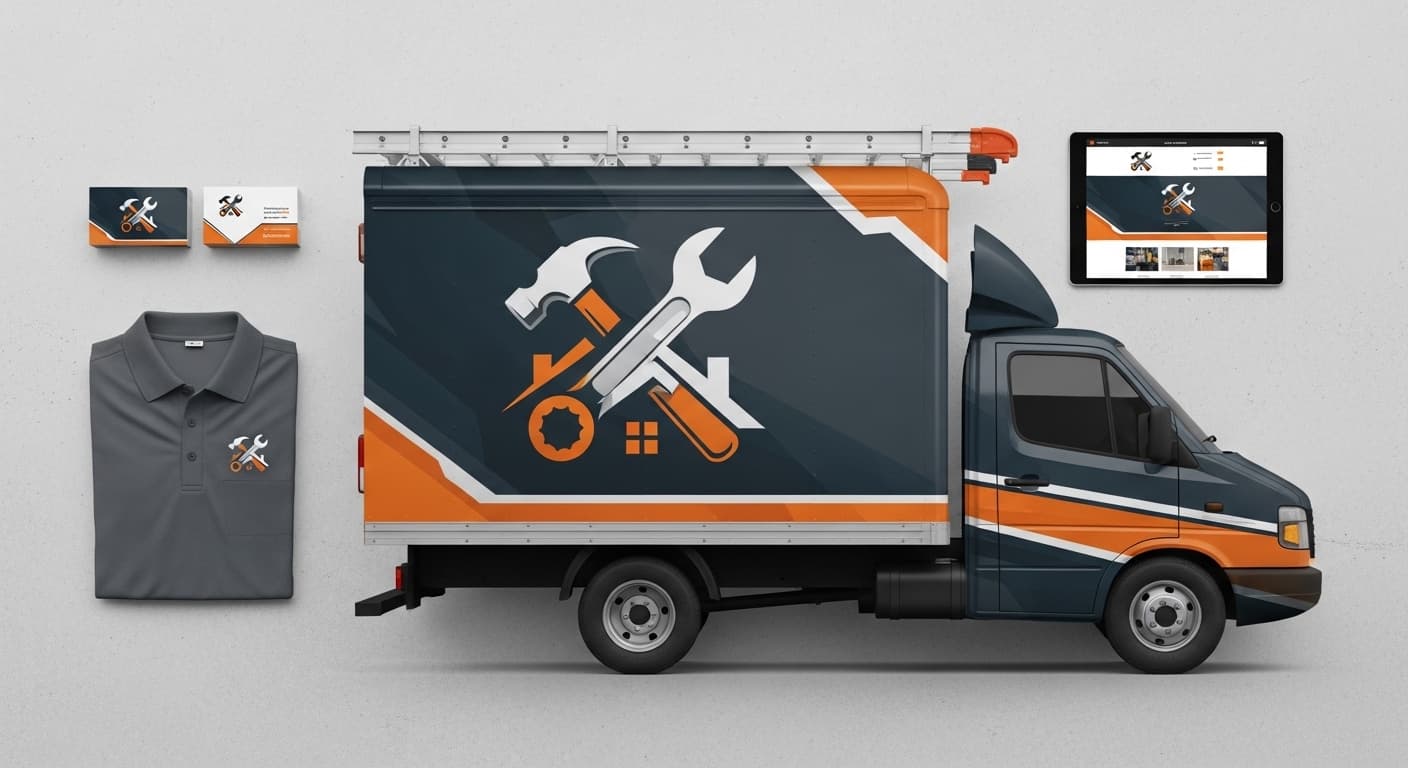
Contractor Branding: How to Build a Brand That Wins Jobs
Your brand is what people say about your company when you're not in the room. Learn how to build a contractor brand that stands out, earns trust, and lets you charge what you're worth.
Read moreReady to Put This Into Action?
Get a free SEO audit and see exactly where your contracting business stands.