Roofing Marketing Strategies That Actually Generate Leads
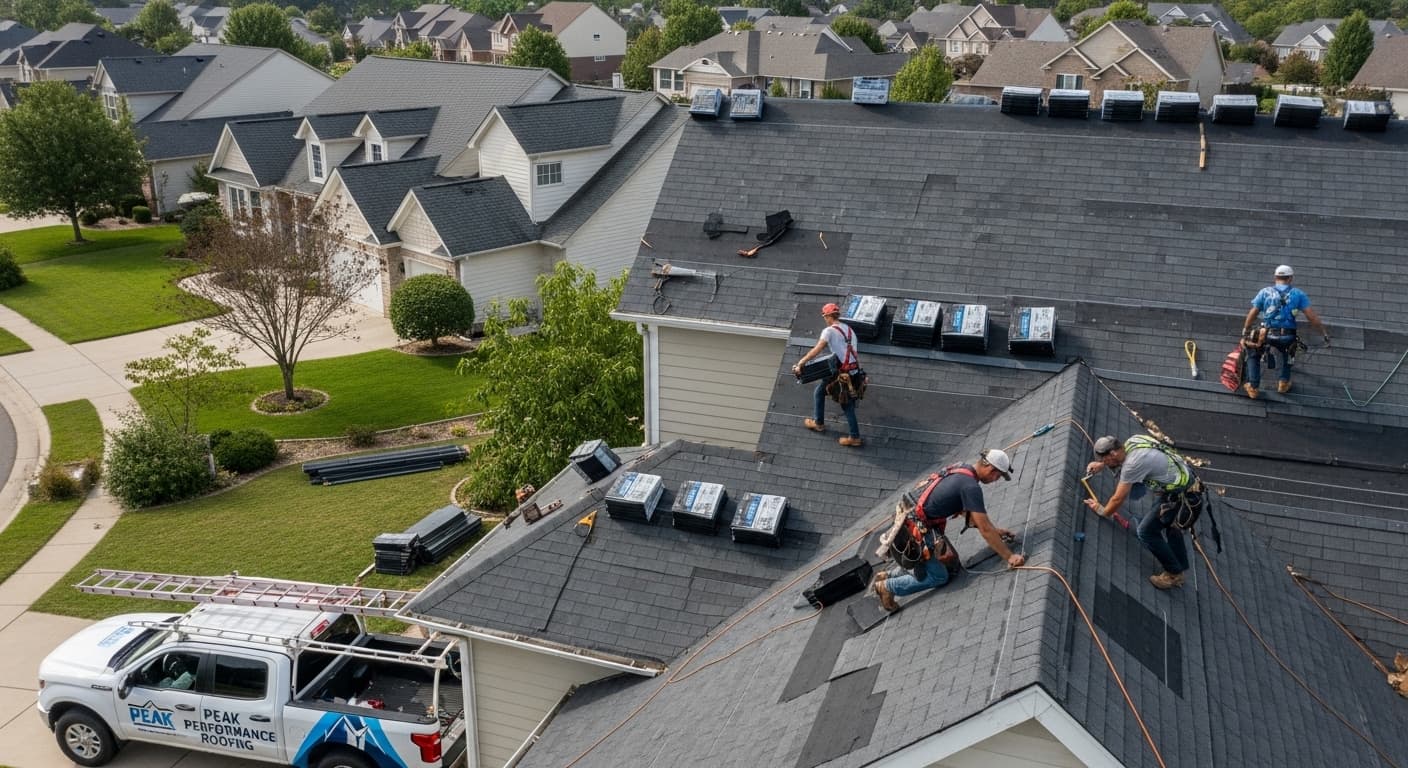
The roofing industry has a marketing problem. Too many roofers rely on door knocking, storm chasing, and word of mouth — strategies that work until they do not. One slow season, one competitor who figures out Google, and suddenly your phone stops ringing.
This guide covers the roofing marketing strategies that generate leads consistently, month after month, regardless of weather or season. These are the same strategies used by roofing companies doing $2M-$10M+ annually.
The Roofing Lead Landscape in 2026
Before diving into tactics, here is what the roofing market looks like right now:
Search volume is massive. "Roofing" keywords generate hundreds of thousands of searches per month in the US. Every metro area has thousands of people searching for roof repair, roof replacement, and roofing companies every single month.
Competition is fierce. Roofing is one of the most competitive trades in Google Ads, with cost-per-click ranging from $20-$100+ depending on the market. This means strategy matters more than budget.
High ticket values make marketing ROI attractive. The average roof replacement costs $8,000-$15,000, and commercial jobs run much higher. When one job covers your entire monthly marketing budget, the math works in your favor.
Trust is the deciding factor. Roofing has more consumer skepticism than almost any trade due to storm-chasing operations and high-pressure sales tactics. Your marketing needs to build trust at every touchpoint.
Strategy 1: Dominate Google Business Profile
Your Google Business Profile is where most roofing leads start. When a homeowner searches "roofers near me" or "roof repair [city]," the Map Pack appears above everything else.
To rank in the Map Pack for roofing:
- Primary category: "Roofing contractor." Secondary categories should include "Roof repair service" and "Siding contractor" if you offer it.
- Complete every section of your profile — services, service area, business description, attributes, hours.
- Post before/after photos weekly. Drone shots of completed roofs are especially effective. Google prioritizes profiles that post regularly.
- Manage reviews aggressively (more on this below).
- Use the Q&A section strategically. Add questions about your warranty, insurance, timeline, and financing.
Pro tip: If you serve a large metro area, consider opening a second legitimate location (not a PO box — a real office with staff). Each location gets its own GBP, effectively doubling your Map Pack visibility.
Strategy 2: Build a Roofing SEO Machine
SEO for roofing companies is the highest-ROI marketing channel you can invest in. Once you rank, leads come in every day without paying per click.
Service Pages That Rank
Create individual, in-depth pages for every service:
- Roof replacement — your highest-value keyword
- Roof repair — high volume, emergency intent
- Storm damage roof repair — critical for hail/wind markets
- Metal roofing — growing demand, less competition
- Flat roof repair/commercial roofing — if you do commercial
- Gutter installation — supplement service with good margins
- Roof inspection — gateway to larger jobs
Each page needs 800-1,500 words of real content. Include what the service involves, typical pricing ranges, how long it takes, what materials you use, and why homeowners should choose your company. Every page should have a click-to-call button and a form.
Location Pages for Every Service Area
If you serve 15 cities in your metro area, build 15 location-specific pages. Not duplicate content with the city name swapped — genuine content that mentions specific neighborhoods, local building codes, common roofing issues in that area (hail zones, wind exposure, etc.), and your completed projects in that city.
Blog Content That Attracts Buyers
Write content that your ideal customer is searching for:
- "How much does a roof replacement cost in [city]?" — This single article can generate more leads than anything else you publish. People searching this are ready to buy.
- "How to know if you need a new roof" — educational, builds trust
- "Best roofing materials compared: asphalt, metal, tile" — targets homeowners researching options
- "How to file a roof insurance claim" — captures storm damage leads
- "How long does a roof replacement take?" — answers a common pre-purchase question
Strategy 3: Google Ads Done Right
Google Ads for roofing is expensive but extremely profitable when structured correctly. The key is separating your campaigns by intent and managing your bids with precision.
Campaign structure for roofing companies:
Campaign 1: Emergency/Repair — Keywords like "roof leak repair," "emergency roof repair," "roof repair near me." These convert fastest. Run 24/7 with aggressive bids.
Campaign 2: Replacement — Keywords like "roof replacement," "new roof cost," "roofing company." Higher intent, longer sales cycle. Run during business hours.
Campaign 3: Storm Damage — Keywords like "storm damage roof repair," "hail damage roof," "wind damage roof repair." Activate during and after storms. These have the highest conversion rates and justified premium spend.
Campaign 4: Brand — Your company name keywords. Cheap clicks, high conversion. Prevents competitors from stealing your branded searches.
Critical Google Ads rules for roofers:
- Never run broad match keywords without heavy negative keyword lists. "Roofing" alone will match "roofing supplies," "roofing nails," "DIY roofing" — none of which are your customers.
- Use call tracking on every campaign. You need to know which keywords produce calls that become inspections that become signed contracts.
- Set up Local Service Ads (LSAs) in addition to traditional search ads. LSAs show your Google Guaranteed badge and you only pay per lead, not per click.
- Pause keywords that spend but do not convert after 30 days. Review your search terms report weekly.
Strategy 4: Reviews as a Growth Engine
In roofing, reviews are everything. Homeowners are trusting you with the most important structure protecting their family. They will check your reviews, and they will compare your review count and rating to every competitor.
The review system every roofing company needs:
- Collect the customer's cell phone number on every job. This is non-negotiable.
- Send an automated text within 2 hours of completing the work. "Thanks for choosing [company]! Would you mind sharing your experience? [direct Google review link]"
- Follow up once if they do not review within 48 hours. Do not send more than two requests.
- Respond to every single review within 24 hours. Positive reviews get a personalized thank-you. Negative reviews get a professional, empathetic response that takes the conversation offline.
Invest in a review management platform that automates this process. The ROI is immediate — roofing companies that implement systematic review collection typically jump from 3-5 reviews per month to 15-25.
Target: 10+ new Google reviews per month. Within a year, you will have more reviews than 90% of your competitors.
Strategy 5: A Website That Converts
Your roofing website has one job: turn visitors into leads. Everything else is secondary.
Conversion essentials for roofing websites:
- Phone number in a sticky header. Visible on every page, click-to-call on mobile.
- "Free Estimate" or "Free Inspection" form above the fold on every service page.
- Social proof everywhere. Review stars, review count, license numbers, insurance verification, BBB rating, manufacturer certifications (GAF, Owens Corning, CertainTeed).
- Financing callout on replacement pages. "Monthly payments as low as $99" removes the biggest objection.
- Before/after project gallery. Aerial drone photos of completed roofs sell better than any copywriting.
- Speed matters. Your site must load in under 3 seconds. Roofing customers are often in urgent situations — they will not wait for a slow site.
A professionally built contractor website designed for conversion will pay for itself within the first month of operation.
Strategy 6: Canvassing and Door Knocking (Modernized)
Door knocking still works in roofing, especially after storms. But the modern version is smarter than the old spray-and-pray approach.
Modern canvassing strategy:
- Use hail mapping tools to identify affected neighborhoods. Only knock doors where there is actual storm damage.
- Leave professional door hangers with a QR code linking to your storm damage page and a direct scheduling link.
- Follow up digitally. Capture contact info and add prospects to an email/text sequence.
- Pair canvassing with digital ads. Run Facebook Ads geo-targeted to the neighborhoods you are canvassing. When homeowners see your brand at the door AND in their feed, trust skyrockets.
The key is that canvassing supplements your digital presence — it does not replace it.
Strategy 7: Referral and Retention Marketing
Your past customers are a goldmine. Every completed roof is a potential referral source and a future gutter, siding, or maintenance customer.
Build a referral program:
- Offer $250-$500 per referred roof replacement that closes. This is a fraction of your customer acquisition cost through ads.
- Send annual roof check-up reminders to past customers. This keeps your brand top of mind and generates maintenance revenue.
- Partner with real estate agents, insurance adjusters, and property managers. These relationships can generate a steady stream of high-quality referrals.
Measuring Your Roofing Marketing Performance
Track these numbers monthly or you are guessing:
- Total leads by source (Google Ads, organic, GBP, referral, door knock)
- Cost per lead by channel
- Inspection-set rate (leads that become scheduled inspections)
- Close rate (inspections that become signed contracts)
- Average job revenue
- Customer acquisition cost (total marketing spend / new customers)
The best roofing companies know their numbers cold. They know that a Google Ads lead costs $85, converts to an inspection 60% of the time, closes at 35%, and averages $12,000 in revenue. That math tells them exactly how much they can spend to grow.
Your Roofing Marketing Action Plan
Month 1: Optimize your Google Business Profile. Set up review automation. Fix your website speed and conversion elements.
Month 2: Launch targeted Google Ads campaigns with proper tracking. Start building service and location pages for SEO.
Month 3: Begin consistent content publishing (2-4 articles per month). Set up referral program. Launch email sequences for past customers.
Month 4 and beyond: Analyze data, double down on what works, cut what does not. Scale ad spend on profitable campaigns. Watch organic rankings climb.
If you want a partner who specializes in roofing marketing and understands the unique challenges of growing a roofing company, get a free SEO audit to see where you stand. Or contact our team to discuss a custom roofing marketing strategy built around your market, your budget, and your growth goals.
Recommended Service
Marketing Built for Your Trade
We only work with contractors. Every strategy, campaign, and website is built specifically for the trades. See what we can do for your industry.
See All ServicesRelated Articles
The Complete Contractor SEO Guide for 2026
Everything you need to know about ranking your contracting business on Google in 2026. From Google Business Profile to local SEO strategy.
Read more
Google Ads vs SEO for Contractors: Which Is Better for Your Budget?
Should you spend your marketing budget on Google Ads or SEO? The answer depends on your timeline, budget, and business goals. Here's a detailed breakdown with real numbers to help you decide.
Read more
Painting Contractor Marketing: A Complete Growth Playbook
A complete marketing playbook for painting contractors covering SEO, Google Ads, social media, reviews, and website optimization to generate more painting leads.
Read moreReady to Put This Into Action?
Get a free SEO audit and see exactly where your contracting business stands.