
Customer Retention for Contractors: How to Get Repeat Business

Every contractor I know wants more leads. They ask about Google Ads. They ask about SEO. They ask about Facebook advertising. And those things matter -- they're core to what we do at RankWeld.
But here's what almost nobody asks about: keeping the customers they already have.
This is a massive blind spot. The numbers tell the story:
- It costs 5-7x more to acquire a new customer than to retain an existing one
- Increasing customer retention by just 5% increases profits by 25-95% (Harvard Business Review)
- The probability of selling to an existing customer is 60-70% vs. 5-20% for a new prospect
- Referred customers have a 37% higher retention rate and a 16% higher lifetime value
Your past customers are the most valuable asset in your business. They already trust you. They already know your quality. They've already paid you. All you need to do is stay connected and give them a reason to come back.
Here's how to build a customer retention system that keeps the revenue flowing.
The Customer Lifecycle for Contractors
Before building your retention strategy, you need to understand the customer lifecycle. Every customer relationship follows this path:
1. Awareness -- They discover your business (Google, referral, ad) 2. Consideration -- They evaluate you (website, reviews, estimate) 3. Purchase -- They hire you for a job 4. Experience -- They receive your service 5. Follow-up -- You reconnect after the job (most contractors stop here -- or never start) 6. Retention -- They hire you again for maintenance or new projects 7. Advocacy -- They refer you to friends, family, and neighbors
Most contractors invest heavily in stages 1-4 and completely ignore stages 5-7. That's like spending thousands to fill a bucket with holes in the bottom. The leads come in, you serve them, and then they disappear into the void of your past customer files, never to be heard from again.
Retention is plugging the holes.
Strategy #1: Automate Your Post-Job Follow-Up
The most critical moment in customer retention is the 30 days after completing a job. This is when the customer's satisfaction is highest, their memory of you is freshest, and their willingness to refer you is strongest.
The Automated Post-Job Sequence
Set up this sequence in your CRM and let it run automatically for every completed job:
Day 3: Thank-You + Review Request A simple message thanking them for their business and asking for a Google review. This single touchpoint can transform your online reputation.
Day 14: Quality Check "How's everything working? Any questions or concerns?" This shows you care about more than just getting paid. It also catches potential issues before they become complaints or negative reviews.
Day 30: Referral Ask "If you know anyone who could use our services, we'd appreciate the referral." Include details about any referral incentive you offer.
Day 90: Maintenance Reminder "It's been 3 months since your [service]. Here's a maintenance tip to keep everything running smoothly." This positions you as a long-term partner, not a one-time vendor.
Day 365: Annual Reconnection "It's been a year since we [service]. Time for a check-up?" Include a returning customer discount or priority scheduling offer.
This entire sequence runs on autopilot once you set it up. It costs virtually nothing, and it transforms one-time customers into lifelong clients.
Strategy #2: Create Maintenance Plans
Maintenance plans are the single most powerful retention tool for contractors. They convert one-time jobs into recurring revenue and give customers a compelling reason to stay loyal.
How Maintenance Plans Work
You offer customers an annual service agreement that includes scheduled maintenance visits at a discounted rate, plus priority service and other perks.
Example: HVAC Maintenance Plan
| Feature | Included |
|---|---|
| Spring AC tune-up | Yes |
| Fall furnace inspection | Yes |
| Priority emergency service | Yes (24-hour response guarantee) |
| Parts discount | 10% off all parts |
| Annual price | $199/year (vs. $350 for two visits at regular price) |
Why customers love it:
- Peace of mind knowing their system is maintained
- Cost savings vs. paying per visit
- Priority service when emergencies happen
- No need to remember to schedule maintenance
Why contractors love it:
- Predictable recurring revenue ($199/year x 500 customers = $99,500/year)
- Guaranteed touchpoints with customers twice a year
- Opportunity to identify and sell additional work during maintenance visits
- Higher retention rates (maintenance plan customers are 60-80% more likely to rehire)
Maintenance Plans by Trade
Almost every trade can create a maintenance plan:
- HVAC: Bi-annual system tune-ups + priority emergency service
- Plumbing: Annual drain cleaning + water heater flush + leak inspection
- Electrical: Annual panel inspection + safety check + surge protection maintenance
- Roofing: Annual roof inspection + gutter cleaning + minor repair credits
- Landscaping: Weekly/bi-weekly mowing + seasonal treatments + snow removal
- Pest control: Quarterly treatment visits + free call-backs between visits
The key is bundling services customers need at a price that's attractive compared to paying individually, while still being profitable for you.
Strategy #3: Deliver an Exceptional Customer Experience
Retention ultimately comes down to experience. No amount of automated emails will save a poor customer experience. And an exceptional experience creates retention organically, even without sophisticated systems.
The Elements of Exceptional Contractor Experience
Communication:
- Confirm appointments via text the day before
- Call or text when you're en route with an ETA
- Explain what you're going to do before you start
- Give updates during longer projects
- Send a completion summary when the job is done
Professionalism:
- Arrive on time (or communicate if running late)
- Wear clean, branded uniforms
- Use drop cloths and shoe covers inside homes
- Clean up the work area completely when finished
- Leave the area cleaner than you found it
Transparency:
- Explain what you found and what you recommend
- Show the customer the problem when possible (photos, video)
- Provide written estimates before starting work
- No surprise charges -- ever
- If something changes during the job, discuss it immediately
Going above and beyond:
- Fix small things you notice without charging (tighten a loose handle, replace a furnace filter)
- Leave a small branded gift or thank-you note
- Send a handwritten thank-you card (this alone sets you apart from 99% of contractors)
- Follow up to make sure everything is working
These touches cost almost nothing but create emotional loyalty that no competitor can replicate with a lower price.
Strategy #4: Build a Referral Program
Your best customers don't just come back -- they send you new customers. A structured referral program turns this natural behavior into a systematic growth engine.
The details of building a referral program deserve their own guide (see our contractor referral program article), but here are the essentials:
Structure: Offer a meaningful incentive for every successful referral. This could be:
- Cash ($50-$100 per referral that books)
- Credit toward future service
- Gift cards
- Charitable donation in their name
Timing: Ask for referrals when satisfaction is highest -- typically 2-4 weeks after completing a job.
Make it easy: Provide customers with a simple way to refer (shareable link, referral cards, text-to-refer system).
Follow through: Always honor the incentive promptly and thank the referrer personally.
Strategy #5: Stay Top of Mind With Content
The average homeowner doesn't need a contractor every month. But when they do need one, you want to be the first name that comes to mind. The way to achieve this is through consistent, valuable communication.
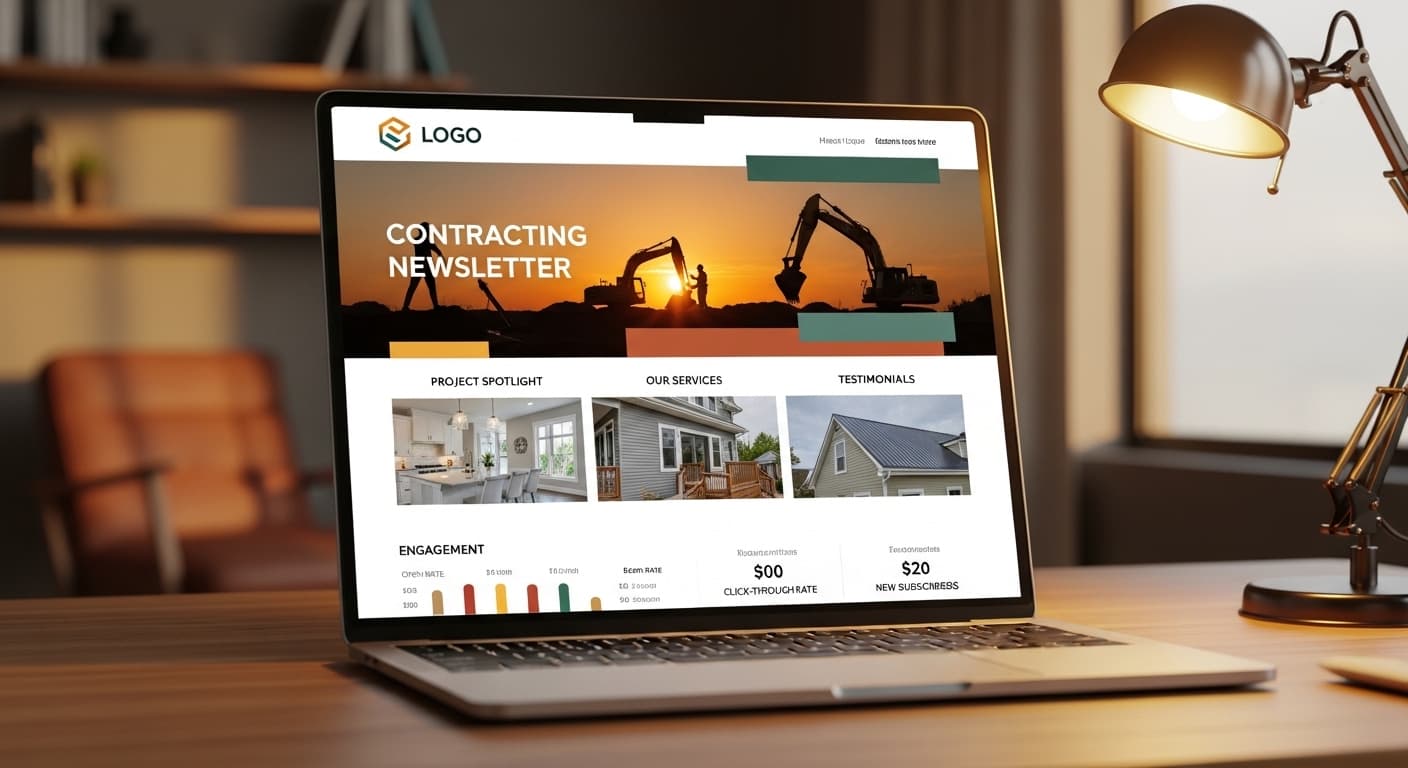
Monthly Email Newsletter
A simple monthly email keeps you in your customers' inbox (and their memory). Keep it short and valuable:
- 1 seasonal maintenance tip or home improvement idea
- 1 before-and-after project showcase
- 1 soft promotion or seasonal offer
- Your contact information and booking link
(For detailed email strategies, see our email marketing for contractors guide.)
Seasonal Campaigns
Different seasons create different needs. Plan your retention outreach around them:
Spring: HVAC tune-ups, roof inspections, landscaping startup, exterior painting Summer: Outdoor projects, deck building, irrigation maintenance Fall: Furnace prep, gutter cleaning, winterization, insulation Winter: Emergency plumbing awareness, indoor remodeling, spring project planning
Send targeted emails to past customers 4-6 weeks before each season, offering early-bird scheduling and returning customer discounts.
Social Media Touchpoints
When past customers see your work on Facebook or Instagram, it reinforces your brand and reminds them of your quality. Tag customers in project completion posts (with permission), share seasonal tips they can use, and engage with their comments.
Strategy #6: Implement a CRM System
All of these retention strategies require one thing: a system to manage customer relationships. That's what a CRM (Customer Relationship Management) system does.
A contractor CRM should:
- Store every customer's contact info, job history, and preferences
- Automate post-job follow-up sequences
- Schedule and send seasonal reminders
- Track referral sources and incentives
- Manage maintenance plan renewals
- Flag customers who haven't been contacted in 6+ months
- Generate reports on retention rates and customer lifetime value
Without a CRM, retention activities fall through the cracks. Someone forgets to send the follow-up email. Seasonal reminders go unsent. Referral incentives get missed. The CRM ensures nothing falls through the cracks.
Measuring Customer Retention
What gets measured gets managed. Track these metrics monthly:
Customer Retention Rate
Formula: (Customers who hired you again in the past 12 months / Total past customers) x 100
Benchmark: 40-60% is good. 60%+ is excellent.
Customer Lifetime Value (CLV)
Formula: Average job value x Average number of times a customer hires you
Example: If your average job is $3,000 and customers hire you an average of 3 times, your CLV is $9,000. That means every new customer is worth $9,000 over time -- not just $3,000.
This changes how you think about marketing spend. If a customer is worth $9,000, spending $200 to acquire them is a no-brainer.
Repeat Business Percentage
Formula: (Revenue from repeat customers / Total revenue) x 100
Benchmark: Top contractors generate 30-50% of revenue from repeat and referral customers. If your number is below 20%, you have a significant retention opportunity.
Net Promoter Score (NPS)
Survey customers with one question: "On a scale of 0-10, how likely are you to recommend us to a friend?" Customers who answer 9-10 are promoters. 7-8 are passives. 0-6 are detractors.
Formula: % Promoters - % Detractors = NPS Benchmark: 50+ is excellent. 70+ is world-class.
The Compound Effect of Retention
Here's where retention gets really exciting. Customer retention doesn't just add to your revenue -- it compounds.
Year 1: You serve 200 customers. 30% come back (60 repeat jobs). You earn $900,000.
Year 2: You serve 200 new customers + 60 returning + referrals from retained customers. You earn $1,200,000.
Year 3: Your base keeps growing. Maintained customers keep returning. Referrals multiply. Revenue: $1,600,000.
Meanwhile, your marketing cost per customer keeps dropping because a larger percentage of your revenue comes from repeat and referral customers who cost almost nothing to acquire.
This is how contractors go from $500K to $2M without doubling their marketing budget. They stop treating every job as a one-time transaction and start building lasting customer relationships.
Getting Started: Your 30-Day Retention Plan
Week 1:
- Set up a CRM system (or configure your existing one for follow-ups)
- Create your post-job follow-up email sequence
- Build a list of all past customers from the last 2 years
Week 2:
- Design a maintenance plan for your most common services
- Write your first monthly newsletter
- Send a re-engagement email to customers you haven't contacted in 6+ months
Week 3:
- Create a simple referral program with clear incentives
- Train your team on customer experience standards
- Set up automated seasonal reminders for next quarter
Week 4:
- Send your first newsletter
- Review initial response data
- Set monthly retention metrics tracking
The Bottom Line
The most profitable contractors aren't the ones with the most leads. They're the ones who turn every customer into a lifelong client and a referral source. Customer retention is the unsexy, unglamorous strategy that quietly builds million-dollar contracting businesses.
Your new customers are expensive. Your existing customers are gold. Treat them accordingly.
Ready to build a customer retention system? Start with the tools. Get a free SEO audit to assess your current online presence, or contact us to discuss a complete marketing and retention strategy. View our pricing to see how RankWeld helps contractors grow smarter, not just bigger.
Recommended Service
Ready to Grow Your Contracting Business?
From SEO to Google Ads to review management — we handle the marketing so you can focus on the work. Monthly plans from $600/mo.
Get Your Free SEO AuditRelated Articles
Email Marketing for Contractors: How to Stay Top of Mind
Email marketing is one of the most underused tools in a contractor's arsenal. Learn how to build a list, what to send, and how automated emails can drive repeat business and referrals without lifting a finger.
Read more
How to Build a Referral Program for Your Contracting Business
Referral leads close faster, spend more, and stay loyal longer than any other lead source. Here's how to build a referral program that turns every satisfied customer into a growth engine for your business.
Read more
Online Reputation Management for Contractors: A Complete Guide
Your online reputation is your most valuable marketing asset. Learn how to build, protect, and leverage your contractor reputation to win more jobs and charge premium prices.
Read moreReady to Put This Into Action?
Get a free SEO audit and see exactly where your contracting business stands.