
Handyman Marketing Guide: How to Get More Clients in 2026
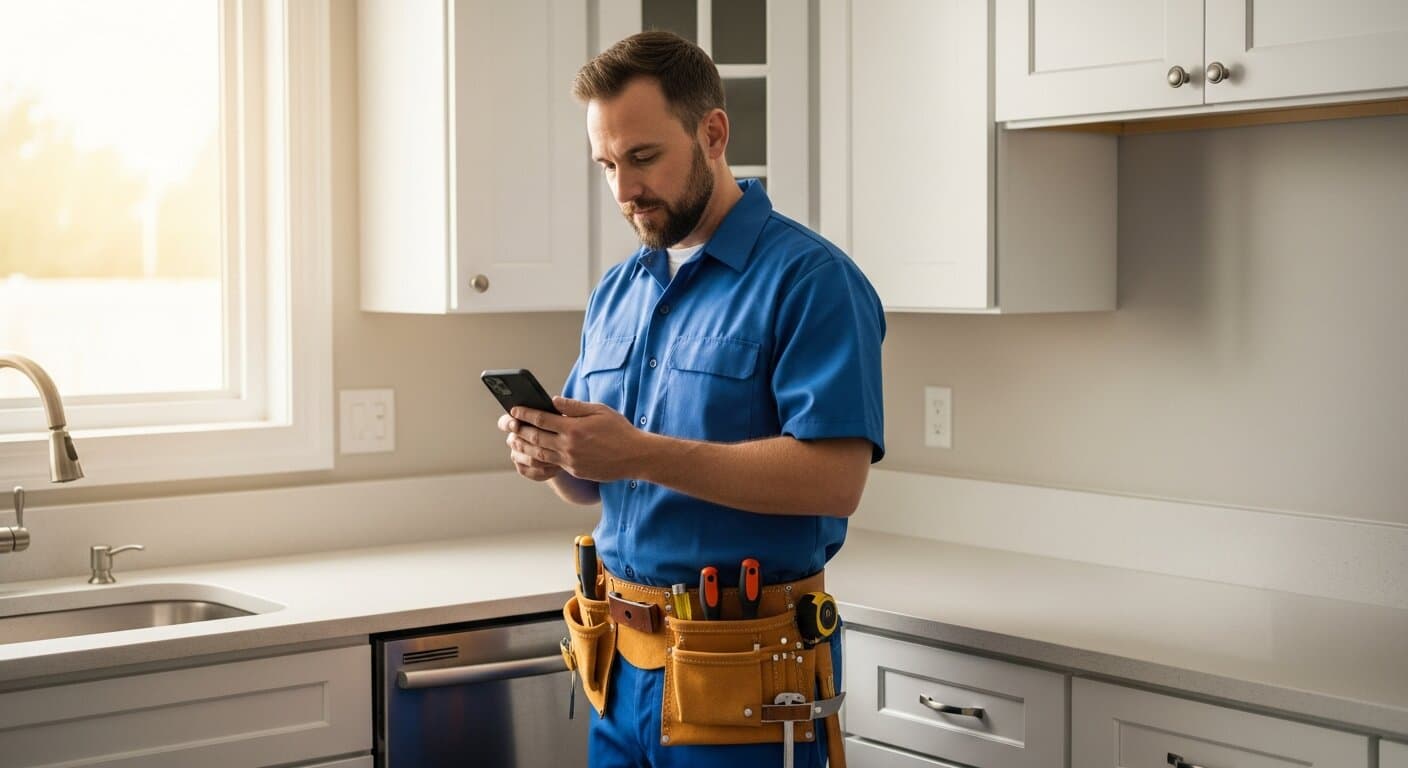
If you run a handyman business, you're already great at fixing things. But fixing a leaky faucet is a lot easier than fixing a slow phone — and for most handymen, that's the real problem.
Handyman marketing is both easier and harder than it looks. Easier, because most of your competitors are barely doing any marketing at all. Harder, because you're essentially selling trust — and convincing a homeowner to let a stranger into their house requires a different approach than selling roofing or HVAC.
This guide walks through every marketing channel that actually generates handyman leads in 2026. We'll cover local SEO, Google Ads, reviews, your website, and the practical tactics we've seen move the needle for handyman businesses across the country.
Why Handyman Marketing Is Different From Other Trades
Before diving into tactics, it helps to understand what makes handyman marketing unique.
You're selling trust, not just a service. A homeowner calling a plumber knows roughly what they're getting. A homeowner calling a handyman is inviting someone into their home to fix a dozen different things. Trust signals — reviews, photos, a professional-looking website — matter even more for handymen than for specialized trades.
Your service breadth is your biggest marketing challenge. Most handymen do everything from hanging TVs to fixing drywall to assembling furniture. That versatility is great for customers but creates real SEO challenges. You can't easily rank for every service simultaneously, so you need a focused strategy to capture your full range.
Repeat customers and referrals are your goldmine. A homeowner who loves you will call you for every small job — and they'll tell their neighbors. In our experience at RankWeld, handyman businesses with strong referral engines grow twice as fast as those relying entirely on paid advertising.
You're competing hyperlocally. Unlike a roofing company that might travel 50 miles for a big job, most handymen work within 10-15 miles of their home base. Your marketing needs to dominate that tight geographic area — depth beats breadth.
Google Business Profile: Your #1 Handyman Lead Source
If you do nothing else in this guide, optimize your Google Business Profile. It is, by a wide margin, the best source of handyman leads available to you — and it's free.
When someone searches "handyman near me" or "handyman in [city]," Google shows the Map Pack at the top of the results — three local businesses with reviews, phone numbers, and directions. Getting into that top three should be your primary marketing goal, because those three businesses capture the overwhelming majority of clicks and calls.
Here's how to dominate the Map Pack as a handyman:
Choose the right primary category. "Handyman" is your primary category. Don't overthink it. Add secondary categories for specific services you offer regularly: "Carpenter," "General contractor," "Tile contractor," or "Door supplier" if applicable.
Fill out every field completely. Business description (weave in your top services and city naturally), service area, hours, services with individual descriptions, and attributes like "On-site services available." The more complete your profile, the more Google trusts it.
Upload photos constantly. Before/after photos of your work are worth their weight in gold. Businesses with 100+ photos get significantly more profile views and calls than those with fewer than 10. Set a habit: every job, snap a before photo and an after photo.
Get reviews aggressively. Reviews are the Map Pack ranking signal that matters most. A handyman with 50 reviews and a 4.8 rating will almost always outrank a competitor with 12 reviews, even if that competitor's website is technically better.
Post weekly. Share completed jobs, seasonal home tips, or limited-time offers. Google rewards active profiles with better visibility in local search results.
Local SEO for Handyman Businesses
Beyond your Google Business Profile, your website needs to rank in organic results for handyman-related queries in your service area. This is contractor SEO applied to the unique challenges of handyman businesses.
The challenge is your breadth of services. Here's how to handle it strategically:
Build service pages for your most profitable services. You can't rank for everything, so pick the 5-10 services that represent your best work and highest margins. Create a dedicated page for each: "Drywall Repair [City]," "TV Mounting [City]," "Furniture Assembly [City]," "Door Repair [City]." Each page should be at least 500 words with real photos and a clear call to action.
Create location-specific pages. If you serve multiple cities or neighborhoods, create separate pages for each major area. "Handyman Services in [City Name]" targeting each zone dramatically expands your organic footprint over time.
Build local citations. Get your business listed consistently on Yelp, Angi, Thumbtack, HomeAdvisor, and local directories. Consistent NAP (Name, Address, Phone) across all listings helps Google trust your location data and rank you higher.
Earn local backlinks. Get listed in your local chamber of commerce, create a profile in neighborhood Facebook groups, and seek mentions from local home improvement blogs. These signals tell Google you're a legitimate, rooted local business.
Our data at RankWeld shows that handymen who invest in local SEO see a 3-5x increase in organic lead volume within 6-12 months compared to those relying solely on paid lead generation. Learn more about the mechanics of local rankings in our local SEO Map Pack guide.
Google Ads for Handyman Businesses
While SEO builds long-term lead flow, Google Ads can put handyman leads in your inbox within days of launch. For handymen just starting out or those looking to fill their calendar quickly, ads are often the fastest path to new customers.
The most important thing to understand about handyman Google Ads: intent varies wildly. Someone searching "handyman services" might just be browsing. Someone searching "handyman to hang shelves today" is ready to book right now. Your keywords and ad copy should relentlessly target the latter group.
Best keyword types for handyman ads:
- "[specific service] + [city]" (e.g., "drywall repair Phoenix" or "TV mounting Dallas")
- Emergency and urgency terms: "same day handyman," "handyman available this weekend"
- Task-specific searches: "door frame repair," "bathroom caulking service," "ceiling fan installation"
- "Handyman near me" (use precise location targeting, not this literal keyword)
Budget expectations. In most US markets, you'll pay $12-40 per click for handyman keywords. With a landing page converting at 15-25%, you can typically expect $80-250 per lead — very reasonable for a trade where average job values run $150-500 and satisfied customers become repeat clients for years.
For guidance on structuring your overall marketing spend, see our contractor marketing cost guide.
Building a Handyman Website That Converts
Your website is your digital storefront, and for handymen it needs to do three things: establish trust immediately, communicate your services and service area clearly, and make it effortless to contact you.
Here's what a high-converting handyman website must include:
A clear, benefit-driven headline. "Professional Handyman in [City] — Small Jobs Done Right, First Time" beats a generic "Welcome to [Name] Handyman Services" every time.
Photos of your actual work. Stock photos are an instant credibility killer. Real before/after photos of real jobs — even taken on your phone — are far more effective. Showcasing variety (carpentry, tile, drywall, plumbing fixes) demonstrates your range while building trust.
Prominent contact information. Put your phone number in the header, visible on every single page. Add a simple contact form that takes 60 seconds to complete. Every barrier you remove between a visitor and a call increases your conversion rate.
Dedicated service pages. One long "Services" page is far less effective than individual pages for each major service you offer. Each service page should describe the problem you solve, your approach, your pricing philosophy, and photos of the work.
Customer reviews prominently displayed. Embed Google reviews on your homepage. Social proof is your single strongest trust signal for a home services business.
Mobile-first performance. Most handyman searches happen on phones. If your site doesn't load in under 3 seconds and look clean on mobile, you're bleeding leads to faster competitors. Test your site on a real phone today.
Our contractor website design team builds handyman websites specifically engineered to turn visitors into callers. The difference between a DIY site and a properly optimized one often comes down to conversion rate — which has a direct, measurable impact on your cost per lead.
Reviews: The Handyman's Single Biggest Differentiator
In a trust business like handyman services, reviews aren't just nice to have — they're the difference between a full calendar and an empty one.
Why reviews matter more for handymen than most trades:
- Google uses review count and average rating as primary Map Pack ranking signals
- Homeowners scrutinize reviews when deciding whether to invite someone into their home
- High review volume allows you to charge premium prices without pushback
- Reviews across multiple platforms (Google, Yelp, Facebook, Nextdoor) build omnipresent credibility in your market
How to get more reviews consistently: The best time to ask is immediately after finishing a job, while the customer is admiring your work and feeling the satisfaction of a solved problem. "I'm so glad you love how it turned out — if you have a minute, a Google review would really help my small business. I'll text you the direct link right now." Then send it before you leave the driveway.
Make it a repeatable system. After every completed job, send a follow-up text with your Google review link. Our data at RankWeld shows handymen using a consistent review request system collect 4x more reviews than those who ask manually and inconsistently.
How to respond to every review: Respond to all reviews — positive and negative. For positive reviews, thank them by name and mention a specific detail from the job. For negative reviews, stay calm, acknowledge the concern professionally, and offer to make it right offline. How you handle complaints tells prospective customers everything about how you handle problems on the job.
Explore our detailed system in the contractor review management guide.
The Handyman Marketing Budget: What to Spend and Where
Here's a practical framework based on what we've seen work across hundreds of handyman businesses:
| Marketing Channel | Monthly Budget | Leads/Month | Est. Cost Per Lead |
|---|---|---|---|
| Google Business Profile (free) | $0 | 10–30 | $0 |
| Local SEO (ongoing) | $300–800 | 15–40 | $10–25 |
| Google Ads | $500–1,500 | 10–25 | $50–100 |
| Website (amortized monthly) | $50–150 | — | Foundation |
| Review management | $100–200 | Indirect | Amplifies all channels |
| Total | $950–2,650 | 35–95 | ~$20–50 blended |
As a general rule, invest 7-10% of your revenue back into marketing. A handyman doing $150,000 per year should be spending $10,500-15,000 annually. That sounds significant, but properly managed marketing generates $3-10 in revenue for every $1 spent when your channels are working together.
Social Media for Handyman Businesses
Social media is not a primary lead driver for most handymen — and that's a truth your business coach may not tell you. Facebook, Instagram, and TikTok can generate leads, but they convert at a much lower rate than Google search because people browsing social media aren't actively looking for a handyman right now.
That said, social media serves important supporting roles that are worth the time investment:
Nextdoor is the exception to every rule. Nextdoor is hyperlocal and highly intent-driven for home services. Homeowners regularly post "Does anyone know a good handyman?" — and a responsive, well-reviewed business profile there can generate 5-10 jobs per month with zero ad spend.
Facebook for referral amplification. Ask satisfied customers to share your page or tag you in neighborhood groups. Post completed work photos with location tags. Collect Facebook reviews in addition to Google reviews to build your presence across platforms.
Instagram for premium work. If you do visually impressive work — tile, built-ins, carpentry, cabinet installations — Instagram can build an audience that generates referral calls over time. It's not a primary strategy, but it costs nothing but consistency.
Common Handyman Marketing Mistakes to Avoid
We see these mistakes repeatedly when auditing handyman businesses across the country:
- Relying entirely on word-of-mouth. Referrals are great but unpredictable. Build owned channels — website, GBP, reviews — so your lead flow doesn't depend on whether a happy customer remembers to mention you.
- Never asking for reviews. Your best customers won't review you unless you ask directly. Make the request a non-negotiable step in every job completion.
- No website, or a broken one. Homeowners check your website before they call. An absent or unprofessional site loses those inquiries to competitors who look more established.
- Targeting keywords that are too broad. "Handyman services" is competitive and low-intent. Target specific services in specific cities for dramatically better results.
- Giving up on Google Ads too quickly. Many handymen try ads, see mediocre results, and quit — usually because they had no landing page and poor keyword targeting. Done right, with proper setup, Google Ads is highly profitable.
- Forgetting past customers. A quarterly text or email to your existing customer list with a seasonal tip and a reminder that you're available fills 20-30% of your calendar at near-zero cost.
Your 30-Day Handyman Marketing Action Plan
If you're starting fresh or resetting your marketing approach, here's the priority sequence:
Week 1: Claim and fully optimize your Google Business Profile. Add 20+ photos, write a keyword-rich description covering your top services and cities, and complete your service list with individual descriptions.
Week 2: Audit or build your website. You need at minimum a homepage, service pages for your top 5 services, your service area, and a contact page. Test it on mobile.
Week 3: Ask your 10 most recent customers for a Google review. Set up a simple text-based system to ask every future customer automatically after job completion.
Week 4: Launch a small Google Ads campaign ($20-30/day) targeting your top 3 services in your primary city. Track calls and form submissions carefully.
After 30 days, double down on what's generating the most leads. Then start building out local SEO content for compound growth over the next 6-12 months.
For handyman businesses ready to build a real, systematic marketing engine, our contractor lead generation team can build a custom plan based on your specific market, services, and revenue goals.
Ready to Fill Your Handyman Calendar?
A great handyman business with poor marketing will always lose to a mediocre competitor with great marketing. The good news: most of your competitors are doing almost none of what's in this guide.
Get a free analysis of your current handyman marketing — where you rank on Google, how your reviews compare to local competitors, and exactly what it would take to fill your calendar year-round — at our free SEO audit page. No commitment, no sales pressure. Just real data about your local market.
Recommended Service
Marketing Built for Your Trade
We only work with contractors. Every strategy, campaign, and website is built specifically for the trades. See what we can do for your industry.
See All ServicesRelated Articles
Contractor Lead Generation: 12 Strategies Beyond Angi & HomeAdvisor
Tired of paying $50+ for shared leads on Angi and HomeAdvisor? These 12 contractor lead generation strategies build a pipeline of exclusive leads that you own and control.
Read more
Local SEO for Contractors: How to Dominate the Google Map Pack
The Google Map Pack is where most contractor leads come from. This guide breaks down the exact local SEO strategies you need to rank in the top 3 — from citations and reviews to on-page optimization and content.
Read more
Google Business Profile for Contractors: Complete Setup & Optimization Guide
Your Google Business Profile is the most important ranking factor for local contractor SEO. This step-by-step guide shows you exactly how to set up, optimize, and maintain your profile to dominate the Map Pack.
Read more
Review Management for Contractors: The Complete Playbook
Reviews are the most powerful trust signal for contractors. This playbook covers everything: how to get more reviews consistently, handle negative feedback, and use reviews to dominate local search.
Read more
How to Get More Leads as a Contractor: 15 Proven Strategies
Struggling to fill your pipeline? These 15 proven lead generation strategies help contractors get more calls, more quotes, and more booked jobs — without wasting money on bad leads.
Read moreReady to Put This Into Action?
Get a free SEO audit and see exactly where your contracting business stands.