Lawn Care Marketing: How to Fill Your Schedule and Build a Route-Dense Business
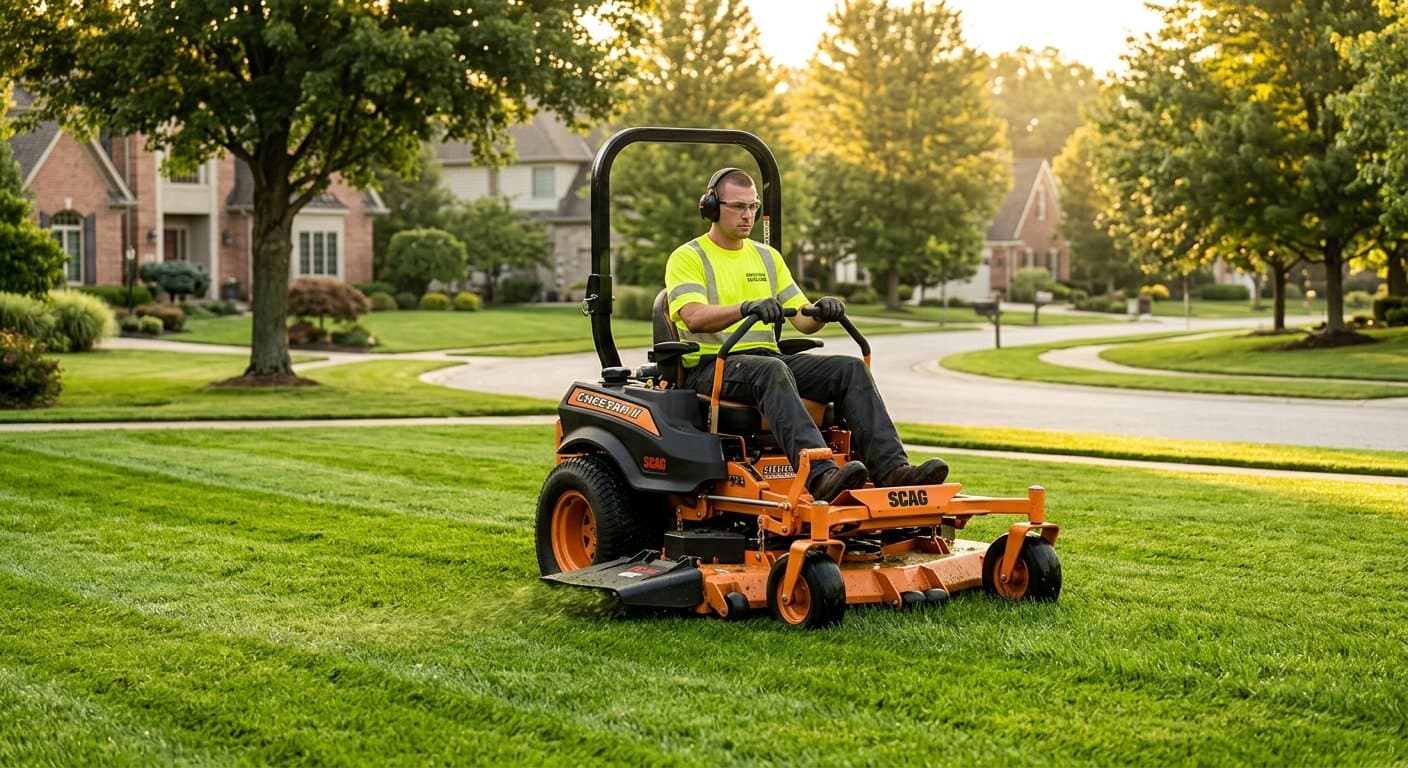
If you run a lawn care business, you are in one of the best recurring-revenue businesses in the trades. Unlike a roofer who completes a job and moves on, you have the opportunity to earn from the same customer every single week for years. The math is powerful: a $75/week mowing customer is worth $3,000-$3,500 in annual revenue, and if you retain them for five years, that is a $15,000+ customer.
The challenge is that lawn care marketing requires a different approach than most contractor marketing. You are not chasing one-time high-ticket jobs — you are building a recurring customer base, optimizing route density, and stacking services like fertilization programs, aeration, and seasonal cleanups on top of your mowing revenue.
This guide covers the complete lawn care marketing playbook for 2026, with specific tactics that work for mowing-first businesses, full-service lawn care companies, and everything in between.
Why Lawn Care Marketing Is Unique
Before we get into tactics, let us be clear about what makes lawn care marketing different from other contractor businesses.
Recurring revenue changes everything. When a plumber closes a job, the relationship is mostly over. When you sign a lawn care customer, you are acquiring a revenue stream that compounds year over year. This means you can afford to spend more to acquire a customer because the lifetime value is so high. A $100 marketing spend to acquire a customer worth $3,000/year is a much better deal than it looks upfront.
Geography drives profitability. A roofing company can drive 45 minutes to a job without hurting their margins much. A lawn care crew cannot. Every minute of drive time between stops is money you are not making. This means your marketing strategy needs to be tightly geographic — targeting specific neighborhoods, not your whole city.
Seasonal demand creates marketing windows. In most markets, 60-70% of annual lawn care revenue is earned between April and October. You need to be marketing aggressively in February and March to fill your spring schedule. Companies that start marketing in May are already behind.
Low switching costs create churn. Lawn care customers switch providers more easily than most contractor relationships. A single bad cut, a missed appointment, or a competitor's door hanger can end the relationship. This means your marketing needs to focus not just on acquiring new customers but on retaining existing ones.
The Lawn Care Marketing Priority Stack
Not all marketing channels are equal. Here is where to focus your budget and attention, ranked by typical ROI for lawn care businesses.
| Channel | Best For | Typical Cost Per Lead | Time to Results |
|---|---|---|---|
| Google Business Profile | Recurring customers in your area | Free (organic) | 30-90 days |
| Google Local Services Ads | High-intent immediate leads | $20-$50/lead | 1-3 days |
| Google Ads (Search) | Service-specific campaigns | $15-$45/lead | 1-7 days |
| Nextdoor | Neighborhood referrals | Free or low cost | Varies |
| Direct Mail / Door Hangers | Route density building | $0.30-$1.50/piece | 7-21 days |
| Facebook Ads | Seasonal promotions | $25-$75/lead | 3-14 days |
| SEO (organic website) | Long-term lead flow | $0 after investment | 60-180 days |
| Email / SMS (existing customers) | Upsells, retention | Near zero | Immediate |
Step 1: Get Your Google Business Profile Dialed In
Your Google Business Profile is the most important piece of your lawn care marketing. For a deep-dive on how to optimize it, see our Google Business Profile guide for contractors. When someone searches "lawn mowing near me" or "lawn care service [city]," the Google Map Pack shows three businesses above the organic results. Getting into those three spots drives the bulk of inbound calls for most lawn care companies.
To rank in the Map Pack, you need:
- A complete, optimized profile. Fill in every field — business description (include "lawn care," "mowing," and your city multiple times), services list, service area, business hours, and photos.
- Reviews, reviews, reviews. Aim for 50+ Google reviews with a 4.7+ star rating. Text your best customers a direct review link after completing their lawn. Our data shows this simple step alone — texting a review request within 30 minutes of finishing a job — increases review volume by 3-4x.
- Regular posts. Post a before/after photo or seasonal tip to your Google Business Profile at least twice a week. Google rewards active profiles with better rankings.
- Service-specific categories. List your primary category as "Lawn Care Service" and add secondary categories for additional services like "Fertilizer Supplier" or "Landscaping Service."
Step 2: Run Google Local Services Ads
Google Local Services Ads (LSAs) appear above everything else in Google search — above regular Google Ads and above the Map Pack. They show your business name, review count, and a "Google Guaranteed" badge. For lawn care, they are often the highest-converting paid channel.
To set up LSAs for lawn care:
- Apply at google.com/ads/localservicesads
- Verify your license (varies by state) and insurance
- Pass the background check
- Set your weekly budget and the services you want leads for
- Respond to every lead within 5 minutes — your response rate affects your placement
The "Google Guaranteed" badge carries real weight with homeowners. In our experience, it increases call-through rates by 20-30% compared to standard Google Ads.
Step 3: Build Your SEO Foundation
Contractor SEO for lawn care companies does not have to be complicated. The basics — done consistently — generate significant organic traffic over 3-6 months. For a full breakdown of local SEO fundamentals, our contractor SEO guide covers everything from site structure to Google Business Profile signals.
Your website needs service-specific pages. Do not put all your services on one page. Build separate pages for:
- Lawn mowing / lawn maintenance
- Fertilization and weed control programs
- Lawn aeration and overseeding
- Spring cleanups
- Fall cleanups / leaf removal
- Mulching services
Each page should include your target keyword (e.g., "lawn aeration [city]"), a description of the service, pricing information or a range, and a clear call to action.
Local keywords matter. "Lawn care near me" gets massive search volume, but ranking for "[city] lawn mowing service" or "lawn care [neighborhood]" is often achievable within 90 days for a new website with basic SEO work.
Write content that answers customer questions. A blog post titled "How Often Should You Mow Your Lawn in [State]?" or "When to Aerate Your Lawn in [Region]" captures seasonal search traffic and positions your company as the local expert.
Route Density: The Hidden ROI Multiplier
Here is a lawn care marketing secret that most agencies will not tell you: where you advertise matters as much as how you advertise.
A crew driving 5 minutes between stops earns $400-$500 per crew per day more than a crew with 20-minute gaps. Over a season, that is $25,000-$35,000 in extra profit per crew — without changing your prices or adding a single customer.
This means your marketing should be geographically concentrated, not scattered across your whole city.
How to build route density through marketing:
- Geo-target your Google Ads to specific zip codes where you already have customers, not your entire metro area.
- Use door hangers strategically. When you finish a lawn, leave door hangers on the 10 houses immediately surrounding the property. You are already there — make the most of it.
- Offer a neighbor discount. "Refer your neighbor, both of you get $10 off per visit." This is one of the most cost-effective route-building strategies we have seen.
- Target Nextdoor by neighborhood. You can post to specific neighborhoods and run sponsored posts targeted to individual neighborhoods. Focus on neighborhoods where you already have customers.
- Run direct mail to target zip codes. Services like Every Door Direct Mail (EDDM) let you mail every address in a carrier route for around $0.20-$0.30 per piece.
We have worked with lawn care companies that doubled their revenue per crew by spending 90 days concentrating marketing in a 10-block radius rather than chasing leads across a 30-mile service area.
Seasonal Marketing Timing for Lawn Care
Timing is everything in lawn care. Here is the month-by-month marketing calendar:
January-February: Start promoting your annual lawn care programs — fertilization schedules, weed control programs, and early mowing agreements. Offer an early-bird discount for customers who sign annual contracts before the season starts. This is when you lock in recurring revenue.
March-April: Spring cleanup promotions. Target homeowners who had winter damage, need their lawns aerated after compaction, or want a fresh mulch install. Run Google Ads for "spring lawn cleanup [city]" — these convert extremely well.
May-June: Peak mowing season. Focus on new customer acquisition. Run door hanger campaigns, Nextdoor ads, and Google Ads. This is when demand is highest and competition for new customers is hottest.
July-August: Heat management marketing. Promote dormant lawn treatment, irrigation system checks, and fall seeding prep. Customer retention focus — make sure existing customers are happy.
September-October (now): This is a key window. Fall lawn care is one of the highest-ROI marketing periods because:
- Aeration and overseeding convert at extremely high rates (homeowners see thin lawns and want help)
- Fall fertilization programs are a natural upsell
- Leaf removal / fall cleanup is a high-ticket add-on service
- Customers evaluating their current lawn care provider often switch in the fall
If you are reading this in September, run Google Ads for "fall lawn aeration," "fall seeding service," and "leaf removal [city]" right now. These are high-converting, high-margin jobs.
November-December: Sell leaf removal and winter lawn treatments. Begin promoting spring contracts. Reach out to your existing customer list with renewal incentives.
Digital Advertising for Lawn Care
Google Ads Strategy
Google Ads for lawn care works best when you structure campaigns around specific services rather than generic "lawn care" keywords.
High-converting lawn care keywords to bid on:
- "[city] lawn mowing service"
- "lawn aeration near me"
- "fall lawn cleanup [city]"
- "lawn fertilization service [city]"
- "weekly lawn mowing [city]"
- "leaf removal service near me"
Keywords to avoid (low intent, expensive):
- "lawn care tips" — informational, not transactional
- "how to mow lawn" — DIY intent
- "lawn care [very broad area]" — too competitive without local relevance
Landing page best practice: Every Google Ads campaign should send traffic to a dedicated service page, not your homepage. A homeowner who clicks "fall lawn aeration service" should land on a page about fall aeration — with pricing, photos of the process, and a clear "Get a Free Estimate" button.
Facebook Ads for Lawn Care
Facebook Ads are not the highest-converting channel for lawn care, but they are effective for:
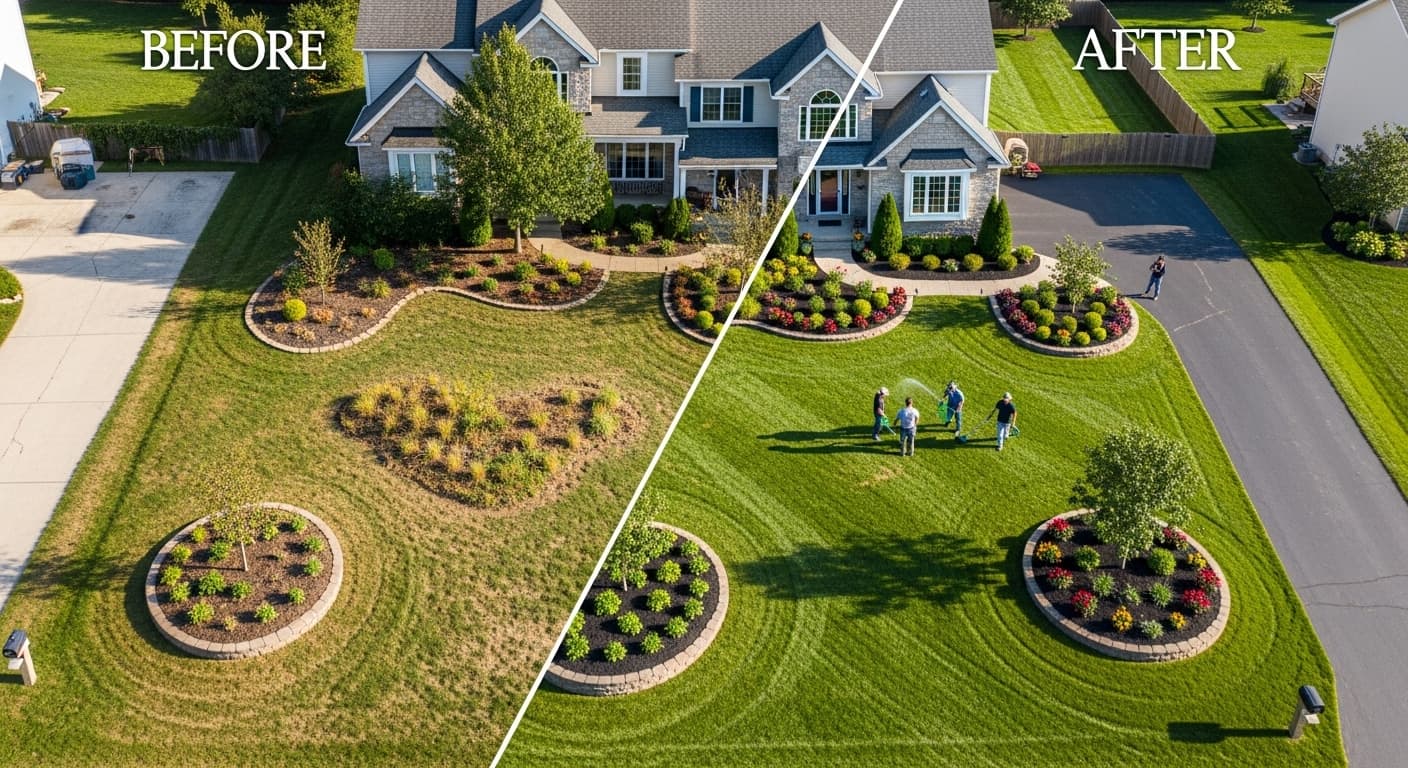
- Before/after photo campaigns targeting homeowners in your area
- Seasonal promotions (spring cleanup, fall aeration) with a limited-time offer
- Retargeting people who visited your website but did not call or submit a form
For Facebook, target homeowners (Facebook lets you filter by homeowner status), age 35-65, in your target zip codes. Video ads showing a before/after transformation typically outperform static image ads by 2-3x.
Reputation Management for Lawn Care
Reviews are not optional in lawn care — they are the difference between winning and losing. Here is the system that works:
Automate your review requests. Using your CRM, set up an automatic text or email that goes to every customer 30 minutes after a service visit: "Hi [Name], we just finished up at your property — hope everything looks great! If you have a moment, a Google review would mean the world to us: [link]."
Respond to every review. Respond to every positive review within 24 hours and every negative review within 2 hours. For negative reviews, move the conversation to a phone call quickly. A handled complaint often turns into a deleted one-star review.
Target 100 reviews in your first year. That number is enough to dominate most local markets. Companies with 100+ reviews and a 4.8+ rating win a disproportionate share of leads in competitive markets.
Your Lawn Care Lead Generation System
The best lawn care companies do not rely on any single channel. They build a system where multiple sources feed their pipeline.
Here is what a complete lawn care lead generation system looks like:
- Google Business Profile captures homeowners searching in your area (free, high intent)
- Google Local Services Ads captures additional search traffic at the top of results
- Website SEO builds organic traffic over time for specific services
- Nextdoor + direct mail build route density in target neighborhoods
- Referral program converts happy customers into advocates
- Email/SMS to existing customers drives upsells and renewals (highest ROI, near-zero cost)
Most lawn care companies underinvest in that last one — marketing to their existing customer base. An existing customer is 5-7x cheaper to retain than a new customer to acquire. Send a monthly text or email with seasonal tips, a check-in, and a service reminder. This simple habit dramatically improves retention.
Building Your Referral Engine
Referrals are the highest-converting lead source for lawn care companies — they close at 40-60% versus 15-25% for cold leads. And referred customers have 25-30% better retention rates.
Here is a simple referral program that works:
- Offer a double-sided incentive: "Refer a neighbor and both of you get $25 off your next service."
- Make it easy. Text your best customers a referral link, not a complicated form. The simpler the path, the more referrals you get.
- Time your ask. The best moment to ask for a referral is immediately after delivering an exceptional experience — after you fix a struggling lawn, after a big cleanup, after a customer compliments you.
- Track and follow up. When someone refers a friend, call or text the referrer to say thank you. That personal touch generates more referrals.
What Good Lawn Care Marketing Looks Like at Scale
Here is a real-world breakdown of how a growing lawn care company might allocate a $24,000/year marketing budget:
| Channel | Monthly Budget | Annual Budget | Expected Leads/Year |
|---|---|---|---|
| Google Local Services Ads | $500 | $6,000 | 120-180 leads |
| Google Ads (Search) | $400 | $4,800 | 80-130 leads |
| Local SEO / Website | $300 | $3,600 | 60-100 organic leads |
| Direct Mail (spring + fall) | $200 (avg) | $2,400 | 40-80 leads |
| Facebook Ads | $200 | $2,400 | 30-60 leads |
| Nextdoor + other local | $150 | $1,800 | Variable |
| Total | $1,750 | $21,000 | 330-550 leads |
At a 20% close rate on a $3,200/year average customer value, 400 leads becomes 80 new customers and $256,000 in new annual recurring revenue. The math on lawn care marketing, when done right, is extraordinary.
Common Lawn Care Marketing Mistakes
Marketing too wide a geography. A 30-mile service area sounds like more opportunity, but it is mostly inefficiency. Tight geographic marketing builds route density and profitability.
Competing on price instead of value. The cheapest lawn care company in town attracts the worst customers — the ones who switch providers every season. Market on reliability, quality, and responsiveness. "We show up on the same day every week, rain or shine" is worth $5-$10 more per cut than a competitor without that promise.
Ignoring existing customers. Most lawn care companies spend 80% of their marketing budget chasing new customers while letting existing ones drift away from lack of communication. Invest in retention — it is your highest-ROI activity.
Not tracking lead sources. You cannot improve what you do not measure. Use call tracking numbers (different numbers for different channels), ask every caller "how did you hear about us," and track what closes. After 90 days, cut the channels that are not producing.
Starting too late in the season. Spring is not the time to start spring marketing. Run your spring campaigns in January and February. Run your fall campaigns in August. You are competing for customers who are already looking — be there before the season starts.
Next Steps for Your Lawn Care Business
If you are ready to build a lawn care marketing system that generates consistent recurring revenue, the highest-impact starting points are:
- Optimize your Google Business Profile and set up a review collection system
- Launch Google Local Services Ads in your target service area
- Build dedicated service pages on your website for each major service
- Start a door-hanger campaign in your three densest existing neighborhoods
- Set up an automated post-service review request through your CRM
The companies that dominate their local lawn care market are not necessarily the biggest or the lowest-priced — they are the ones that consistently show up online when homeowners search, have the reviews to back up their reputation, and build tight routes that make every crew hour as profitable as possible.
Ready to build your lawn care lead engine? Get a free SEO audit and we'll show you exactly where you rank, where your competitors are beating you, and what to fix first.
Recommended Service
Marketing Built for Your Trade
We only work with contractors. Every strategy, campaign, and website is built specifically for the trades. See what we can do for your industry.
See All ServicesRelated Articles
Landscaping Marketing: How to Stand Out in a Crowded Market
The landscaping market is crowded. Here is how to differentiate your company, rank on Google, and build a lead generation system that keeps your crews booked.
Read more
The Complete Contractor SEO Guide for 2026
Everything you need to know about ranking your contracting business on Google in 2026. From Google Business Profile to local SEO strategy.
Read more
Google Business Profile for Contractors: Complete Setup & Optimization Guide
Your Google Business Profile is the most important ranking factor for local contractor SEO. This step-by-step guide shows you exactly how to set up, optimize, and maintain your profile to dominate the Map Pack.
Read moreReady to Put This Into Action?
Get a free SEO audit and see exactly where your contracting business stands.