
Remodeling Contractor Marketing: How to Book More Projects
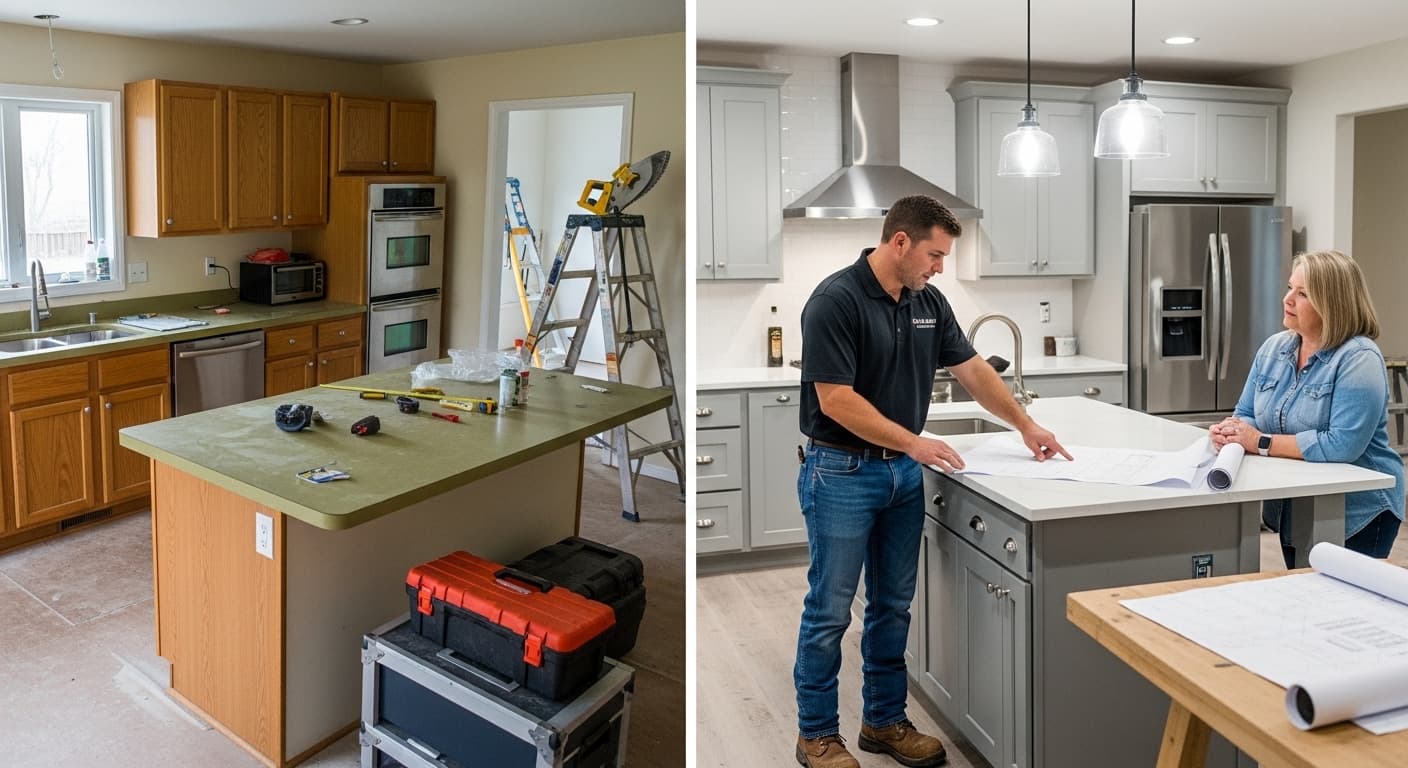
Remodeling is a high-ticket, high-trust business. A homeowner hiring a remodeling contractor is making a decision worth $15,000 to $100,000+, and they are going to research, compare, and deliberate before signing a contract. Your marketing needs to meet them at every stage of that journey.
This guide covers remodeling contractor marketing strategies that generate qualified leads, build trust during long sales cycles, and ultimately book more projects. Not leads from tire-kickers — leads from homeowners ready to invest in their homes.
What Makes Remodeling Marketing Different
Remodeling has unique characteristics that set it apart from other contractor marketing:
Long sales cycles. Unlike emergency plumbing or AC repair, remodeling projects are planned months in advance. Homeowners research, gather estimates, check portfolios, and read reviews before making a decision. Your marketing must work across this entire timeline, not just at the moment of search.
High ticket values. Kitchen remodels average $25,000-$75,000. Bathroom remodels run $10,000-$35,000. Whole-home renovations can exceed $150,000. When a single project is worth this much, your marketing cost per lead can be higher and still deliver strong ROI.
Portfolio is everything. Homeowners are buying a vision. They need to see your previous work to imagine what you will do for them. Your project portfolio is the most important marketing asset you have.
Trust barriers are high. Horror stories about remodeling projects gone wrong are everywhere. Homeowners are cautious. Your marketing needs to overcome this skepticism through reviews, credentials, project documentation, and transparent communication.
Strategy 1: Portfolio-Driven Website
For remodeling contractors, your website IS your marketing. More than any other trade, the quality and presentation of your project portfolio determines whether a visitor becomes a lead.
Building a portfolio website that converts:
Project Case Studies
Go beyond simple before/after galleries. For your top 10-15 projects, create detailed case studies that include:
- Before photos — the original space
- Design renderings (if available) — shows your planning process
- In-progress photos — demonstrates craftsmanship and thoroughness
- After photos — professional quality, well-lit, staged
- Project details — scope, timeline, approximate budget range, materials used, challenges overcome
- Client testimonial embedded in the case study
This level of detail does three things: it demonstrates professionalism, sets expectations, and pre-qualifies leads by showing your price range.
Essential Website Elements
- Click-to-call phone number in header
- "Schedule a Consultation" form on every page — use "consultation" not "estimate" (positions you as a professional, not a commodity)
- Service pages for each remodeling specialty
- Credentials prominently displayed — contractor's license, insurance, certifications (NKBA, NARI, EPA lead-safe), manufacturer partnerships
- Design process page — explain your process from consultation to completion. This reduces anxiety and sets expectations.
- Financing options — prominently display financing for large projects. This removes the biggest barrier to conversion.
- Testimonial video if possible — video testimonials convert dramatically better than text
Strategy 2: SEO for Remodeling Companies
SEO for remodelers targets some of the most valuable keywords in home services. A first-page ranking for "kitchen remodeling [city]" can generate dozens of high-value leads per month.
Service Pages That Rank
Build dedicated pages for every remodeling service:
- Kitchen remodeling — highest volume, highest value keyword
- Bathroom remodeling — second highest volume
- Basement finishing / remodeling — strong demand, less competition
- Whole-home renovation — highest ticket
- Home additions — room additions, second-story additions
- Aging-in-place remodeling — growing niche with ADA accessibility focus
- Outdoor living — decks, patios, outdoor kitchens
- Flooring installation — high volume, can stand alone
- Custom carpentry / built-ins — niche, premium service
- ADU / garage conversion — booming in many markets
Each page should target "[service] + [city]," include 800-1,500 words of content, feature project photos specific to that service type, cover typical scope, timeline, pricing ranges, and include a consultation CTA.
Blog Content That Attracts Remodeling Clients
Remodeling content marketing works exceptionally well because homeowners research extensively before hiring:
- "How much does a kitchen remodel cost in [city]?" — the most valuable content piece you can create. Write a comprehensive guide with pricing by tier (budget, mid-range, high-end).
- "Kitchen remodel timeline: how long does it take?" — addresses a major concern
- "Bathroom remodel ideas for 2026" — attracts early-stage planners
- "How to choose a remodeling contractor" — positions you as the trustworthy choice
- "Basement finishing ideas and costs" — targets a specific, high-value service
- "Is a home addition worth it?" — targets homeowners considering expansion
- "Remodeling vs. moving: which makes more financial sense?" — captures a broader audience of homeowners who might not have considered remodeling yet
Publish 3-4 articles per month. Use original project photos. Include real pricing data from your market — content with specific numbers outperforms vague advice every time.
Design Inspiration Content
Create gallery-style pages organized by style:
- Modern kitchen designs
- Traditional bathroom remodels
- Open concept living spaces
- Farmhouse-style renovations
- Contemporary basement finishes
These pages attract Pinterest and social media traffic and keep visitors on your site longer, which improves SEO signals.
Strategy 3: Google Ads for Remodeling Contractors
Google Ads for remodeling is expensive ($20-$80 per click for competitive keywords) but the ROI is justified by high project values. A single closed kitchen remodel from Google Ads can pay for months of advertising.
Campaign Structure
Kitchen remodeling campaign:
- Keywords: "kitchen remodeling [city]," "kitchen renovation contractor," "kitchen remodel near me"
- Your highest-priority campaign — kitchen remodels are the bread and butter
- Landing page with kitchen-specific portfolio, pricing ranges, and consultation CTA
Bathroom remodeling campaign:
- Keywords: "bathroom remodeling [city]," "bathroom renovation," "bathroom remodel contractor"
- Separate from kitchen to optimize messaging and budgets independently
General remodeling campaign:
- Keywords: "home remodeling [city]," "remodeling contractor near me," "renovation company"
- Broader intent, captures homeowners in early research phase
Specialty campaigns (if budget allows):
- Basement finishing, home additions, ADU construction
- Lower volume but less competition and lower cost per click
Google Ads Best Practices for Remodelers
- Use portfolio images in ad extensions. Image extensions showcasing your best work dramatically increase click-through rates.
- Lead form extensions vs. landing pages: Test both. Some homeowners prefer filling out a quick form directly in the ad without visiting your site.
- Remarketing is critical. Remodeling has a long sales cycle. Run remarketing campaigns that show your portfolio to people who visited your site but did not convert. They may come back weeks or months later.
- Negative keywords: Exclude "DIY," "cheap," "how to," "ideas" (unless you have strong content to capture those), "jobs," "salary."
Strategy 4: Social Media and Houzz
Instagram for Remodelers
Instagram is highly effective for remodeling companies:
- Before/after carousels of completed projects — these generate the highest engagement
- Reels with time-lapse construction footage — show the transformation from demo to completion
- Design process content — show material selection, 3D renderings, design meetings
- Client walkthrough videos — film the homeowner seeing their completed project for the first time
- Post 3-4 times per week with a mix of content types
Houzz
Houzz is unique in the contractor marketing world because it is specifically designed for home remodeling and design:
- Create a detailed Houzz profile with all services, service area, and credentials
- Upload your best project photos organized by room/project type with detailed descriptions
- Collect Houzz reviews from past clients (separate from Google reviews)
- Answer questions in Houzz discussions to build authority
- Consider Houzz Pro advertising — the leads are highly qualified because Houzz users are actively planning remodeling projects
Pinterest drives significant traffic for remodeling content. Pin your project photos and blog content to relevant boards. Create boards organized by room type, style, and design trend.
Strategy 5: Reviews and Trust Building
For remodeling contractors, reviews are one of the final decision-making factors. A homeowner about to spend $50,000 on a kitchen remodel will read reviews carefully.
Review strategy for remodelers:
- Request reviews at the project completion walkthrough. This is when satisfaction is highest. "We are so glad you love it. If you are happy with the result, we would be honored if you shared your experience on Google."
- Ask for detailed reviews. Coach customers to mention the type of project, the timeline, communication quality, and the final result. Detailed reviews rank for long-tail keywords and provide rich social proof.
- Photo reviews are gold. Ask customers to include photos of their completed project in their review. These stand out in search results and provide additional visual proof.
- Video testimonials. After completing a major project, ask if you can film a 60-second testimonial. Use these on your website, social media, and in remarketing ads.
- Respond thoughtfully. Thank every reviewer with a detailed response mentioning the specific project.
Target: 4-8 new reviews per month. Remodeling projects take weeks or months, so your review volume will be lower than service-based trades. Make every review count by encouraging detailed, photo-rich responses.
Strategy 6: Lead Nurturing for Long Sales Cycles
Remodeling leads rarely convert on the first visit. You need a system to stay in front of prospects over weeks and months.
Email nurturing sequence:
After a homeowner downloads a guide, requests information, or fills out a consultation form:
- Day 1: Thank you email with a link to your portfolio and a relevant project case study
- Day 3: "Remodeling Planning Guide" — checklist of things to consider before starting a project
- Day 7: Client testimonial spotlight — share a detailed testimonial from a happy customer
- Day 14: FAQ email addressing common remodeling concerns (timeline, living in the home during renovation, permits, etc.)
- Day 30: "Ready to start?" offer for a free design consultation
- Monthly: Newsletter with new project photos, design trends, and remodeling tips
This sequence keeps your company top of mind during the long decision-making process and positions you as the informed, professional choice.
Building Your Remodeling Marketing Plan
Foundation (Month 1):
- Launch or redesign your website with professional portfolio
- Optimize your Google Business Profile
- Set up review automation
- Claim and optimize your Houzz profile
Growth (Months 2-3):
- Launch Google Ads campaigns for kitchen and bathroom remodeling
- Begin publishing SEO content (2-4 articles per month)
- Start Instagram posting consistently
- Set up email nurturing sequences
Scale (Months 4-12):
- Expand service pages and location pages for SEO
- Add remarketing campaigns
- Create video testimonials and project walkthroughs
- Analyze data and optimize: double down on what generates signed contracts, not just leads
Book More Remodeling Projects
The remodeling companies that consistently book high-value projects are the ones with stunning portfolios, dominant Google presence, and marketing systems that nurture leads through long decision cycles. The craftsmanship sells the work — the marketing makes sure the right homeowners see it.
For the full marketing strategy that remodeling contractors use to book high-value projects, read our contractor marketing guide and our guide on contractor website features that convert high-ticket leads.
If you are ready to build a marketing system that books more remodeling projects, start with a free SEO audit to see where you stand. Explore our pricing or contact our team to discuss a custom marketing strategy designed for your remodeling business and your market.
Recommended Service
Marketing Built for Your Trade
We only work with contractors. Every strategy, campaign, and website is built specifically for the trades. See what we can do for your industry.
See All ServicesRelated Articles
The Complete Contractor SEO Guide for 2026
Everything you need to know about ranking your contracting business on Google in 2026. From Google Business Profile to local SEO strategy.
Read more
Painting Contractor Marketing: A Complete Growth Playbook
A complete marketing playbook for painting contractors covering SEO, Google Ads, social media, reviews, and website optimization to generate more painting leads.
Read more
Google Ads vs SEO for Contractors: Which Is Better for Your Budget?
Should you spend your marketing budget on Google Ads or SEO? The answer depends on your timeline, budget, and business goals. Here's a detailed breakdown with real numbers to help you decide.
Read moreReady to Put This Into Action?
Get a free SEO audit and see exactly where your contracting business stands.