
Seasonal Marketing for Contractors: How to Stay Busy Year-Round
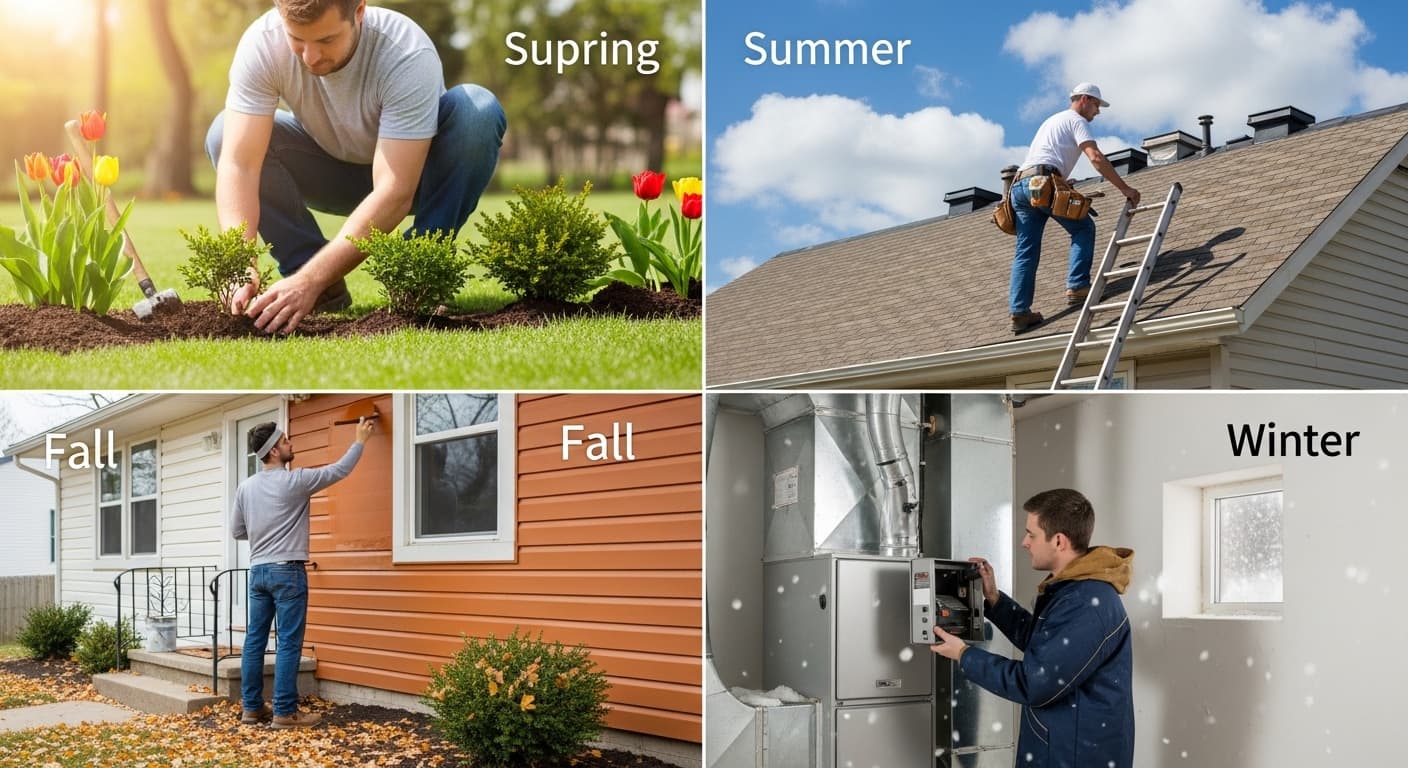
The feast-or-famine cycle is one of the biggest challenges in the contracting business. Spring and summer are chaos -- phones ringing nonstop, crews booked out 4 weeks, turning down work. Then November hits, and suddenly the phone goes quiet, your crew is idle, and you're wondering how to make payroll.
This cycle is not inevitable. It's the result of reactive marketing -- only promoting your business when you need leads. The contractors who stay busy year-round aren't lucky. They're strategic. They market the right services at the right time to the right people.
Here's how to build a seasonal marketing strategy that keeps your calendar full 12 months a year.
Understanding Seasonal Demand Patterns
Before you can market seasonally, you need to understand when homeowners search for your services. Google Trends data reveals clear seasonal patterns for every trade.
Peak Seasons by Trade
| Trade | Peak Season | Secondary Peak | Slowest Period |
|---|---|---|---|
| HVAC | Jun-Aug (cooling) & Dec-Feb (heating) | Mar-Apr (tune-ups) | Oct-Nov |
| Roofing | Mar-Jun, Sep-Oct | After major storms (any season) | Dec-Feb |
| Plumbing | Year-round (relatively flat) | Dec-Feb (frozen pipes) | Jun-Aug (slight dip) |
| Electrical | Mar-Jun (renovation season) | Nov-Dec (holiday lighting, panel upgrades) | Jul-Aug |
| Landscaping | Mar-Oct | Feb (spring planning) | Nov-Jan |
| Painting | Apr-Sep (exterior) | Year-round (interior) | Nov-Feb (exterior) |
| Remodeling | Jan-Mar (planning), Apr-Jun (execution) | Sep-Oct | Nov-Dec |
| Pest control | Mar-Sep | Year-round (varies by pest) | Nov-Feb |
Your marketing calendar should align with these patterns -- ramping up before peak seasons and pivoting to alternative services during slow periods.
Quarter 1 (January - March): Planning and Pre-Season Push
Marketing Focus: Pre-Season Bookings
Q1 is when homeowners start planning spring and summer projects. They're researching online, comparing contractors, and requesting estimates. This is your window to capture early-season demand before the rush.
SEO strategy:
- Publish content targeting spring service keywords 60-90 days before peak season
- Examples: "When to Schedule Your AC Tune-Up," "Spring Roof Inspection Checklist," "Best Time to Start a Landscaping Project"
- Optimize existing service pages with seasonal keywords
- Update your Google Business Profile with spring services and seasonal hours
Paid advertising:
- Launch Google Ads campaigns for spring services in February (lower competition = lower cost per click)
- Run Facebook Ads promoting pre-season booking discounts
- Target "planning" keywords: "how much does X cost," "best time for X," "X contractor near me"
Email marketing:
- Send a "Get Ahead of the Rush" campaign to past customers
- Offer early-bird pricing or priority scheduling for pre-season bookings
- Share a spring maintenance checklist (email marketing strategies)
Operational:
- Review and update your pricing for the new year
- Refresh your website with current photos and testimonials
- Plan content calendar for the rest of the year
Trade-Specific Q1 Actions
HVAC: Promote spring AC tune-ups and duct cleaning. Offer maintenance plan signups at a January discount.
Roofing: Market spring roof inspections. Target homeowners with aging roofs via Facebook Ads. Publish "winter damage assessment" content.
Landscaping: Launch spring cleanup packages. Promote early design consultations for hardscaping and new installations. Book mulching and bed prep.
Plumbing: Market water heater inspections (many fail in winter). Promote sump pump servicing before spring rains.
Quarter 2 (April - June): Peak Season Execution
Marketing Focus: Maximize Conversion
This is the busiest season for most contractors. Your goal isn't to generate more leads -- it's to convert the leads you're already getting at the highest possible rate and book as far ahead as possible.
SEO strategy:
- Focus on converting existing traffic, not publishing new content
- Ensure all service pages have strong calls-to-action and fast load times
- Monitor rankings and fix any drops immediately
- Your contractor SEO investment pays its biggest dividends now
Paid advertising:
- Maximize Google Ads budget for your highest-value services
- Increase bids on high-intent keywords (costs will be higher, but so is conversion intent)
- Run Google Local Service Ads (LSAs) at full throttle
- Use retargeting ads for website visitors who didn't convert
Email marketing:
- Send project showcase emails featuring recent completed work
- Promote summer services to spring customers
- Request reviews from every completed job (this is when you build review volume fastest)
Social media:
- Post before-and-after content from current jobs (highest engagement period)
- Share time-lapse videos of projects in progress
- Leverage customer enthusiasm for fresh testimonial videos
Operational:
- Track cost per lead and cost per acquisition by channel
- Focus on efficiency and profit margins, not just volume
- Book summer work now -- stack the calendar while demand is high
Trade-Specific Q2 Actions
Exterior painters: This is your prime season. Run aggressive local campaigns. Target neighborhoods with aging exteriors via Facebook Ads with before/after examples.
HVAC: Transition from tune-up marketing to repair and replacement marketing as temperatures rise. Emergency AC repair keywords spike in May-June.
Roofing: Storm damage response marketing. Monitor weather patterns and launch rapid-response campaigns after hail or wind events.
Landscaping: Showcase hardscaping projects, outdoor living spaces, and landscape design. This is when homeowners want to be inspired.
Quarter 3 (July - September): Transition and Preparation
Marketing Focus: Shoulder Season Strategy
Late summer is a transition period. Spring/summer demand starts cooling while fall demand hasn't kicked in yet. This is where many contractors see a dip. Smart marketing prevents it.
SEO strategy:
- Publish fall-focused content now so it ranks before fall arrives
- Examples: "Fall Furnace Maintenance Checklist," "When to Schedule Gutter Cleaning," "Winterizing Your Home: Complete Guide"
- Create industry-specific content targeting seasonal keywords for your trade
- Build backlinks and citations (the long game that pays off all year)
Paid advertising:
- Shift budget toward fall services by mid-August
- Test ad copy for winter services at lower budgets
- Run "end of summer" promotions for exterior services (last chance before weather turns)
- Pre-season ads for fall services get excellent CPCs (low competition in August)
Email marketing:
- "Last chance for summer projects" campaign in July
- Fall maintenance reminders in August
- Maintenance plan promotions in September ("sign up before the busy season")
Operational:
- This is the best time to invest in your website
- Record testimonial videos with satisfied summer customers
- Plan and produce content for Q4 and Q1
- Audit and improve your review generation system
Trade-Specific Q3 Actions
HVAC: Transition from cooling to heating marketing. August-September is when to promote furnace tune-ups and inspections. Launch heating system replacement campaigns.
Roofing: Market roof repairs and replacements before winter. "Fix it before the first freeze" messaging.
Painters: Push interior painting services as exterior season winds down. "Refresh your home before the holidays" campaigns.
Landscaping: Fall aeration, overseeding, and leaf removal packages. Begin promoting snow removal contracts.
Quarter 4 (October - December): Slow Season Hustle
Marketing Focus: Alternative Services and Investment
Q4 is the traditional slow season for most trades (except HVAC heating). But it's also the biggest opportunity for contractors who market strategically.
SEO strategy:
- Publish content for Q1 and Q2 searches (these need time to rank)
- Examples: "How Much Does a Kitchen Remodel Cost in 2027," "Spring Home Improvement Projects to Plan Now"
- Comprehensive site audit and technical SEO improvements
- Refresh outdated content on your highest-traffic pages
Paid advertising:
- Reduce budget but don't turn off ads entirely (competitors do, leaving you less competition)
- Target emergency and winter-specific keywords
- Run remarketing campaigns to all website visitors from the past 6 months
- Promote gift certificates or holiday specials for home services
Email marketing:
- Holiday-themed emails (Thanksgiving "thankful for our customers" message, holiday card)
- Year-end maintenance checklist
- Pre-season booking for spring at a locked-in rate
- Annual review: "Here's what we accomplished together this year"
Operational:
- This is the best time to invest in your brand, marketing infrastructure, and team training
- Redesign your website
- Build out content library
- Train crew on customer experience
- Plan and budget next year's marketing spend
- Attend industry conferences and trade shows
Trade-Specific Q4 Actions
HVAC: Peak heating season. Furnace repair and replacement keywords are at annual highs. Maximize lead generation for heating services.
Plumbing: Promote winterization services, frozen pipe prevention, and water heater replacements (higher failure rate in cold weather).
Electricians: Holiday lighting installation, panel upgrades for new appliances received as gifts, generator installation before winter storms.
General contractors: Market interior remodeling. Many homeowners want projects completed before holiday gatherings or New Year's resolutions.
Building a Year-Round Content Calendar
Content marketing drives organic traffic that generates leads for months after publishing. But content only works if it's published at the right time.
The Seasonal Content Strategy
Publish content 60-90 days before the target season. Google needs time to discover, index, and rank your content. An article about "spring HVAC maintenance" published in April is too late -- it needed to go live in January or February.
Monthly content plan:
| Month | Content Focus | Target Search Season |
|---|---|---|
| January | Spring services, cost guides | March-May searches |
| February | Renovation planning, maintenance tips | April-June searches |
| March | Summer preparation, outdoor projects | May-July searches |
| April | Peak season showcases, project spotlights | Ongoing authority |
| May | Fall planning, maintenance guides | August-October searches |
| June | Emergency preparedness, seasonal tips | Ongoing authority |
| July | Fall/winter services, energy efficiency | September-November searches |
| August | Winterization guides, heating content | October-December searches |
| September | Holiday prep, indoor projects | November-January searches |
| October | Year-round maintenance, planning guides | January-March searches |
| November | New year planning, budget guides | January-March searches |
| December | Annual review, prediction articles | January-February searches |
Budgeting for Seasonal Marketing
Your marketing budget shouldn't be the same every month. Align spending with demand:
Budget Allocation Framework
| Quarter | % of Annual Budget | Focus |
|---|---|---|
| Q1 (Jan-Mar) | 25% | Pre-season SEO, early Google Ads, email |
| Q2 (Apr-Jun) | 35% | Maximum paid advertising, conversion optimization |
| Q3 (Jul-Sep) | 25% | Transition marketing, content creation, fall prep |
| Q4 (Oct-Dec) | 15% | Reduced ads, infrastructure investment, planning |
Note: These percentages should be adjusted for your specific trade. HVAC contractors might allocate more to Q4 (heating season), while landscapers allocate almost nothing.
Staying Busy During the Slow Season: Practical Tactics
Diversify Your Services
Add services that fill your slow-season gaps:
- Exterior contractors add interior services (painting, remodeling)
- Landscapers add snow removal and holiday lighting
- HVAC companies add indoor air quality services
- Plumbers add water treatment and filtration
- Roofers add gutter installation and attic insulation
Maintenance Plans
Maintenance plans generate guaranteed revenue year-round. Customers pay monthly or annually for scheduled service visits, creating predictable income during slow months. (See our customer retention guide for details.)
Commercial Work
If you focus on residential work, consider adding light commercial during slow months. Office buildings, retail spaces, and property management companies have year-round maintenance needs.
Training and Improvement
Use slow months to invest in your business:
- Train crew on new techniques and certifications
- Build your website and SEO foundation
- Develop marketing materials and content
- Network with referral partners (realtors, property managers)
Your Next Step
Stop waiting for the phone to ring and start controlling your pipeline. A seasonal marketing strategy turns the feast-or-famine cycle into predictable, year-round growth.
Not sure where to start? Get a free SEO audit and we'll analyze your online presence, identify seasonal opportunities specific to your trade and market, and build a marketing calendar that keeps leads flowing all year.
Contact us to discuss a seasonal marketing strategy tailored to your business. Or view our pricing to see how RankWeld helps contractors build marketing systems that work in every season.
Recommended Service
Ready to Grow Your Contracting Business?
From SEO to Google Ads to review management — we handle the marketing so you can focus on the work. Monthly plans from $600/mo.
Get Your Free SEO AuditRelated Articles

The Ultimate Guide to Contractor Marketing in 2026
Everything contractors need to know about marketing in 2026. From SEO and Google Ads to reviews and social media, this guide covers every channel that drives real leads.
Read more
Contractor Lead Generation: 12 Strategies Beyond Angi & HomeAdvisor
Tired of paying $50+ for shared leads on Angi and HomeAdvisor? These 12 contractor lead generation strategies build a pipeline of exclusive leads that you own and control.
Read more
Email Marketing for Contractors: How to Stay Top of Mind
Email marketing is one of the most underused tools in a contractor's arsenal. Learn how to build a list, what to send, and how automated emails can drive repeat business and referrals without lifting a finger.
Read moreReady to Put This Into Action?
Get a free SEO audit and see exactly where your contracting business stands.