Solar Contractor Marketing: How to Generate Solar Leads Online
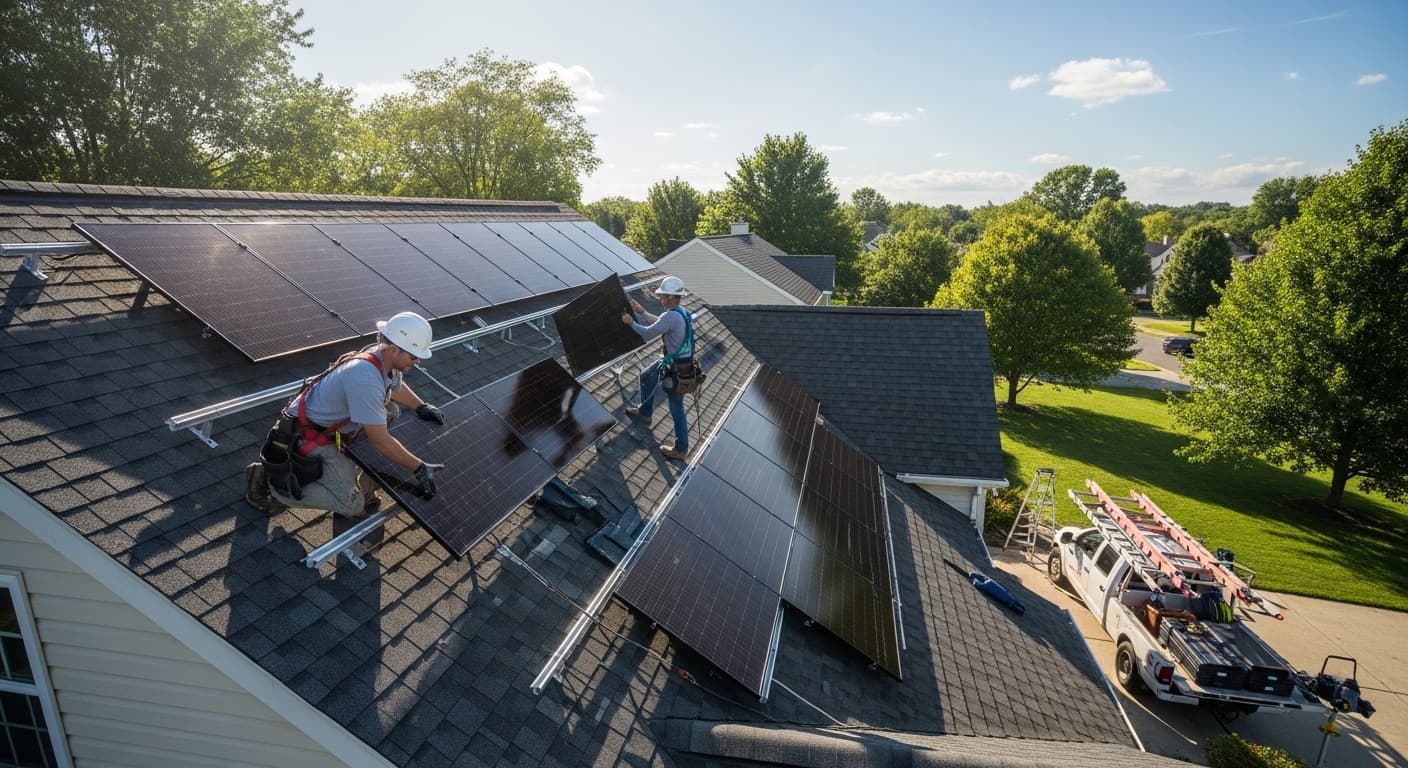
The solar industry is booming. Residential solar installations have grown over 30% year-over-year, government incentives are driving adoption, and homeowners are increasingly motivated by both environmental concerns and rising electricity costs. The market opportunity is massive.
But opportunity attracts competition. National installers like SunRun, Vivint Solar, and Tesla are spending millions on marketing. Regional companies are fighting for market share. And lead generation companies are selling the same leads to multiple installers.
If you are a solar contractor, your growth depends on building your own solar marketing system — one that generates exclusive, qualified leads at a cost that scales with your business.
Why Solar Marketing Is Different From Other Trades
Solar has characteristics that fundamentally change the marketing playbook:
Education-driven purchase. Homeowners considering solar have dozens of questions: How much does it cost? What is the ROI? How do tax credits work? Lease vs. buy? Battery storage? Your marketing needs to educate, not just advertise.
Long sales cycle. The average solar sale takes 30-90 days from first contact to signed contract. Homeowners research extensively, get multiple quotes, and consult with family before committing to a $20,000-$35,000 purchase.
High customer acquisition cost. Solar leads are expensive regardless of the channel. The key is maximizing close rates and lifetime value (battery storage additions, referrals, maintenance contracts) to justify that acquisition cost.
Incentive complexity. Federal tax credits, state incentives, local rebates, net metering policies — these change frequently and vary by location. Your marketing content needs to be accurate and current, which is also an SEO opportunity because most competitors let their content go stale.
Trust is the ultimate differentiator. Homeowners are making a 25-year commitment (the warranty period for most solar panels). They are not choosing the cheapest option — they are choosing the company they trust most.
Strategy 1: Educational Content Marketing
Content marketing is the most important strategy for solar companies because of the education-heavy buying process. Homeowners search Google extensively before contacting a solar installer.
Content That Generates Solar Leads
Create comprehensive, accurate content for these high-value topics:
Cost and ROI content (highest priority):
- "How much do solar panels cost in [state/city]?" — the most searched solar question. Write a detailed guide with system sizes, cost ranges, cost per watt, and net cost after incentives.
- "Solar panel savings: how much will you save on electricity?" — include real calculations with local utility rates
- "Solar panel ROI: when do solar panels pay for themselves?" — payback period calculations with real numbers
- "Is solar worth it in [state]?" — state-specific analysis including incentive programs and sun hours
Incentive and financing content:
- "Solar tax credit 2026: complete guide" — update this annually, keep it current
- "[State] solar incentives and rebates explained" — state-specific content ranks very well
- "Solar lease vs. buy: which is right for you?" — comparison content targeting a key decision point
- "Solar financing options: loans, leases, and PPAs compared" — addresses the payment barrier
Technical and decision-stage content:
- "Best solar panels for homes in 2026" — brand comparison (SunPower, REC, LG, Panasonic, etc.)
- "Do I need a solar battery? Pros and cons" — targets a growing market segment
- "How many solar panels do I need?" — system sizing guide
- "Net metering explained: how does it work in [state]?" — policy-driven content
- "What to look for in a solar installer" — positions your company as the right choice
Publish 4-6 articles per month. Solar content has high search volume and relatively long content shelf life (update incentive content quarterly). This is the channel that will deliver the highest ROI over 12 months.
Strategy 2: Local SEO for Solar Companies
Local SEO for solar companies is powerful because most homeowners search for local installers, and national brands cannot rank for every local keyword.
Service Pages
Create dedicated pages for every service you offer:
- Residential solar installation — your core service page
- Commercial solar installation — if you serve businesses
- Solar battery storage — Tesla Powerwall, Enphase, Generac, etc.
- Solar panel maintenance / cleaning — ongoing revenue service
- EV charger installation — natural cross-sell for solar customers
- Solar roof / solar shingles — if you offer Tesla Solar Roof or similar
- Ground-mounted solar — targets rural properties with large yards
- Solar financing — dedicate a page to financing options
Each page should target "[service] + [city/state]" with 800-1,500 words of content including pricing information, process overview, local incentive details, and project photos.
Location Pages
Solar companies typically serve a large geographic area. Build location pages for every county and major city:
- "Solar installation in [city], [state]"
- Include local utility rates (to calculate savings)
- Mention local permitting processes
- Reference local incentive programs
- Include testimonials from customers in that area
- Show average sun hours / solar production data for that location
Google Business Profile
Your Google Business Profile is essential for appearing in local solar searches:
- Primary category: "Solar energy contractor." Secondary: "Solar panel installation service," "Solar energy equipment supplier."
- Photos: Upload photos of completed installations — rooftop arrays, ground mounts, battery systems, monitoring dashboards showing production. Drone photos of roof installations are particularly effective.
- Posts: Share completed projects, incentive updates, customer savings testimonials, and educational content.
- Reviews: Solar customers who are saving money on electricity are often enthusiastic reviewers — make sure you ask every one of them.
Strategy 3: Google Ads for Solar Companies
Google Ads for solar is competitive (clicks range from $15-$60+) but the math works because of high ticket values. A single closed deal from Google Ads pays for months of advertising.
Campaign Structure
High-intent campaign:
- Keywords: "solar installation [city]," "solar company near me," "solar panel installer [city]"
- These searchers are ready to get quotes
- Landing page with local pricing, incentive summary, and consultation booking form
Cost/savings campaign:
- Keywords: "solar panel cost [state]," "how much do solar panels cost," "solar savings [city]"
- These searchers are in research mode but highly qualified
- Landing page with cost calculator or detailed pricing guide
Incentive campaign:
- Keywords: "[state] solar tax credit," "[state] solar incentives," "federal solar tax credit 2026"
- Captures incentive-driven buyers
- Landing page with current incentive details and a "see your savings" CTA
Battery storage campaign:
- Keywords: "solar battery," "home battery storage," "Tesla Powerwall installation"
- Growing market segment, less competition
- Appeals to existing solar customers and new combined solar+storage buyers
Competitor campaign:
- Keywords: Competitor brand names + "reviews," "alternative," "vs"
- Captures homeowners comparing options
- Landing page highlighting your differentiators
Google Ads Tips for Solar Companies
- Use lead form extensions for mobile searchers who want a quick estimate
- Remarketing is critical given the long sales cycle. Show ads to past website visitors for 90+ days.
- Bid on "cost" keywords despite them seeming informational. People searching solar costs are serious prospects.
- Negative keywords: Exclude "jobs," "careers," "stock," "companies to invest in," "DIY," "cleaning" (unless you offer it).
- Use customer lists for targeting. Upload past customer emails to create lookalike audiences.
Strategy 4: Reviews and Social Proof
Solar purchases involve significant trust because homeowners are making a long-term commitment with a large upfront investment. Reviews are one of the most influential factors in their decision.
Building reviews for solar companies:
- Request reviews after the system is activated and producing energy. Not at installation completion — wait until the customer can see their electricity savings. This generates more enthusiastic, detailed reviews.
- Include production data in your review request. "Your system produced 850 kWh last month, saving you approximately $127. If you are happy with your experience, would you share a review?" This primes them to mention savings.
- Ask customers to share photos of their monitoring app showing production data. Reviews with photos of real savings data are incredibly compelling.
- Video testimonials: Solar customers who are saving money are often eager to share. Film 60-second testimonials highlighting their experience and savings.
Target: 6-10 new reviews per month. Solar installations take longer than service calls, so volume will be lower. Focus on quality — detailed reviews with savings data and photos.
Strategy 5: Referral Program
Solar has one of the highest referral rates of any contractor trade. Happy solar customers talk about their panels, show neighbors their electricity bills, and advocate for solar. Capitalize on this with a structured referral program.
Effective solar referral programs:
- Offer $500-$1,000 per referred installation that closes. This sounds generous but is a fraction of your customer acquisition cost through ads or lead gen companies.
- Make it easy. Provide a referral link, a simple form, or a card they can hand to neighbors.
- Follow up quarterly. Send a "referral reminder" email along with a production summary showing their savings. When they are looking at how much money they are saving, they are most likely to refer.
- Community incentive: "When your neighbor goes solar, you both save." Offer a bonus to both the referrer and the new customer.
Strategy 6: Solar Company Website
Your website is your primary education and conversion tool. It needs to answer questions, build trust, and make it easy to request a quote.
Critical website elements for solar companies:
- Solar savings calculator — interactive tool where visitors enter their address, electricity bill, and roof details to see estimated savings. This is the highest-converting element on any solar website.
- Current incentive information — federal tax credit, state rebates, utility incentives, clearly displayed and kept up to date
- Project gallery with installation photos and production data
- Financing page with clear options — cash purchase, solar loan, lease, PPA
- FAQ section addressing every common objection (roof damage, warranty, moving, etc.)
- Certifications and partnerships — NABCEP certified, manufacturer partnerships (SunPower, Enphase, SolarEdge, Tesla)
- "Get a Free Quote" form on every page
- Phone number in sticky header
Strategy 7: Partnerships and Community Marketing
Solar marketing extends beyond digital channels. Strategic partnerships accelerate growth:
- Real estate agent partnerships. Agents increasingly promote solar as a home value booster. Build relationships with top agents in your market.
- Electrician partnerships. Partner with local electricians who do not install solar but encounter customers who ask about it.
- Home energy auditor partnerships. Energy auditors frequently recommend solar to their clients.
- Community solar events. Host or sponsor educational workshops at local libraries, community centers, or homeowner associations.
- Neighborhood campaigns. When you install solar on a street, offer a neighborhood discount. Solar adoption increases when homeowners see it on neighboring homes.
Your Solar Marketing Calendar
January-March: Tax season — push tax credit content and Google Ads. Homeowners thinking about taxes are receptive to solar savings messaging. Update all incentive content for the new year.
April-June: Spring is peak solar research season. Maximum content publishing and ad spend. Host community events. Launch referral push.
July-September: Peak installation season. Maintain advertising. Focus on review collection from completed installations. Push battery storage add-ons.
October-December: Slower season in many markets. Push year-end tax credit urgency ("Install before December 31 to claim the 2026 federal tax credit"). Plan next year's content calendar. Nurture leads that did not close during summer.
Scale Your Solar Business
The solar companies growing fastest are the ones that own their lead generation. They are not dependent on lead gen companies charging $50-$100 per shared lead — they are building organic traffic, running optimized ad campaigns, and leveraging their happy customers as their sales force.
For the full framework, read our contractor marketing guide and our Google Ads budget guide for contractors — paid search is especially critical for solar companies.
If you are ready to build a marketing system that generates exclusive solar leads at a scalable cost, get a free SEO audit to see where you stand. Check our pricing or contact our team to discuss a custom solar marketing strategy designed for your market, your capacity, and your growth goals.
Recommended Service
Marketing Built for Your Trade
We only work with contractors. Every strategy, campaign, and website is built specifically for the trades. See what we can do for your industry.
See All ServicesRelated Articles
The Complete Contractor SEO Guide for 2026
Everything you need to know about ranking your contracting business on Google in 2026. From Google Business Profile to local SEO strategy.
Read more
Electrician Marketing: Digital Strategies That Work
Digital marketing strategies built specifically for electricians. Learn how to get more calls, rank higher on Google, and grow your electrical contracting business.
Read more
Google Ads vs SEO for Contractors: Which Is Better for Your Budget?
Should you spend your marketing budget on Google Ads or SEO? The answer depends on your timeline, budget, and business goals. Here's a detailed breakdown with real numbers to help you decide.
Read moreReady to Put This Into Action?
Get a free SEO audit and see exactly where your contracting business stands.