Waterproofing Contractor Marketing: How to Get More Basement & Foundation Leads
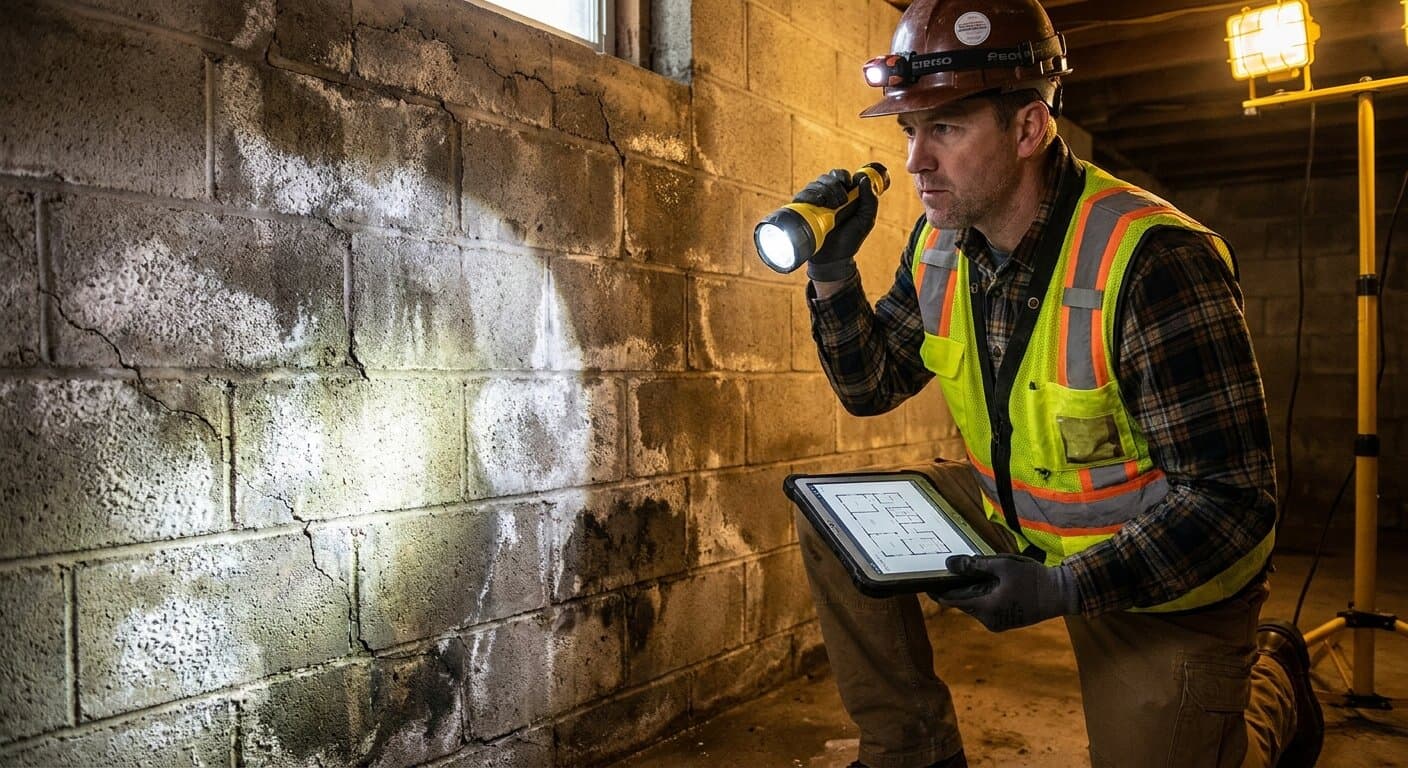
Waterproofing is one of the most profitable residential contracting niches in North America — average job values run $3,000 to $15,000, and many jobs expand once the work begins. But the business only works if homeowners can find you when they need you, and the marketing landscape is more competitive than ever.
In this guide, we'll walk through every major marketing channel for waterproofing contractors — what works, what doesn't, and exactly how to build a system that generates consistent basement and foundation leads year-round.
Why Waterproofing Marketing Is Different
Most contractor marketing is about awareness. Waterproofing marketing is about capture.
When a homeowner notices standing water in their basement after a rainstorm, they don't browse social media hoping to find someone. They open Google and type "wet basement repair near me." The purchase decision is urgent, the budget is already decided emotionally, and the first contractor to appear credible enough to call often wins the job.
That means your marketing job is primarily about being visible at the moment of intent — and being credible enough to convert that click into a call.
Secondary to that is proactive demand generation: reaching homeowners before they have a problem through education, referral networks, and neighborhood targeting. Both matter, but urgency-capture is where the revenue is.
Step 1: Build a Website That Converts Scared Homeowners
Before spending a dollar on ads or SEO, your website needs to convert. Waterproofing customers are anxious — they're worried about structural damage, mold, and costly repairs. Your site needs to immediately reassure them that you're the right company for a serious problem.
What a high-converting waterproofing website includes:
- A clear headline that names the problem: "Wet Basement? We Fix It Permanently."
- Phone number visible above the fold on every page
- Before/after photos of real jobs (not stock photography)
- A video testimonial from a homeowner explaining their experience
- Explanation of your warranty and what it covers
- Transparent service descriptions: interior drainage systems, exterior waterproofing, sump pump installation, crawl space encapsulation
- A simple estimate request form (name, address, brief description)
We've seen contractors add a live chat widget and a 24-hour response guarantee and increase their contact form submission rate by 30–40%. When water is in the basement, homeowners want help now — meet that urgency.
Your contractor website design should load fast (under 2 seconds on mobile), pass Google's Core Web Vitals, and be mobile-first. More than 65% of emergency contractor searches happen on a phone.
Step 2: Own Local SEO for Waterproofing Keywords
The highest-volume, highest-intent traffic for waterproofing contractors comes from local organic search. Ranking on page one for "basement waterproofing [your city]" can generate 10–30 inbound calls per month with zero per-click cost.
Target keyword categories:
| Keyword Type | Examples | Intent Level |
|---|---|---|
| Service + Location | "basement waterproofing Columbus OH" | Very High |
| Problem + Location | "wet basement Columbus" | High |
| Service Type | "crawl space encapsulation Ohio" | High |
| Question/Research | "why is my basement wet" | Medium |
| Cost-Based | "basement waterproofing cost Ohio" | High |
How to rank for waterproofing keywords:
Optimize your Google Business Profile — Fill out every field. Add photos of your crew, equipment, and completed jobs. Post updates monthly. Respond to every review within 24 hours. This directly impacts your Map Pack ranking. Learn how to optimize your Google Business Profile for the services you offer.
Create service-specific landing pages — One page for "Basement Waterproofing," a separate one for "Crawl Space Encapsulation," another for "Sump Pump Installation." Each page targets its own keyword cluster, not a single generic page covering everything.
Build location pages — If you serve 5+ cities, create a unique page for each with localized content. Not a template. An actual page about the common waterproofing problems in that area's soil type, basement age, and climate.
Publish educational content — A blog post titled "Why Basements Flood After Heavy Rain in [City]" ranks for research queries and positions you as the expert. Write one article per month minimum.
Read our local SEO guide for contractors for the full Map Pack optimization playbook.
Step 3: Launch Google Local Services Ads First
If you're choosing between Google Ads and Google Local Services Ads (LSAs), start with LSAs. Here's why:
LSAs show above regular Google Ads with a "Google Guaranteed" or "Google Screened" badge. For a service as anxiety-heavy as waterproofing, that badge dramatically increases click-through rates. You pay per lead (not per click), so you're not wasting budget on tire-kickers. And LSAs pull directly from your Google reviews — which creates a virtuous cycle where reviews help your ads, and ads bring customers who leave more reviews.
LSA setup for waterproofing contractors:
- Complete the Google background check and license verification
- Bid on job types: "Basement Waterproofing," "Foundation Repair," "Sump Pump Services," "Crawl Space Services"
- Set your service area to match your realistic drive radius
- Mark every job type as "Yes" that you actually perform — the algorithm rewards completion rate
Waterproofing LSA leads typically cost $40–$120 per lead. With average job values of $5,000–$10,000, that's a 50:1 to 250:1 return if you close even 20% of inquiries.
Step 4: Run Google Search Ads for Broader Coverage
Once LSAs are running, add Google Search Ads to capture keywords LSAs don't cover — especially research-phase searches and competitor comparisons.
Proven waterproofing Google Ads structure:
Campaign 1 — Emergency/High-Intent
- Keywords: "wet basement repair," "basement flooding," "water leaking into basement"
- Bid strategy: Target Impression Share (top of page)
- Ad copy headline 1: "Basement Flooding? Call Now — 24/7 Emergency Service"
Campaign 2 — Service Keywords
- Keywords: "basement waterproofing [city]," "interior drainage system," "sump pump installation"
- Ad copy headline 1: "Permanent Waterproofing Solutions — Lifetime Warranty"
Campaign 3 — Crawl Space
- Keywords: "crawl space encapsulation," "crawl space moisture," "vapor barrier installation"
- Landing page: Dedicated crawl space page, not your homepage
Use negative keywords to filter out "DIY basement waterproofing" and "basement waterproofing products." These searches are researchers, not buyers.
See our Google Ads guide for contractors for full campaign setup instructions.
Step 5: Build a Referral Network That Sends Steady Jobs
The single highest-ROI marketing channel most waterproofing contractors ignore is professional referrals. Unlike pay-per-click, referrals cost nothing and close at dramatically higher rates because they arrive pre-sold.
Your top referral sources:
1. Real estate agents When a home inspection reveals a wet basement, the deal stalls until it's fixed. Real estate agents need a waterproofing contractor they trust to quote fast, communicate clearly, and do the job before closing. Build relationships with 5–10 agents in your area. Give them branded folders with your info, offer priority scheduling for their clients, and follow up after every referral with a thank-you and job summary they can share with their client.
2. Home inspectors Home inspectors flag wet basements in every report. They get asked "who do you recommend for waterproofing?" constantly. Meet your local inspectors, offer to walk a job site with them so they understand your methods, and make it easy for them to recommend you with a simple referral card.
3. Foundation repair contractors Foundation repair and waterproofing often overlap. Many foundation repair companies don't do interior drainage or crawl space work — and vice versa. Build a mutual referral relationship with a foundation repair company that complements your services without competing.
4. HVAC and plumbing contractors When a plumber finds a chronically wet crawl space, or an HVAC tech sees mold from basement moisture, they need someone to refer. Keep referral cards in your truck and connect with local tradespeople who encounter moisture problems.
Implement a formal contractor referral program with clear tracking so you know which sources are producing and can reward them appropriately.
Step 6: Make Review Management a System, Not an Afterthought
Waterproofing is a $5,000–$15,000 decision. Homeowners don't call a company with 8 Google reviews when there's a competitor with 150. Reviews aren't a nice-to-have — they're the difference between winning and losing the job.
The waterproofing review system:
Ask every customer — Train your crew to ask after the final walkthrough: "If you're happy with the job, would you leave us a Google review? Here's the link." Print QR codes on your invoice.
Follow up by text — 3 days after job completion, send a text: "Hi [Name], I hope the basement is staying dry! If you have a minute, a Google review means the world to us. [Link]"
Respond to every review — Good and bad. A thoughtful response to a critical review shows future customers you're professional and accountable.
Quantity and quality both matter — Aim for 4.7+ stars and 50+ reviews minimum. Companies with 100+ reviews consistently outperform smaller review counts in both rankings and conversion.
See our contractor review management guide for the full playbook on requesting, responding to, and growing your reviews.
Step 7: Market Seasonally to Stay Busy Year-Round
Waterproofing demand peaks in spring (snowmelt, April showers) and fall (pre-winter storms). But if you only market when it's raining, you'll starve in July and February.
Seasonal marketing calendar:
| Season | Tactic | Message |
|---|---|---|
| Spring (Mar–May) | Heavy Google Ads spend, LSA budget boost | "Basement flooding this spring? Act before the damage gets worse." |
| Summer (Jun–Aug) | Crawl space encapsulation push, referral outreach | "Crawl space humidity causes mold. Fix it before winter." |
| Fall (Sep–Nov) | Pre-winter prep campaign, email to past customers | "Is your sump pump ready for winter storms?" |
| Winter (Dec–Feb) | Budget maintenance, blog content creation | "Frozen drain tile? Here's what to do." |
Past customer campaigns are gold for waterproofing. Many homeowners need additional work — drain tile extensions, window well covers, exterior grading — 2–5 years after their initial job. Send a "seasonal maintenance check-in" email every spring and fall to your past customer list. We've seen contractors generate $30,000–$80,000/year in upsell revenue from this one tactic alone.
Step 8: Use Video to Educate and Build Trust
YouTube is the #2 search engine, and "basement waterproofing" gets tens of thousands of searches there monthly. A waterproofing contractor who creates genuine educational videos ranks in YouTube search, builds trust with homeowners before the phone call, and often appears in Google's video results as well.
Videos that work for waterproofing contractors:
- "Why Is My Basement Leaking? (The 3 Most Common Causes)"
- "Interior Drainage System vs. Exterior Waterproofing — Which Is Right for You?"
- "What Crawl Space Encapsulation Costs in [City] — A Real Breakdown"
- "Sump Pump 101: What It Does, When to Replace It, and What to Look For"
- Time-lapse of a complete basement waterproofing job
Keep videos 3–8 minutes. Film with your phone in good lighting. Authenticity matters more than production value for this audience.
Tracking and Metrics That Matter
Your contractor lead generation investment is only worth it if you can measure it. For waterproofing contractors, track:
- Cost per lead by channel (Google, LSA, organic, referral)
- Lead-to-estimate rate — are people who call actually scheduling?
- Estimate-to-close rate — what percentage of in-home estimates become jobs?
- Average job value by lead source
- Review request rate — are you asking every customer?
Most waterproofing contractors we work with discover their LSAs or referrals produce leads that close at 40–60%, while lead platforms close at 10–20%. Knowing this lets you shift budget to what works.
What a $3,000/Month Marketing Budget Looks Like for a Waterproofing Contractor
To give you a real framework, here's how we'd allocate a $3,000/month marketing budget for a waterproofing contractor doing $800K–$1.5M in annual revenue:
| Channel | Monthly Budget | Expected Leads | Notes |
|---|---|---|---|
| Google LSAs | $800 | 8–15 leads | High-intent, pre-vetted |
| Google Search Ads | $700 | 6–12 leads | Broader coverage |
| SEO (agency) | $1,000 | Grows over time | Compounds monthly |
| Review management | $200 | Improves close rate | Critical for LSA performance |
| Content/blog | $300 | Organic traffic | Long-term asset |
At a 25% close rate and $6,000 average job value, 20–30 leads per month produces $30,000–$45,000 in booked revenue — a 10:1 return on a $3,000 investment.
The Bottom Line: Own Your Market Before Someone Else Does
Waterproofing is a high-margin, high-ticket business. The contractors who invest in marketing consistently — not just when it rains — build companies that run without depending on weather, word-of-mouth, or lead platforms.
Start with LSAs and a solid Google Business Profile. Add SEO for long-term organic traffic. Build referral relationships with real estate agents and home inspectors. And make review collection automatic.
Ready to fill your schedule with waterproofing leads? Get your free SEO audit and see exactly where you're losing leads to competitors — and what it takes to own page one in your market.
Recommended Service
Marketing Built for Your Trade
We only work with contractors. Every strategy, campaign, and website is built specifically for the trades. See what we can do for your industry.
See All ServicesRelated Articles

Foundation Repair Contractor Marketing: How to Fill Your Calendar Year-Round
Foundation repair is one of the highest-ticket services in home improvement. Here's how to market it effectively and stop competing for shared leads.
Read more
Local SEO for Contractors: How to Dominate the Google Map Pack
The Google Map Pack is where most contractor leads come from. This guide breaks down the exact local SEO strategies you need to rank in the top 3 — from citations and reviews to on-page optimization and content.
Read more
Contractor Lead Generation: 12 Strategies Beyond Angi & HomeAdvisor
Tired of paying $50+ for shared leads on Angi and HomeAdvisor? These 12 contractor lead generation strategies build a pipeline of exclusive leads that you own and control.
Read more
Review Management for Contractors: The Complete Playbook
Reviews are the most powerful trust signal for contractors. This playbook covers everything: how to get more reviews consistently, handle negative feedback, and use reviews to dominate local search.
Read more
Google Business Profile for Contractors: Complete Setup & Optimization Guide
Your Google Business Profile is the most important ranking factor for local contractor SEO. This step-by-step guide shows you exactly how to set up, optimize, and maintain your profile to dominate the Map Pack.
Read moreReady to Put This Into Action?
Get a free SEO audit and see exactly where your contracting business stands.