Commercial Contractor Marketing: How to Win More B2B Contracts in 2026
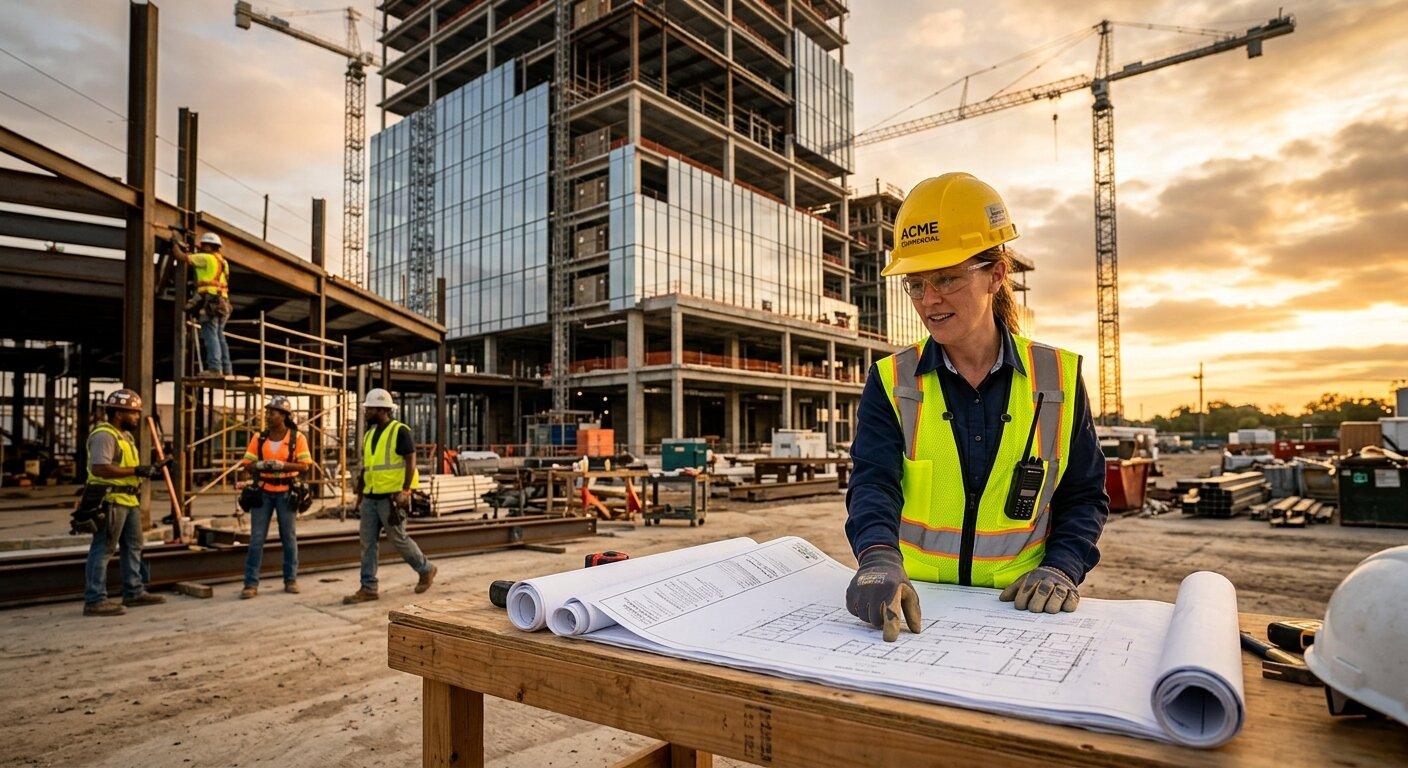
Commercial contracts can transform a contracting business. A single commercial client — a property management company, a school district, a retail chain — can deliver more revenue in a year than a hundred individual homeowners. But winning commercial work requires a fundamentally different approach than marketing to residential customers.
Most contractors who "try to get into commercial" fail not because they lack skills, but because they use a residential marketing playbook that doesn't speak the language of commercial buyers. This guide gives you the commercial contractor marketing system that works in 2026 — from your website to LinkedIn to referral networks.
The Commercial vs. Residential Marketing Gap
Before building your commercial pipeline, understand what makes commercial buyers different from homeowners:
| Factor | Residential Buyers | Commercial Buyers |
|---|---|---|
| Decision timeline | Same day to 2 weeks | 30–90 days (often longer) |
| Primary concern | Price, trust, speed | Reliability, insurance, track record |
| Decision makers | 1–2 people | 2–5 (facility mgr, owner, finance, procurement) |
| Average job value | $500–$25,000 | $5,000–$500,000+ |
| Referral network | Neighbors, family | Architects, GCs, property managers |
| Contract requirements | Simple quote | Formal bid, COI, bonding, W-9 |
| Review of | Google, Yelp | Portfolio, references, insurance docs |
Marketing to commercial buyers requires patience, professional positioning, and consistent relationship-building — not just a high Google star rating. The companies that win large commercial accounts are the ones who show up repeatedly, provide value before asking for work, and make it easy to verify their credentials.
Step 1: Position Your Website for Commercial Buyers
Most contractor websites are built for homeowners. A homepage showing a residential kitchen remodel or a suburban garage door says nothing to the property manager who manages a 200-unit apartment complex and needs a plumber they can call at 2am.
Your website needs a dedicated "Commercial Services" section that speaks directly to commercial buyers. This section should include:
- Services you offer at commercial scale — be specific. "Commercial HVAC installation and maintenance for properties up to 100,000 sq ft" is more credible than "HVAC services."
- Types of commercial clients you serve — office buildings, retail, restaurants, multi-family, industrial, healthcare, schools, government
- Your insurance and bonding details — general liability limits, workers' comp, bonding capacity. Put this front and center. It's the first thing commercial buyers check.
- Your license numbers and certifications — commercial buyers verify these. Make it easy.
- Portfolio of commercial work — 3–8 case studies with photos, scope, and client type (even anonymized is fine if clients prefer)
- References available — "References from our commercial clients available upon request" builds trust
Connect this page to your contractor landing page optimization practices to ensure your commercial services pages convert visitors into inquiries. If you need help building pages that convert commercial buyers, our contractor website design service is built specifically for this.
Step 2: Target Commercial Keywords in Your SEO Strategy
Commercial keyword searches are lower volume than residential, but each click is worth significantly more. A property manager searching "commercial electrical contractor Dallas" is evaluating a $50,000 annual maintenance agreement, not a $300 outlet repair.
High-value commercial contractor keywords by trade:
| Trade | High-Value Commercial Keywords |
|---|---|
| Electrical | commercial electrician [city], commercial electrical contractor, office electrical work |
| HVAC | commercial HVAC contractor [city], commercial AC maintenance, building HVAC service |
| Plumbing | commercial plumber [city], commercial plumbing contractor, property management plumber |
| Roofing | commercial roofing contractor [city], flat roof commercial, commercial roof replacement |
| General Contractor | commercial general contractor [city], tenant improvement contractor, commercial renovation |
Create a dedicated service page for each commercial keyword group. Each page should be 600–1,000 words targeting that specific trade + commercial + city combination.
Review our contractor SEO guide and apply those on-page SEO principles to your commercial service pages — the fundamentals are the same, just with B2B-focused content. Our contractor SEO service can handle the technical optimization while you focus on delivering jobs.
Step 3: Build Your LinkedIn Presence and Outreach System
LinkedIn is the most effective social platform for commercial contractor marketing. Property managers, facility directors, construction managers, architects, and developers are all active on LinkedIn — and many of them have unmet needs you can fill.
LinkedIn profile setup for commercial contractors:
- Professional headshot — the owner or business development lead
- Headline: "Commercial [Trade] Contractor Serving [Region] | [2–3 specific capabilities]"
- About section: 3–5 sentences on your commercial client types, team size, and what makes you reliable
- Featured section: 3 portfolio photos of commercial projects
- 500+ connections with relevant local professionals
LinkedIn outreach system (run weekly):
- Search for "facility manager [city]", "property manager [city]", "construction manager [city]"
- Filter for 2nd-degree connections
- Connect with a short, personalized note: "Hi [Name], I work with property managers and facility teams in [city] on [trade] work. Happy to be a resource if you ever need a reliable contractor. No pitch — just connecting."
- After they accept, check their profile for relevant details and send one follow-up message sharing something of value (a helpful tip about seasonal maintenance, a code update they should know about)
- Aim for 10–15 new connections per week, 3–5 follow-up conversations
This is a slow burn, but in 90 days you can build a network of 40–60 commercial decision-makers who know your name. When they have a need, you're the first call.
Step 4: Develop Referral Relationships With Architects and Property Managers
The single most powerful source of commercial contractor leads is referrals from trusted intermediaries — specifically architects, commercial property managers, and general contractors.
Architects specify subcontractors and specialty trades on new builds and renovations. An architect who recommends you to their clients sends you work for years. To get in front of architects:
- Attend local AIA (American Institute of Architects) chapter events
- Offer to give a lunch presentation on your trade specialty
- Send a simple introduction letter with your portfolio and insurance summary
- Follow up quarterly with useful information (code changes, new materials, project updates)
Property management firms have ongoing maintenance and repair needs across their entire portfolio. One relationship with a property management company can mean 50+ service calls per year. To reach property managers:
- Identify the 20–30 largest property management companies in your market (search "property management companies [city]" and check their websites)
- Mail a physical introduction package — envelope with your card, a one-page capability sheet, and a handwritten note. Physical mail cuts through the email noise.
- Follow up by phone 5–7 days after your mailer arrives
- Offer a "portfolio assessment" where you'll walk their properties and identify preventive maintenance needs for free
General contractors need reliable subcontractors. A GC who trusts you subcontracts your trade on every project they win. To get on GC bid lists:
- Research active GCs in your market on local building permit databases
- Contact their project managers or estimators directly
- Offer to provide bids on their next applicable project at no obligation
- Make yourself easy to work with: fast estimates, clean bids, no surprises
Step 5: Use Google Ads for Commercial Keywords
While residential Google Ads require broad reach and volume, commercial Google Ads work on precision. You're targeting lower-volume, high-value keywords — so CPCs are often lower than residential while job value is dramatically higher.
Commercial Google Ads best practices:
- Run search campaigns only (no display or broad match)
- Target specific commercial keywords with exact and phrase match
- Use lead form extensions for commercial inquiries — decision-makers often prefer to fill a form rather than call immediately
- Create ad copy that speaks to commercial buyers: "Fully Insured | COI Available | 24/7 Service for Property Managers"
- Send commercial ad traffic to your dedicated commercial landing page, not your homepage
- Set up conversion tracking for form submissions AND phone calls
Budget guidance: for commercial keywords, $30–$60/day per trade generates 2–6 qualified commercial leads per month in most markets. Those leads are worth 10–50x more than residential, so the math is compelling.
Learn more about budgeting in our Google Ads contractor budget guide.
Step 6: Create Content That Attracts Commercial Buyers
A property manager researching contractors will often search for content that helps them do their job. Creating helpful, educational content positions you as an expert and builds trust before you ever speak with them.
High-value content topics for commercial contractors:
- "HVAC preventive maintenance checklist for property managers"
- "What to look for when hiring a commercial electrical contractor"
- "How often does commercial plumbing need to be inspected?"
- "Commercial roofing lifespan by material: what property managers should know"
- "How to create an annual maintenance budget for commercial properties"
Publish 1–2 pieces per month targeting these topics. This content generates organic search traffic from commercial buyers doing research, establishes your expertise, and gives you something valuable to share on LinkedIn.
Step 7: Develop a Formal Proposal and Bid Process
Commercial buyers evaluate you as much on how you present your proposals as on your price. A messy hand-written quote signals that your work might be equally disorganized. A professional, clear, detailed proposal says "we run a tight operation."
Elements of a winning commercial proposal:
- Cover page with your logo, project name, client name, and date
- Scope of work — precise and complete. "Scope creep" disputes kill commercial relationships. Define exactly what is and isn't included.
- Pricing breakdown — itemized by phase or category for larger projects
- Timeline — project milestones and completion date
- Insurance summary — general liability limits, workers' comp, additional insured language
- Your team — key personnel, relevant experience, certifications
- References — 2–3 commercial clients with contact information
- Terms and payment schedule
Standardize your proposal template and review it against competitors' proposals when you have the chance. Commercial buyers see many bids — presentation quality signals operational quality.
Step 8: Measure and Optimize Your Commercial Pipeline
Commercial lead generation is a long game, and you need to track it properly. Set up a simple CRM — even a spreadsheet is better than nothing — to track:
- Every commercial contact in your network
- Last date of contact and method
- Status: prospect, bidding, won, lost
- Revenue potential
Review your commercial pipeline every week. Move relationships forward: schedule a call, send a useful piece of content, follow up on an open bid. Consistency in follow-up is the single biggest differentiator between contractors who win commercial accounts and those who don't.
In our experience with clients who successfully transitioned to commercial work, the average time from first contact to first contract is 4–6 months. The contractors who give up at month 2 never see the payoff. Track your inputs (contacts made, proposals sent, follow-ups completed), not just your outputs.
Pair this with our contractor lead generation strategies guide to build a complete, multi-channel approach that works for both residential and commercial.
Step 9: Deliver Results That Generate Referrals
The most powerful commercial marketing isn't marketing at all — it's reputation. When you deliver excellent work on a commercial project, on time and on budget, that property manager or facility director becomes your best salesperson.
Be explicit about asking for referrals after every successful commercial job:
- "Are there other buildings in your portfolio I could help with?"
- "Do you know any other property managers in the area who might be looking for a reliable [trade]?"
- "Would you be comfortable introducing me to your architect or the GC on your upcoming project?"
Most contractors never ask these questions. The ones who do consistently build dominant commercial positions in their markets within 2–3 years.
Your Next Step
Building a commercial contractor marketing system takes time, but the rewards — higher job values, longer relationships, and a more stable business — are worth the investment. Start with your website positioning and LinkedIn profile today. Add Google Ads and architect outreach in month two. Build from there.
If you want to see how your current web presence stacks up against top commercial contractors in your market, get your free SEO audit from RankWeld. We work with contractors across every trade, and we know exactly what it takes to win commercial searches in your city.
Recommended Service
Marketing Built for Your Trade
We only work with contractors. Every strategy, campaign, and website is built specifically for the trades. See what we can do for your industry.
See All ServicesRelated Articles

General Contractor Marketing: How to Get More Construction Leads in 2026
A complete marketing guide for general contractors covering local SEO, Google Ads, portfolio websites, commercial marketing, and CRM strategies that generate consistent construction leads.
Read more
Contractor Lead Generation: 12 Strategies Beyond Angi & HomeAdvisor
Tired of paying $50+ for shared leads on Angi and HomeAdvisor? These 12 contractor lead generation strategies build a pipeline of exclusive leads that you own and control.
Read more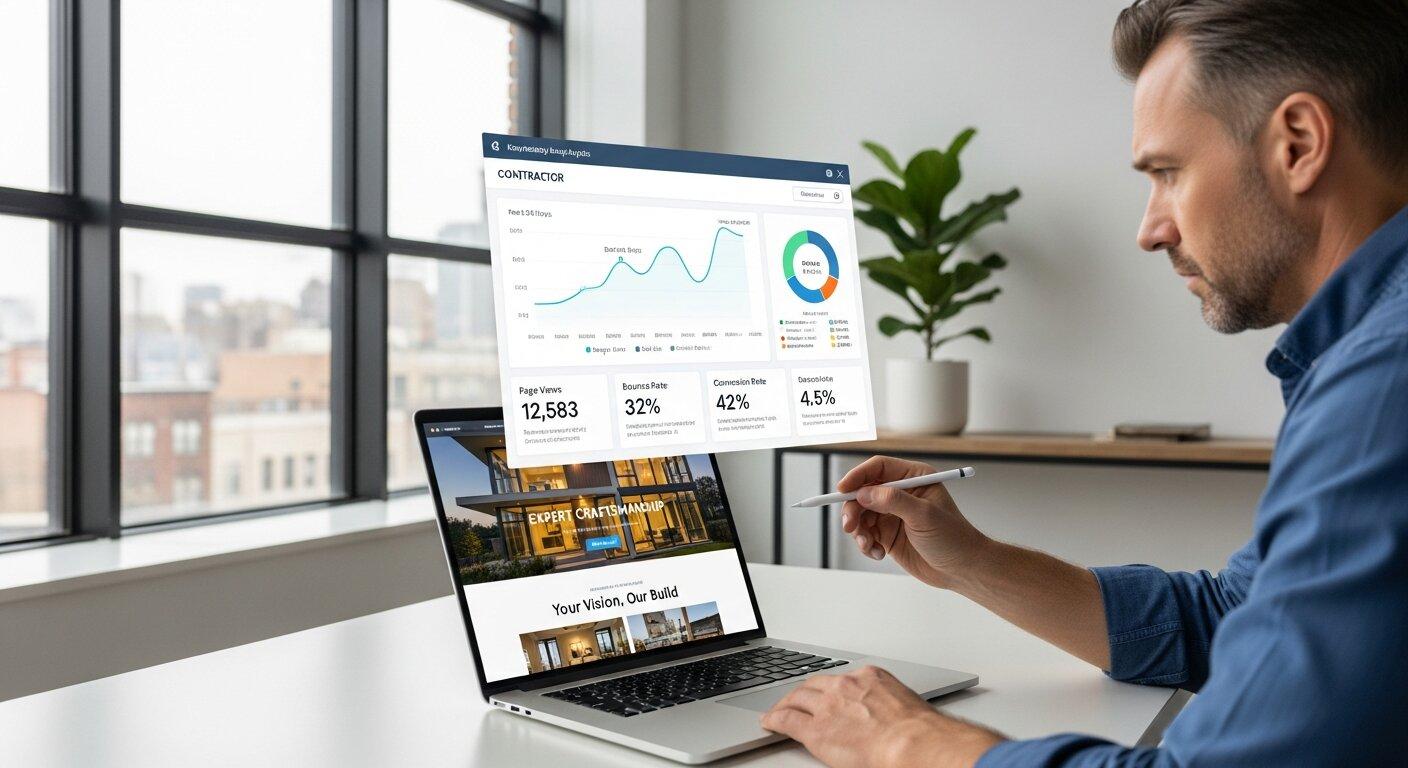
Contractor Landing Page Optimization: Turn Clicks Into Calls
Most contractor websites get traffic but don't convert it. This guide shows you exactly how to build landing pages that turn visitors into phone calls and booked jobs.
Read more
The Complete Contractor SEO Guide for 2026
Everything you need to know about ranking your contracting business on Google in 2026. From Google Business Profile to local SEO strategy.
Read moreReady to Put This Into Action?
Get a free SEO audit and see exactly where your contracting business stands.