
General Contractor Marketing: How to Get More Construction Leads in 2026

General contracting is one of the most competitive — and highest-ticket — service businesses in the country. A single residential addition project might be worth $150,000. A commercial tenant improvement could be $2M. The leads are valuable, and that means the competition to win them is fierce.
Yet most general contractors still market the same way they did 15 years ago: business cards, truck magnets, and waiting for referrals. The contractors who are growing — who are fully booked 3-6 months out with the projects they actually want — have built a systematic digital marketing presence that generates inbound leads while they focus on running jobs.
This general contractor marketing guide covers every strategy that actually moves the needle, with specific tactics for both residential and commercial GC businesses.
Why General Contractor Marketing Is Different
Marketing a general contracting business is more complex than marketing a single-trade contractor for several reasons:
Longer sales cycles. A homeowner researching a kitchen remodel or a developer evaluating a GC for a commercial project might research for weeks or months before signing. Your marketing needs to stay visible throughout that entire process.
Higher trust requirements. GC projects involve large sums of money, significant disruption to a home or business, and multi-month relationships. Customers need significant evidence that you are competent, reliable, and financially stable before they'll sign.
Multiple buyer types. Residential GCs target homeowners planning remodels, additions, or new construction. Commercial GCs target developers, property managers, architects, corporations, and municipalities — each requiring a different marketing approach.
Portfolio-driven decisions. Unlike HVAC or plumbing where technical competence is assumed, GC work is visual and project-specific. Customers want to see your portfolio of completed work that matches what they're planning.
Understanding these dynamics shapes every marketing decision you make.
Strategy 1: Build a Portfolio Website That Wins Bids
Your contractor website is the most important marketing asset you own. General contractors live and die by their portfolio, and in 2026 that portfolio lives on your website.
What a high-converting GC website must include:
- Project portfolio with before/after photos. Organize by project type: kitchen remodels, home additions, commercial tenant improvements, new construction. Use real project photos, not stock images. Include square footage, timeline, and a brief project description.
- Specialization signals. Clearly state what you do best — custom home building, kitchen and bath remodeling, commercial construction, historical restoration. Specialists win more bids than generalists.
- Licenses and insurance credentials. Display your contractor license number, general liability insurance certificate, workers' comp status, and any specialty certifications. This is often the difference between making the short list or not.
- Client testimonials by project type. A testimonial from a homeowner about a kitchen remodel is more convincing to another homeowner planning a kitchen remodel than a generic praise quote.
- Clear process explanation. Walk prospects through your process: free estimate → design/planning → contract → construction timeline → final walkthrough. This reduces anxiety around the complexity of a GC project.
- Fast, prominent contact options. Phone number and a quote request form in the header of every page. Use a scheduling tool like Calendly or Acuity for estimate consultations.
We've seen GC websites with strong portfolios and clear credentialing convert at 3-5x the rate of generic websites with stock photography.
Strategy 2: Google Business Profile for General Contractors
Your Google Business Profile positions you in Google's local map pack when customers search "general contractor near me" or "remodeling contractor [city]."
GBP optimization for GCs:
- Primary category: "General contractor." Add secondary categories matching your specialties: "Kitchen remodeler," "Home builder," "Bathroom remodeler," "Commercial contractor."
- Services: List every project type — kitchen remodels, bathroom remodels, room additions, new home construction, basement finishing, commercial tenant improvement, historic renovation, etc.
- Photos: Upload project photos monthly. Show different project types, different budget levels, and progress shots that demonstrate craftsmanship. Projects in recognizable local neighborhoods are especially powerful.
- Posts: Share completed project reveals, "before and after" content, seasonal tips ("Planning a home addition? Here's why fall is a great time to start"), and company news.
- Response management: Respond to every review within 24 hours. For negative reviews, address the issue professionally — GC projects have disputes and future clients will read how you handle them.
Strategy 3: SEO for General Contractors
SEO for GCs is highly competitive but extremely valuable because the leads it generates are organic — no per-click cost once you rank.
Service and Project Type Pages
Build dedicated landing pages for every service you offer:
| Page Type | Example |
|---|---|
| Kitchen Remodeling | "Kitchen Remodeling Contractor [City]" |
| Bathroom Remodeling | "Bathroom Renovation Contractor [City]" |
| Home Additions | "Home Addition Contractor [City]" |
| New Home Construction | "Custom Home Builder [City]" |
| Basement Finishing | "Basement Finishing Contractor [City]" |
| Commercial Construction | "Commercial General Contractor [City]" |
| Tenant Improvements | "Office Buildout Contractor [City]" |
| Deck & Patio | "Deck Builder [City]" |
Each page should be 800-1,500 words with project photos from that specific service type, pricing ranges or cost guides, a project timeline overview, and a clear estimate request CTA.
Local and Regional Pages
If you serve a metro area or multiple counties, create location pages. "General contractor in [suburb]" and "remodeling contractor [city]" searches happen constantly. Include references to local neighborhoods, project examples nearby, and local permitting knowledge (e.g., "We handle all permit applications with [city] Building Department").
Content Marketing for GC Leads
Homeowners and commercial clients research heavily before contacting a GC. Blog content that attracts them:
- "How much does a [project type] cost in [city]?" — highest-intent traffic
- "What to look for in a general contractor"
- "How long does a home addition take?"
- "Kitchen remodel timeline: what to expect"
- "Tenant improvement process: a guide for commercial landlords"
This content positions you as the expert and generates leads from customers who find you months before they're ready to commit.
Strategy 4: Google Ads for General Contractor Leads
Google Ads puts you in front of buyers at the exact moment they're searching. GC keywords are competitive but the lead value justifies the cost.
Highest-converting GC keywords:
- "General contractor [city]" — broad term, moderate competition
- "Kitchen remodeling contractor [city]" — project-specific, high intent
- "Home addition contractor [city]" — high-ticket project keyword
- "Bathroom remodeling [city]" — common project type
- "Custom home builder [city]" — new construction leads
- "Commercial general contractor [city]" — high-value B2B leads
- "Contractor for home renovation [city]" — renovation buyer
Budget and expectations:
GC Google Ads are more expensive than most trades due to keyword competition:
- Cost per click: $15-$50 in most markets
- Cost per lead: $75-$300 depending on project type and market
- Expected close rate: 10-25% (lower than small trades due to longer sales cycles)
- Cost per project acquired: $300-$3,000
Even at $1,500 per acquired project, a $100K kitchen remodel or $500K commercial project delivers 30x-300x ROI.
GC ad landing pages: Never send GC ad traffic to your homepage. Create dedicated landing pages for each campaign that match the ad (kitchen remodel ad → kitchen remodel landing page with kitchen portfolio, kitchen pricing guide, and estimate CTA).
Strategy 5: Commercial GC Marketing — The B2B Playbook
Commercial general contracting requires a different marketing approach than residential. Your buyers are developers, architects, property managers, facilities directors, and business owners — not homeowners browsing Google.
LinkedIn for commercial GC marketing:
LinkedIn is where commercial GC clients live. Build a professional company page and personal profile as the company owner/principal with:
- Completed commercial project photos and case studies
- Regular posts about commercial construction topics ("Tenant improvement trends in 2026," "What to know about commercial permits in [state]")
- Connection requests and genuine outreach to architects, commercial real estate brokers, property managers, and developers in your market
Relationships with architects and engineers:
Architects and structural engineers who design commercial projects need trusted GC partners to recommend for construction. Building genuine relationships — through quality work, reliable communication, and occasional lunch-and-learns — generates some of the highest-value referral leads in the business.
Prequalification and RFQ responses:
For public and large commercial projects, ensure you're registered on relevant bidding platforms (e.g., ConstructConnect, Dodge Data, BidClerk) and that your company profile is complete and compelling. Respond to RFQs professionally with a company overview that emphasizes your commercial experience.
Strategy 6: Reviews and Reputation Management
General contractor reviews carry enormous weight. A homeowner reviewing GC candidates is looking at your track record for projects worth tens of thousands of dollars.
Review generation for GCs:
- Request a Google review at project completion and walkthrough — this is the moment of maximum satisfaction.
- For longer projects, request a mid-project review after a key milestone (rough-in complete, framing done, etc.) — you don't have to wait until the end.
- Use Houzz, Angi Pro, and Yelp in addition to Google. Some GC prospects specifically use Houzz to find remodeling contractors.
- Respond to every review publicly.
See our guide on contractor review management for a complete system.
Strategy 7: CRM and Lead Management for GCs
General contractors lose more business to slow follow-up than to competition. A prospect who submits a quote request and doesn't hear back within 2 hours often calls another GC.
CRM for GCs:
A contractor CRM tracks every lead from first contact through closed deal. For GCs, this is especially important because:
- Projects require multiple consultations before signing
- Leads go cold if not nurtured over weeks or months
- Referral source tracking shows you which marketing channels ROI best
Minimum CRM requirements for a GC:
- Lead capture from website forms, calls, and emails
- Automated initial response (within 5 minutes of form submission)
- Follow-up task scheduling for each lead stage
- Proposal sent/won/lost tracking
- Revenue attribution by lead source
Our best CRM for contractors guide reviews the top options for GC businesses specifically.
Strategy 8: Referral Marketing for General Contractors
Referrals from past clients and trade partners are the highest-close-rate leads a GC can get. Systematizing your referral program turns occasional referrals into a predictable lead stream.
Referral program structure for GCs:
- Past client referrals: Thank-you card + $250-$500 gift card for every signed project referral. Send holiday cards and occasional project update emails to past clients to stay top of mind.
- Trade partner referrals: Architects, interior designers, real estate agents, and sub-contractors who refer GC work deserve reciprocal referrals and relationship investment.
- Supplier referrals: Local lumberyards, tile showrooms, and fixture suppliers often know customers who are about to start projects. Building relationships with these businesses generates referrals.
General Contractor Marketing Budget Guide
| Company Stage | Annual Revenue | Suggested Marketing Budget | Key Channels |
|---|---|---|---|
| Early stage | $500K-$1M | $25,000-$70,000 | GBP, Google Ads, Website |
| Growth | $1M-$3M | $50,000-$150,000 | SEO, Ads, CRM, Referrals |
| Established | $3M-$10M | $120,000-$400,000 | Full digital, BD staff, LinkedIn |
| Commercial | $10M+ | 3-5% of revenue | Dedicated BD team, full digital |
Building a Consistent GC Lead Pipeline
The general contractors who grow sustainably share a common trait: they treat marketing as infrastructure, not as something you do when things are slow.
Building a full GC marketing system involves:
- Foundation: Professional website with project portfolio + Google Business Profile
- Lead generation: Google Ads for immediate leads + SEO for long-term organic traffic
- Trust building: 25+ Google reviews + Houzz presence + LinkedIn for commercial
- Lead management: CRM with automated follow-up so no lead falls through the cracks
- Retention: Past client relationship system that generates repeat and referral business
When all five components are working, a GC business stops depending on luck and starts growing predictably.
For more on the digital foundation, read our guide on contractor website features that generate leads and our local SEO map pack guide for contractors — both essential for any GC trying to dominate Google search in their market.
Ready to build your GC marketing system? Start with a free SEO audit to see exactly where your online presence stands today. Or reach out to our team to build a custom contractor lead generation strategy for your specific market and project types.
Recommended Service
Marketing Built for Your Trade
We only work with contractors. Every strategy, campaign, and website is built specifically for the trades. See what we can do for your industry.
See All ServicesRelated Articles

Contractor Lead Generation: 12 Strategies Beyond Angi & HomeAdvisor
Tired of paying $50+ for shared leads on Angi and HomeAdvisor? These 12 contractor lead generation strategies build a pipeline of exclusive leads that you own and control.
Read more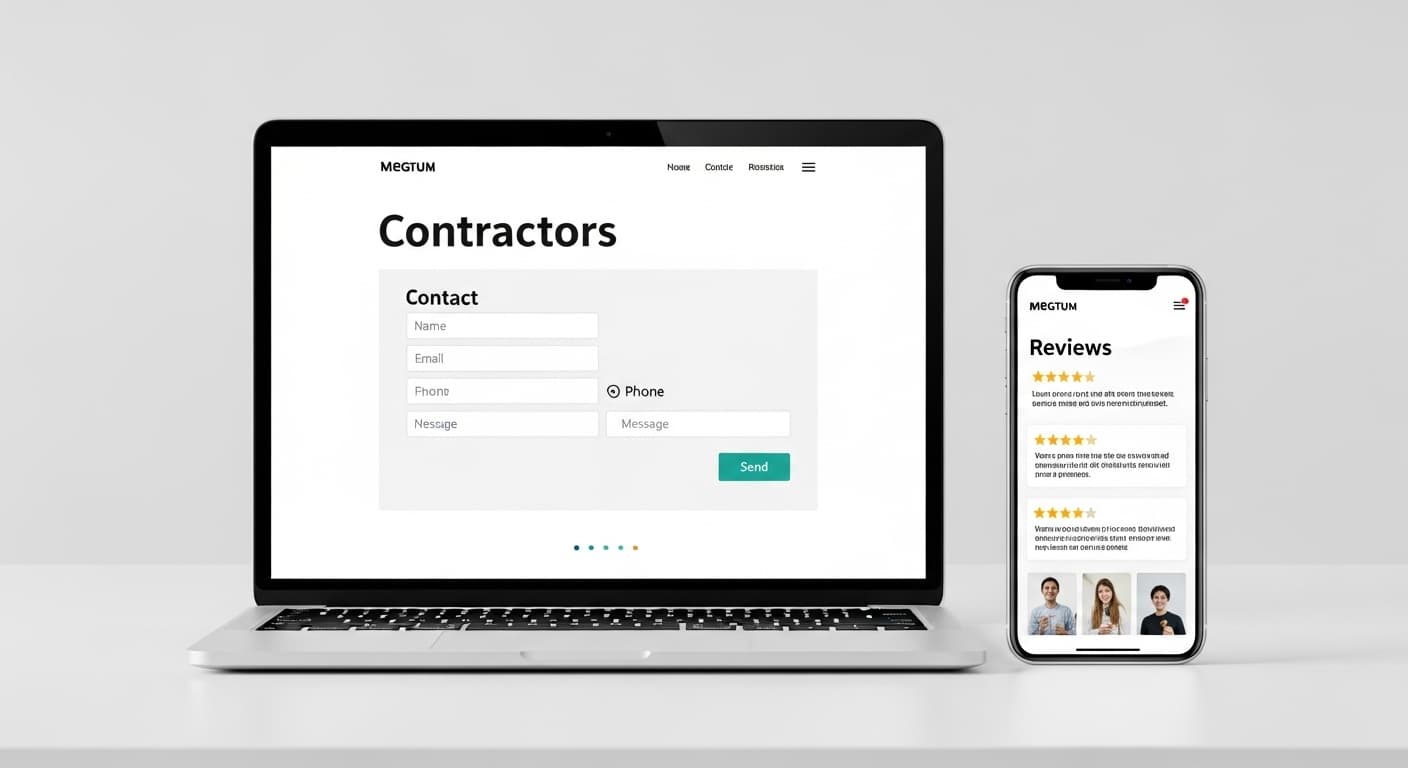
Contractor Website Design: 10 Must-Have Features That Convert
Your contractor website should be a lead generation machine, not a digital brochure. These 10 must-have features separate websites that generate calls from websites that just look pretty.
Read more
The Complete Contractor SEO Guide for 2026
Everything you need to know about ranking your contracting business on Google in 2026. From Google Business Profile to local SEO strategy.
Read moreReady to Put This Into Action?
Get a free SEO audit and see exactly where your contracting business stands.