Excavation Contractor Marketing: How to Get More Digging Jobs
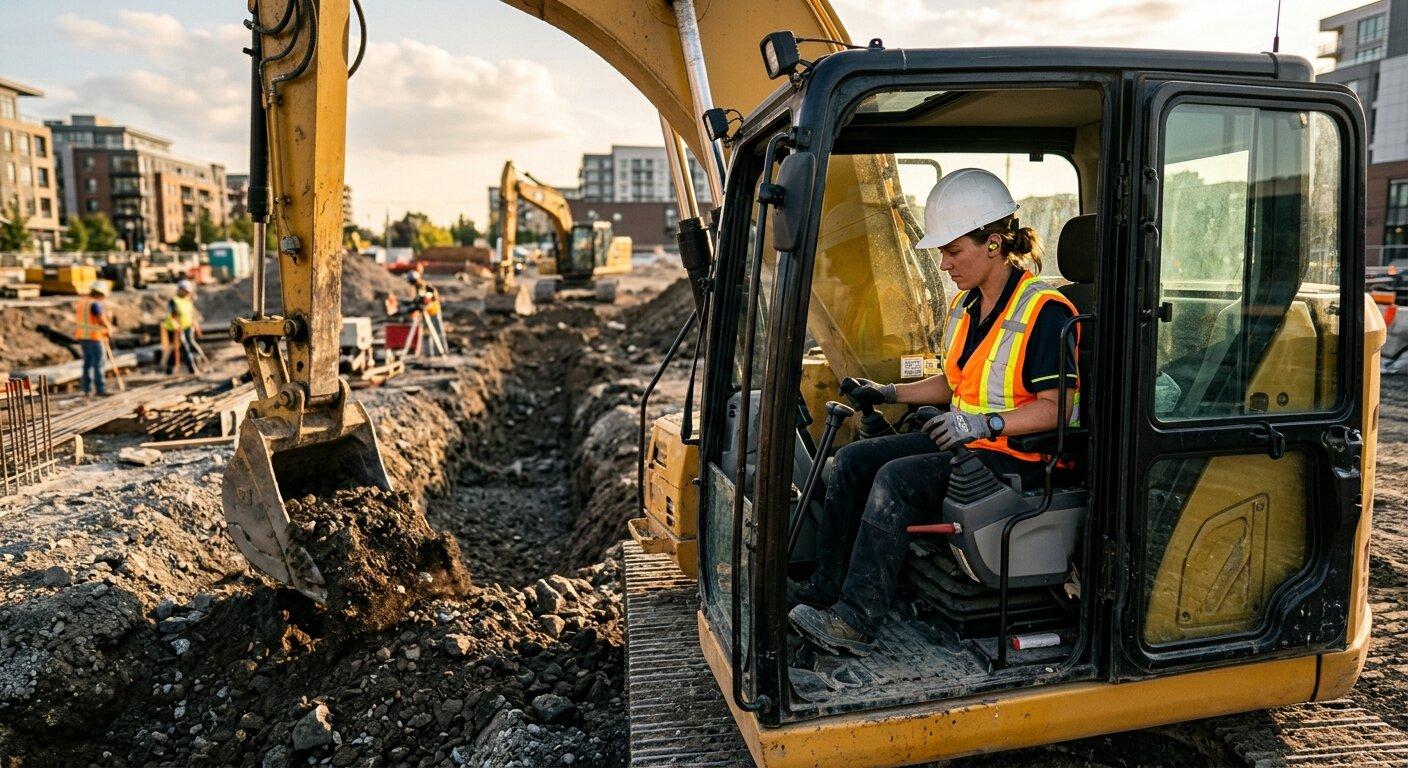
Excavation contractors sit at the foundation of construction — literally. Without you, no house gets built, no septic system gets installed, no commercial pad gets graded. Yet when it comes to marketing, most excavation companies rely entirely on word-of-mouth and hope the phone rings.
That worked for a long time. It doesn't anymore. Homeowners and general contractors both start their search online, and if your excavation company isn't showing up, your competitor is getting the call.
This guide covers every effective excavation contractor marketing strategy for 2026 — from local SEO and Google Ads to referral networks and job-site content that wins commercial work.
Why Excavation Marketing Is Different From Other Trades
Excavation is not a typical consumer service. Your customers include:
- Homeowners needing site prep, land clearing, grading, pond excavation, or septic system excavation
- General contractors and home builders who need a reliable excavation sub on every project
- Commercial developers doing large-scale site work and utility excavation
- Government and municipal projects requiring bonded, experienced crews
Each of these customer types searches differently, buys differently, and needs a different marketing approach. A homeowner needing a pond dug is a Google Ads click. A general contractor looking for a trusted excavation sub is a referral relationship. Your marketing strategy needs to address both.
The other unique challenge: most homeowners have never hired an excavation contractor before and have no idea what to expect — costs, timeline, equipment, permitting. Your marketing and website content can fill that knowledge gap and position your company as the obvious expert.
1. Google Business Profile: Your Most Important Local Asset
For excavation companies targeting homeowners and local searches, your Google Business Profile is the highest-impact marketing asset you have.
When someone searches "excavation contractor near me" or "land clearing company [city]," Google shows a Map Pack of three local companies. Getting into that top 3 means more phone calls without paying for every click.
How to optimize your GBP for excavation:
- Primary category: "Excavation contractor" — set this first
- Secondary categories: Add "Land clearing service," "Excavating contractor," "Grading contractor," "Site work contractor" based on your services
- Service area: Set your actual service radius, not just your city — most excavation companies serve a 50–100 mile radius
- Services list: Add specific services — site preparation, land clearing, grading and leveling, pond excavation, septic excavation, foundation excavation, utility trenching, demolition excavation
- Photos: Upload photos of your equipment, crew, and completed projects consistently — job sites, before/afters, equipment close-ups
- Weekly posts: Share project updates, equipment additions, seasonal availability notices
- Reviews: Actively request reviews from every satisfied customer and subcontractor relationship
We've seen excavation companies jump from zero to the top of the Map Pack within 60 days simply by completing their GBP fully and asking past customers for reviews.
2. Local SEO for Excavation Companies
Google Business Profile gets you into the Map Pack, but local SEO gets your website ranking in the organic results below it. Both are important — many searchers skip the Map Pack and click the organic results, especially for larger commercial projects.
Service pages that rank:
Build dedicated pages for each service you offer, optimized for local keywords:
/excavation-contractor-[city]— your main local landing page/land-clearing-[city]/site-grading-[city]/foundation-excavation-[city]/septic-excavation-[city]/pond-excavation-[city]/utility-trenching-[city]
Each page should be 600–1,000 words with real content — not keyword stuffing. Describe the service, what equipment you use, what the process looks like, typical timeline and costs, and why customers choose you. Include your city and surrounding service areas naturally throughout.
Blog content for long-tail keywords:
Homeowners searching for excavation help ask a lot of questions before they call. Articles targeting these questions build organic traffic and trust:
- "How much does excavation cost per hour/cubic yard?"
- "What permits do you need for excavation?"
- "How long does land clearing take?"
- "How deep does foundation excavation go?"
Backlink building for excavation companies:
Links from local sources tell Google your company is legitimate and established:
- Get listed in contractor directories (AGC, local home builder associations)
- Partner with septic companies, landscapers, and GCs who link to your site
- Sponsor local events or youth sports teams
- Get featured in local news stories about large projects
3. Google Ads: Fast Leads for Excavation Companies
Google Ads can generate excavation leads within days of launching, while your SEO builds over months. The tradeoff: you pay for every click, and excavation keywords in competitive markets run $10–$30 per click.
The keywords that convert for excavation:
| Keyword Type | Examples | Intent |
|---|---|---|
| Service + city | "excavation contractor Phoenix" | High — ready to hire |
| Service type | "land clearing near me" | High — shopping now |
| Equipment-based | "excavator rental near me" | Medium — may DIY |
| Cost questions | "excavation cost per hour" | Medium — research phase |
| Project type | "pond excavation contractor" | High — specific project |
Focus your budget on high-intent keywords where the searcher is ready to hire. Avoid broad match terms like just "excavation" — these attract equipment renters, students, and irrelevant searches that burn budget.
Google Local Services Ads (LSAs):
LSAs appear above regular Google Ads for many service searches and you only pay when someone calls or messages you — not per click. If your excavation company serves homeowners, Google Local Services Ads are worth getting verified for. They show your reviews prominently and carry a "Google Guaranteed" badge that builds trust instantly.
Campaign structure recommendations:
- Separate campaigns for residential vs. commercial work (different bids and messaging)
- Ad extensions: call extension, location extension, site links to key services
- Call-only ads for mobile targeting in your service area
- Negative keywords: "excavation equipment rental," "excavation games," "excavation toys," "DIY excavation"
4. Your Excavation Company Website
Your website is where you close leads. Getting traffic is the first step — but if your site doesn't convert visitors into calls, every marketing dollar is wasted.
What an excavation website needs to work:
- Phone number in the header — large, clickable on mobile
- Clear service list on the homepage with photos of your work
- Equipment list — contractors and commercial clients want to know what you're running (excavators, skid steers, dump trucks, graders)
- Project gallery — before-and-after photos of completed excavation projects build credibility fast
- Service area map or list — clearly state where you work
- Certifications and insurance — bonded, insured, licensed in your state
- Request a quote form — simple, mobile-optimized
Speed matters. A slow website loses excavation leads to faster competitors. Run your site through Google PageSpeed Insights and fix the issues it flags. Most contractor sites fail on mobile speed, which is where over 60% of your searches come from.
5. Reputation and Reviews: The Trust Factor
Excavation projects involve large equipment, significant ground disturbance, and job values that often exceed $10,000. Before a homeowner calls you, they check your reviews.
The excavation review strategy:
- Ask every customer within 24–48 hours of project completion — this is when satisfaction is highest
- Send a direct Google review link via text message — friction kills follow-through
- Respond to every review, positive or negative, within 48 hours
- Aim for 30+ Google reviews before investing heavily in Ads — low review counts hurt conversion rates
Responding to negative reviews:
No excavation company operates perfectly. When a negative review appears, respond professionally and offer to make it right. Future customers read how you handle complaints more than they read the complaint itself.
Learn more about building your online reputation at contractor online reputation management.
6. Referral Networks: The Commercial Pipeline
For excavation companies doing commercial work — site prep for subdivisions, utility excavation, large grading projects — referral networks are often worth more than any digital marketing channel.
Build relationships with:
- General contractors and home builders — they need excavation on every project
- Septic system installers — they can't install without excavation; build a mutual referral partnership
- Landscaping and hardscaping companies — grading, drainage, and drainage excavation are natural cross-referrals
- Civil engineers and site planners — they recommend subs to developers
- Real estate developers — large projects, long-term relationships
Attend local Associated General Contractors (AGC) chapter meetings, National Association of Home Builders (NAHB) events, and local contractor mixers. The relationship that takes 30 minutes to build at an event can feed your company for years.
Referral program for residential customers:
For homeowners, offer a referral incentive. A $200–$500 referral bonus for a qualified lead that closes is excellent ROI when excavation job values run $5,000–$50,000. Document and track referrals in your contractor CRM so nothing falls through the cracks.
7. Social Media and Video: Show the Work
Excavation makes great video content. Massive machines, dramatic earth-moving, before-and-after transformations — this is what social media audiences watch.
Best-performing excavation content formats:
- Time-lapse of a full site prep compressed into 60 seconds — huge engagement on Instagram and TikTok
- Equipment operator POV footage — running an excavator arm from the cab view
- Before-and-after project photos — the more dramatic the transformation, the better
- "Day in the life" crew content — builds trust and shows the professionalism of your team
- Educational content — "What happens during septic excavation?" walks homeowners through the process
Facebook and Instagram Ads work well for reaching homeowners planning projects. Target by zip code, homeownership, and age range. For commercial work, LinkedIn outreach to general contractors and developers is worth trying in metro markets.
8. The Excavation Marketing Channel Comparison
Which channels should you prioritize? Here's how the main options stack up:
| Channel | Time to Leads | Cost Per Lead | Best For |
|---|---|---|---|
| Google Business Profile | 2–8 weeks | $0 (free) | Local residential and GC searches |
| Local SEO | 3–12 months | $50–$150 (long-term) | Organic residential and commercial |
| Google Ads | 1–7 days | $80–$300 | Fast residential lead volume |
| Google LSAs | 1–7 days | $30–$150 | Homeowner leads, pay-per-call |
| Social Media Content | 1–6 months | Low (time only) | Brand awareness, commercial clients |
| Referral Network | Variable | $200–$500 bonus | Commercial, high-value projects |
| Email Newsletter | 2–4 weeks | Near zero | Past customers, builder relationships |
For most excavation companies, the best starting strategy is: optimize your GBP fully, run a targeted Google Ads campaign to generate leads now, and invest in SEO for long-term organic growth. Add referral network building if you want commercial work.
9. Seasonal Marketing for Excavation Companies
Excavation has clear seasonal patterns, and your marketing should match them:
- Spring (March–May): Peak demand for site prep, land clearing, pond work, and new construction starts. Increase ad spend 30–50% starting in February.
- Summer (June–August): High volume; focus on capacity messaging ("booking [month] projects now")
- Fall (September–November): Utility work, drainage, final grading before frost. Good time for foundation work in warmer climates.
- Winter (December–February): In freeze-prone markets, focus on commercial work, planning content, and relationship-building. In warmer markets, continue normal operations.
Adjust your Google Ads budget seasonally. Running full spend in January in Minnesota wastes money. Redirect that budget to December planning content or relationship outreach instead.
10. Building a Consistent Lead Pipeline
The excavation companies that grow consistently don't depend on one source. They build a system where multiple channels feed leads simultaneously:
- Owned channels (website, GBP, email list) — zero variable cost per lead
- Earned channels (SEO, referrals, reviews) — low cost per lead, compounding returns
- Paid channels (Google Ads, LSAs) — consistent, controllable, scalable
As your owned and earned channels grow, you can reduce paid spend and maintain the same lead volume at lower cost. This is the goal of a contractor marketing strategy built for long-term growth.
If you're ready to build a marketing system that fills your excavation calendar year-round, start with a free SEO audit. We'll analyze your current visibility, identify the gaps your competitors are exploiting, and show you exactly what it would take to dominate your local market.
Recommended Service
Marketing Built for Your Trade
We only work with contractors. Every strategy, campaign, and website is built specifically for the trades. See what we can do for your industry.
See All ServicesRelated Articles

Contractor Lead Generation: 12 Strategies Beyond Angi & HomeAdvisor
Tired of paying $50+ for shared leads on Angi and HomeAdvisor? These 12 contractor lead generation strategies build a pipeline of exclusive leads that you own and control.
Read more
Local SEO for Contractors: How to Dominate the Google Map Pack
The Google Map Pack is where most contractor leads come from. This guide breaks down the exact local SEO strategies you need to rank in the top 3 — from citations and reviews to on-page optimization and content.
Read more
Google Ads vs SEO for Contractors: Which Is Better for Your Budget?
Should you spend your marketing budget on Google Ads or SEO? The answer depends on your timeline, budget, and business goals. Here's a detailed breakdown with real numbers to help you decide.
Read more
The Complete Contractor SEO Guide for 2026
Everything you need to know about ranking your contracting business on Google in 2026. From Google Business Profile to local SEO strategy.
Read more
Contractor Website Design: 10 Must-Have Features That Convert
Your contractor website should be a lead generation machine, not a digital brochure. These 10 must-have features separate websites that generate calls from websites that just look pretty.
Read moreReady to Put This Into Action?
Get a free SEO audit and see exactly where your contracting business stands.