Fire and Smoke Damage Restoration Contractor Marketing: Fill Your Calendar with High-Ticket Jobs
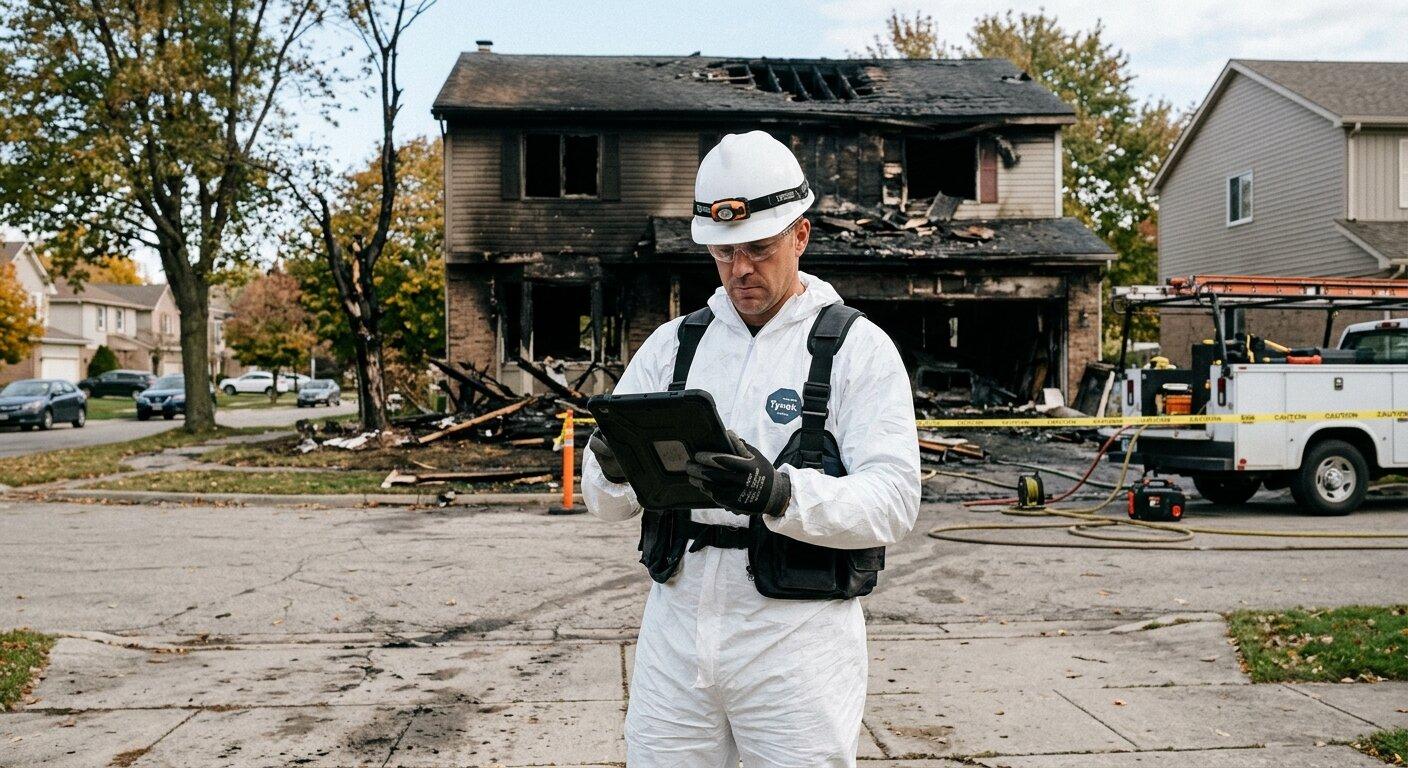
Fire and smoke damage restoration is one of the most demanding — and most lucrative — niches in the home services industry. A single insurance job can run $15,000 to $80,000. Fire season extends year-round (but spikes in winter when heating systems fail), and unlike almost every other trade, demand is non-negotiable: customers don't delay fire restoration the way they might delay a bathroom remodel.
The problem is that most fire restoration companies grow their entire business on a few insurance adjuster relationships and word of mouth. When those relationships dry up, revenue collapses. This guide shows you how to build a fire damage restoration contractor marketing system that generates steady, predictable work from both insurance referrals and direct homeowner channels.
Why Fire Damage Restoration Marketing Is Uniquely Complex
Before diving into tactics, it's worth understanding what makes marketing this trade different.
You're selling to two completely separate buyers. The homeowner who calls you in a panic at 2 a.m. needs immediate reassurance and a clear path forward. The insurance adjuster or TPA dispatcher deciding whether to send your company needs credibility signals, speed, and documentation quality. Each group requires a completely different message and channel strategy.
Job values are massive, so small conversion improvements have outsized impact. If your website converts 2% of visitors into calls and you improve that to 3%, you don't just get 50% more leads — on average jobs of $20,000, that's a potential six-figure annual revenue gain from a single change.
Your competition is franchises. SERVPRO, ServiceMaster, Paul Davis, and Belfor dominate organic search and have insurance TPA relationships baked in. To compete, independent restorers need to outrank them locally and build an insurance network reputation that offsets the brand recognition gap.
Speed matters more than price. A homeowner after a fire doesn't shop around for three bids. They call the first credible company they find. Your marketing job is to be first in their search results and first to respond.
Step 1: Dominate Google Search with Emergency SEO
The most important channel for direct consumer leads is Google search. When a homeowner — or a property manager, real estate agent, or insurance adjuster — searches for fire damage help, you need to be in the Map Pack and in the top organic results.
Target the Right Keywords
For fire damage restoration contractor marketing, focus on these keyword clusters:
Emergency/immediate intent:
- "fire damage restoration [city]"
- "fire damage repair near me"
- "smoke damage cleanup [city]"
- "board up services after fire [city]"
- "24 hour fire damage restoration"
Insurance/research intent:
- "fire damage restoration cost"
- "how to file fire damage insurance claim"
- "fire damage restoration process"
- "fire damage restoration vs reconstruction"
Long-tail trade-specific:
- "smoke odor removal [city]"
- "fire damaged home reconstruction [city]"
- "contents restoration after fire [city]"
Create dedicated service pages for each major keyword cluster rather than trying to rank one page for everything. A standalone page for "smoke odor removal" can rank for queries your main services page never will.
Optimize Your Google Business Profile
Your Google Business Profile is likely the highest-converting marketing asset you have. Here's what fire restoration companies specifically should do:
- Choose the right primary category: "Fire Damage Restoration Service" is the most specific — use it over the generic "Restoration Service"
- Add service attributes: 24/7 availability, emergency services, insurance claim assistance
- Upload job photos consistently: Before/after photos of restoration work are extremely compelling in Maps results
- Answer questions proactively: Add Q&A entries for "Do you work with insurance?" and "How fast can you respond to a fire?" before customers ask
- Use posts for seasonal content: Winter heating season, summer grilling season — these are free visibility opportunities
The local Map Pack drives 40–60% of clicks for location-based searches. Getting into those three spots is your single highest-ROI SEO activity.
Step 2: Build Your Insurance Referral Network
The highest-margin work in fire restoration comes from insurance referrals. A direct dispatch from an adjuster or TPA eliminates your marketing cost entirely for that job. Here's how to systematically build this network.
Target the Right Referral Partners
| Partner Type | Volume Potential | Relationship Difficulty | Priority |
|---|---|---|---|
| Independent insurance adjusters | Medium-High | Medium | High |
| Public adjusters | High | Low-Medium | Very High |
| Insurance carriers (TPA) | Very High | High | High |
| Property managers | Medium | Low | High |
| Real estate agents | Low-Medium | Low | Medium |
| Plumbers/HVAC companies | Low | Low | Medium |
Public adjusters are your fastest path to consistent referrals. Unlike independent adjusters who work for the carrier, public adjusters work for the homeowner — so they want the best, fastest restoration company, not the cheapest. A single PA relationship can send 5–15 jobs per year.
How to build these relationships:
- Identify every public adjuster firm in your market (search "[city] public adjuster" and cross-reference with your state's insurance department license database)
- Introduce yourself with a one-page credentials sheet — your certifications, response time guarantees, documentation process, and references from past insurance jobs
- Take them to lunch. This is a relationship business.
- Follow up quarterly with something of value: a newsletter, a claims-related article, or a market update on restoration costs in your area
Get on Carrier Preferred Vendor Lists
The major insurance carriers — Allstate, Farmers, Liberty Mutual, State Farm, USAA — all have approved vendor programs. Requirements typically include:
- IICRC certifications (at minimum FSRT and WRT)
- General liability insurance ($1M+ per occurrence)
- Workers' comp coverage
- Xactimate estimating software proficiency
- Background-checked staff
- Strong Google review rating (usually 4.5+)
Contact the claims department for each major carrier in your state and ask directly how to apply for their approved vendor program. Some carriers use TPAs like Alacrity, Contractor Connection, or XactNet — getting listed with these administrators can open doors to multiple carriers simultaneously.
Step 3: Run Google Ads for Immediate Lead Flow
Organic SEO is a long-term play. If you need leads in the next 30–90 days, Google Ads is your fastest lever. Fire restoration is one of the strongest paid search verticals because:
- Keyword intent is extremely high (people searching are in immediate need)
- Job values justify high CPCs
- Competition is real but winnable against franchise brands that run national campaigns with generic messaging
Campaign Structure That Works
Run three separate campaign types:
Emergency response campaign: Target keywords like "fire damage near me," "fire damage restoration [city]," "board up services." Use call-only ads — most emergency callers won't visit your website, they want to talk to someone now. Set bid adjustments to maximize during evenings and weekends when fires are most likely to occur.
Insurance research campaign: Target keywords like "fire damage restoration cost," "fire damage repair process," "smoke damage restoration." Use standard ads that go to educational landing pages. These prospects are earlier in their decision process, but they convert to high-value jobs.
Remarketing campaign: Anyone who visited your website but didn't call gets retargeted with display and YouTube ads. For a category with $20,000+ average job values, following up with $5–$15/day in retargeting is extremely cost-effective.
The key to making Google Ads work in this space is response speed. A homeowner searching "fire damage restoration" at 10 PM needs to hear from you within 15 minutes. If your ads run 24/7 but your phones stop at 6 PM, you're wasting money.
Step 4: Build a Website That Converts in a Crisis
Your website needs to work under unusual conditions: a stressed homeowner with a smoky house, often searching from their phone, needs to trust you instantly and contact you immediately.
Above-the-fold essentials:
- Phone number clickable from mobile (this is non-negotiable)
- "24/7 Emergency Response" stated prominently
- One key credential displayed (IICRC certified, licensed & insured)
- A single primary CTA: "Call Now for Emergency Service"
Trust signals that convert:
- IICRC certification badges (displayed prominently, not buried in the footer)
- Number of insurance claims handled
- Average response time
- "Works with all insurance companies" statement
- Photos of real jobs with before/after documentation
Content pages that build organic traffic:
- Complete process page: what happens after fire damage, step by step
- Cost guide: realistic ranges for different damage scenarios
- Insurance guide: how to file a fire damage claim
- FAQ page targeting "people also ask" queries
Your contractor website should load in under 2.5 seconds on mobile. Fire damage searchers are stressed and impatient — slow sites cost real jobs.
Step 5: Manage Your Online Reputation Like a High-Stakes Business
In a category where average job values are $15,000–$50,000, your online reputation is your most important sales asset. Insurance adjusters research you before recommending you to policyholders. Homeowners read reviews before making the most stressful purchase of their year.
Review generation strategy:
- Ask for reviews at the right moment — not during the job (too chaotic), but 2–3 days after final walkthrough when the customer can see the restored space
- Send a personalized text with a direct link to your Google review page
- Have a dedicated staff member (project coordinator or customer success person) own the follow-up process
- For insurance jobs, also ask the adjuster or public adjuster for a recommendation on your Google Business Profile
What your reviews should say: Prompt customers with a few directions: "It would really help us if you mentioned the speed of our response, how we handled the insurance process, and what the final result looked like." Reviews that mention "insurance claim," "24-hour response," and "completely restored" are conversion gold for future callers.
Target a minimum of 60 Google reviews with a 4.7+ average within your first year. For comparison, most independent restoration companies in mid-sized markets have fewer than 30 reviews — a focused review strategy can catapult you above most local competitors.
Step 6: Use Content Marketing to Build Insurance Industry Trust
One of the most underused strategies in contractor marketing is content that speaks directly to insurance professionals — not just homeowners. Creating content that answers the questions adjusters, PAs, and property managers ask builds your reputation as an expert and shows up in their research.
Content ideas that target industry professionals:
- "What Insurance Adjusters Look for in a Restoration Contractor"
- "How to Document Fire Damage for a Successful Insurance Claim"
- "IICRC Standards for Fire Damage Restoration: What They Mean for Your Claim"
- "Fire Damage Reconstruction vs. Restoration: When to Recommend Each"
Publish this content on your blog and share it via LinkedIn (which insurance professionals use) and email newsletters to your referral partner list. This positions you as the knowledgeable local expert rather than just another contractor on a preferred vendor list.
Step 7: Run Email and SMS Nurture Campaigns for Referral Partners
Your referral partner relationships are like plants — they need regular watering to stay alive. Set up a simple email and SMS campaign to stay top of mind with every PA, adjuster, and property manager in your network.
Email newsletter cadence (monthly):
- Restoration industry news or regulatory update
- One tip relevant to their work (e.g., "New IICRC standard for smoke odor documentation")
- A brief case study from a recent job (anonymized)
- A reminder of your 24/7 availability and certifications
SMS tips:
- Use SMS for time-sensitive outreach only (storm events, fire weather alerts in your area)
- Keep messages brief and professional
- Never send more than 1-2 SMS per month to referral contacts — these are professional relationships
A well-maintained referral partner database of 50–100 professionals, nurtured consistently, can generate $2M–$5M in annual insurance referral revenue for a focused restoration company.
Step 8: Track Your Marketing ROI Like a Business Owner
Contractor marketing analytics starts with knowing your numbers. For fire restoration specifically:
| Metric | Benchmark to Target |
|---|---|
| Average job value (insurance) | $20,000–$50,000 |
| Average job value (direct) | $8,000–$25,000 |
| Lead-to-estimate conversion | 70–85% |
| Estimate-to-job conversion | 40–60% |
| Cost per lead (Google Ads) | $150–$400 |
| Cost per lead (organic SEO) | $50–$150 |
| Revenue per referral partner | $80,000–$500,000/yr |
Track where every lead comes from. Use call tracking numbers (different numbers for ads vs. organic vs. direct) so you know exactly which marketing activities are producing revenue.
The best-run restoration companies we work with review these numbers weekly. When a channel underperforms, they cut or adjust. When one outperforms, they invest more. That discipline is what separates the companies growing 30%+ per year from those stuck at the same revenue level.
Winter: Your Peak Demand Season
November through February is prime season for fire restoration. Heating systems malfunction, electrical fires spike, and holiday decorations are a consistent ignition source. Plan your marketing to match:
- Increase Google Ads budgets in November and ramp through February — demand is higher, so CPC competition is stiffer, but job volumes more than compensate
- Send a winter readiness email to your referral partner list in October, reminding them of your availability and updated contact information
- Publish seasonal content: "5 Ways Homeowners Can Prevent Winter House Fires" is good for SEO and positions you as the local safety expert
- Check your Google Business Profile for accuracy — make sure your holiday hours and emergency contact info are current
The contractors who dominate their markets aren't the ones who react to fire season. They're the ones who market into it.
Getting Started: Your 30-60-90 Day Marketing Plan
Days 1–30: Foundation
- Audit and optimize your Google Business Profile
- Ensure your website has 24/7 phone CTA and IICRC credentials prominently displayed
- Start your review generation system — aim for 5+ new reviews in month one
- List every PA and adjuster in your market; begin outreach
Days 31–60: Traffic
- Launch Google Ads (emergency keywords + remarketing)
- Publish 3–4 service pages targeting core keywords
- Start monthly email newsletter to referral partners
Days 61–90: Scale
- Analyze which keywords and channels are producing the best leads
- Double down on what's working; cut what isn't
- Apply to 2–3 insurance carrier approved vendor programs
- Target your first 50-review milestone on Google
Ready to build a marketing engine that fills your calendar with high-value fire damage jobs? Our team at RankWeld specializes in restoration contractor marketing. Get your free SEO audit and find out exactly how your business shows up online compared to your top local competitors.
Recommended Service
Marketing Built for Your Trade
We only work with contractors. Every strategy, campaign, and website is built specifically for the trades. See what we can do for your industry.
See All ServicesRelated Articles
Water Damage Restoration Contractor Marketing: Fill Your Emergency and Planned Jobs
Water damage restoration is a 24/7 business where the phone rings because of disasters — but the companies that dominate their market don't wait for disasters. Here's how to build a marketing system that captures emergency calls and planned work year-round.
Read more
Mold Remediation Contractor Marketing: How to Get More Jobs
Mold remediation is one of the most profitable trades in home services — but most companies struggle to market it effectively. This guide covers the exact strategies that fill your schedule with high-ticket jobs.
Read more
Contractor Lead Generation: 12 Strategies Beyond Angi & HomeAdvisor
Tired of paying $50+ for shared leads on Angi and HomeAdvisor? These 12 contractor lead generation strategies build a pipeline of exclusive leads that you own and control.
Read more
Local SEO for Contractors: How to Dominate the Google Map Pack
The Google Map Pack is where most contractor leads come from. This guide breaks down the exact local SEO strategies you need to rank in the top 3 — from citations and reviews to on-page optimization and content.
Read moreReady to Put This Into Action?
Get a free SEO audit and see exactly where your contracting business stands.