Locksmith Marketing: How to Get More Calls and Dominate Local Search
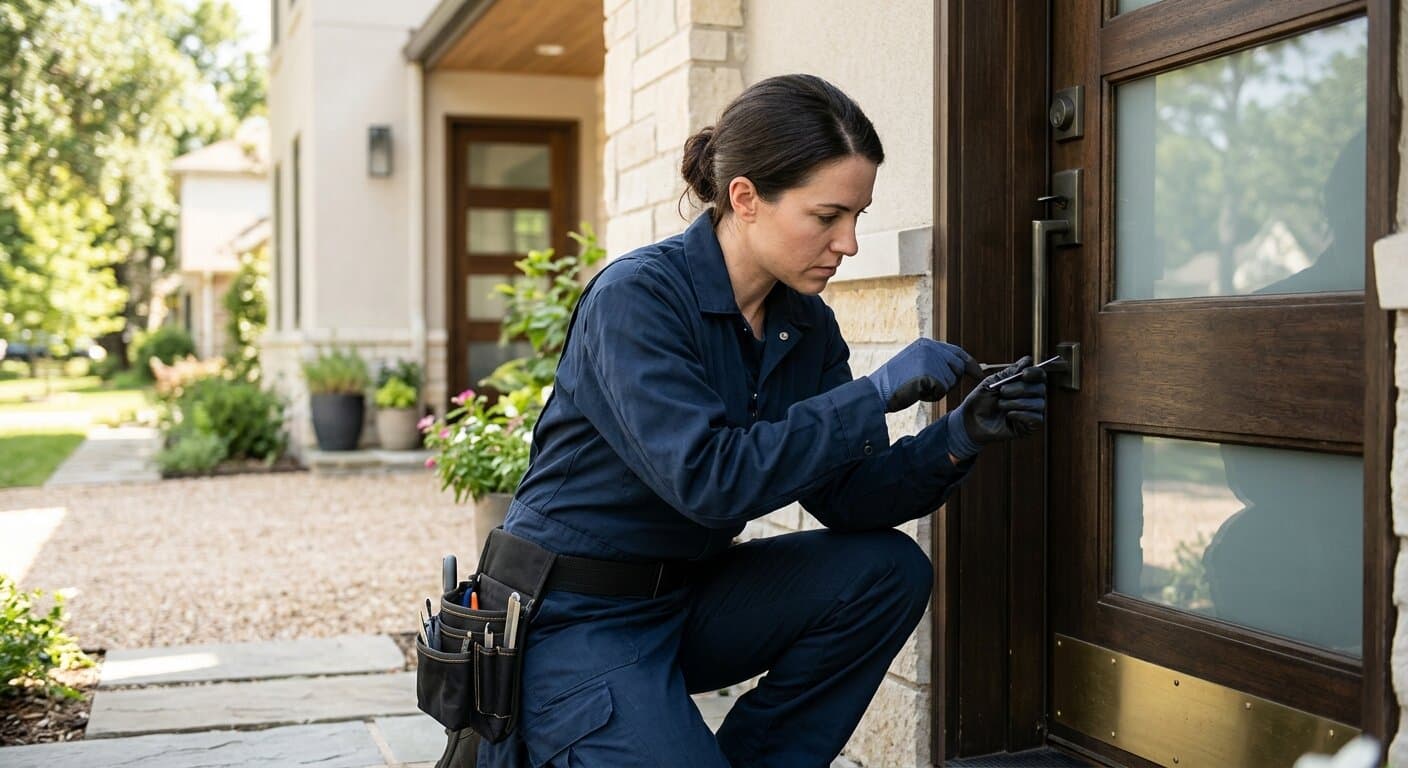
Locksmithing is one of the most urgent-need service businesses in the country. When someone is locked out of their house at 11 PM or standing next to a car with keys inside, they're not comparison shopping — they're calling the first result they trust.
That's the opportunity and the challenge of locksmith marketing: you're competing for customers in a window measured in minutes, in a space where distrust is high because of industry fraud, and against competitors who may be invisible on Google today and prominent tomorrow.
This guide gives you a systematic approach to dominating local locksmith search, building a reputation that earns immediate trust, and growing revenue through both emergency calls and recurring commercial work.
The Unique Marketing Landscape for Locksmiths
Before getting into tactics, it's worth understanding why locksmith marketing requires a different approach than most contractor trades:
Everything is urgency-driven. The majority of locksmith revenue comes from emergency calls — lockouts, broken locks, urgent security needs. A buyer in this situation isn't reading blogs or comparing services. They're calling whoever appears first and looks legitimate. Speed, visibility, and trust signals must all be optimized for this moment.
The industry has a fraud problem. Everyone in locksmithing knows it: fake listings, bait-and-switch pricing, and contractors pretending to be local when they're actually based in a call center thousands of miles away. Google has cracked down on this with policy changes, but fraudulent actors still exist. As a legitimate locksmith, this creates an opportunity — consumers who have been burned before will pay more to work with someone they trust.
Commercial work provides stability. Emergency residential lockouts pay well but are unpredictable. Commercial locksmith work — master key systems, access control, office rekeying, building security — is scheduled, higher-ticket, and often recurring. A healthy locksmith business balances both.
Licensing varies by state. About 15 states require locksmith licensing. Your marketing should prominently display your license number in states that require it — it's a trust signal and often a legal requirement.
| Service Type | Avg. Job Value | Urgency | Competition |
|---|---|---|---|
| Residential lockout | $75-$200 | Extreme | Very High |
| Car lockout | $75-$150 | Extreme | Very High |
| Lock rekey | $75-$150 | Low-Medium | Medium |
| Lock installation | $100-$400 | Low | Medium |
| Smart lock install | $150-$500 | Low | Low |
| Commercial rekey | $200-$800 | Medium | Low |
| Access control systems | $500-$5,000+ | Low | Low |
| Safe opening/service | $100-$600 | Medium | Low |
Strategy 1: Google Business Profile — Your Most Critical Asset
For locksmiths, the Google Business Profile is not just important — it is the most important marketing asset you have. The Maps pack is the first thing anyone sees when they search "locksmith near me," and it occupies prime screen real estate on mobile where most emergency searches happen.
Complete GBP optimization for locksmiths:
Business name: Use your real business name only. Do not add keywords like "Emergency Locksmith 24/7 [City]" to your business name — this violates Google policy and has caused thousands of locksmith suspensions. Your reputation is your name.
Category: Primary category should be "Locksmith." Add secondary categories: "Emergency Locksmith Service," "Car Locksmith," "Safe and Vault Service," and "Security System Supplier" if applicable.
Address and service area: Use your real business address. If you're home-based and don't want to display your home address, you can hide it on GBP and list your service area instead. But be accurate — setting an artificially large service area is flagged by Google.
Phone number: Use a local phone number, not an 800 number. Local numbers perform better in local searches and signal legitimacy.
Business hours: Set accurate hours, including whether you offer 24/7 emergency service. Customers searching at 2 AM are filtering by "open now" — if your hours aren't set correctly, you won't appear.
Services: Add granular services: Residential lockout service, Car lockout service, Lock rekey service, Lock installation, Smart lock installation, Master key systems, Commercial locksmith services, Safe opening service, Access control installation.
Photos: Upload at least 25 photos. Include: branded vehicles, your shop (if you have one), team members in uniform, work-in-progress photos, before/after shots of lock upgrades. Real photos from real jobs build credibility in a way stock photos never can.
Messaging: Enable GBP messaging and respond within minutes during business hours. Emergency searchers move fast — a 10-minute response delay can mean a lost job.
Strategy 2: Google Local Services Ads — The Top Spot That Changes Everything
Google Local Services Ads (LSAs) appear above both regular Google Ads and organic results. For a search like "locksmith near me," being in the LSA section is the highest-visibility position available.
More importantly, LSAs come with the Google Guaranteed badge — a green checkmark that tells searchers your business has passed Google's background check and insurance verification. For an industry plagued by fraud, this badge is a massive trust signal.
How LSAs work for locksmiths:
- You pay per lead (phone call or message), not per click
- Google verifies your business, license, and insurance before approving you
- You only pay for qualified leads — you can dispute irrelevant ones
- Your profile includes reviews, years in business, and the Google Guaranteed badge
Getting started with LSAs:
- Apply at ads.google.com/local-services-ads
- Complete the background check and license verification (varies by state)
- Set your budget — start with $500-$1,000/month
- Set your service area and job types
- Respond to every lead promptly — LSA's algorithm rewards fast response rates with more lead volume
Most locksmiths we've worked with find LSA leads convert at 40-60%, significantly better than regular Google Ads for locksmiths where click fraud and competitors are more of an issue.
Strategy 3: Paid Google Ads for Locksmith Emergency Keywords
While LSAs are valuable, not all locksmiths qualify quickly, and LSA budget caps can limit volume. Google Ads fills the gap, particularly for high-intent emergency keywords.
Campaign structure for locksmiths:
Emergency campaign: Focus on "locked out of house [city]," "emergency locksmith [city]," "locked out of car [city]," "24 hour locksmith [city]." These are high-intent, high-cost keywords — but a $150 lockout job from a $15 click is excellent ROI.
Residential services campaign: "Lock rekey [city]," "lock installation [city]," "deadbolt installation [city]," "smart lock install [city]." Lower urgency but good conversion rates.
Commercial campaign: "Commercial locksmith [city]," "office lockout [city]," "master key system [city]," "access control installation [city]." Higher job value justifies higher CPC.
Ad copy best practices for locksmiths:
- Include "Licensed & Insured" and your license number in the ad
- Mention response time: "30-Minute Response"
- Include pricing transparency: "Flat Rate Pricing — No Surprises"
- Use ad extensions: Call extension with a tracking number, Location extension, Price extensions for common services
Critical negative keywords: Add these to prevent wasted spend on non-commercial searches:
- locksmith salary / locksmith jobs / locksmith training / locksmith school
- locksmith tools / locksmith picks / locksmith certification
- how to pick a lock (unless you're targeting this for content)
- locksmith license / become a locksmith
Landing page: Send ad traffic to a dedicated landing page, not your homepage. The page should have your phone number in large font at the top, a "Call Now" button, your credentials and badge, your response time guarantee, and basic pricing. Read our full guide on contractor landing page optimization for more detail.
Strategy 4: Local SEO That Outlasts Your Ad Spend
SEO for locksmiths is the channel that creates lasting, cost-free traffic. Unlike ads where your visibility disappears the moment you stop paying, SEO rankings compound over time.
On-page SEO fundamentals:
Your website's homepage should be optimized for your primary city and service. Title tag example: "Locksmith [City], [State] | [Company Name] | 24/7 Emergency Service." Your H1 should match or closely mirror this. The first paragraph should mention your primary keyword and service area naturally.
Service-specific pages: Create individual pages for each service:
- Residential lockout page
- Car lockout page (automotive locksmith)
- Lock rekey page
- Smart lock installation page
- Commercial locksmith page
- Safe opening and repair page
Each page should target specific keywords: "car lockout service [city]," "lock rekey [city]," etc. This structure tells Google exactly what you do and dramatically increases the number of search queries your site can rank for.
Location pages: If you serve multiple cities, create a page for each: "Locksmith in [Suburb 1]," "Locksmith in [Suburb 2]." Keep each page unique with local references, neighborhood-specific content, and location-specific testimonials.
Blog content: Answer the questions your customers search for before they need you urgently:
- "How to change your locks after moving into a new home"
- "Smart lock vs. traditional deadbolt — which is right for you?"
- "How much does a locksmith cost in [city]?"
- "What to do when you're locked out of your car"
These posts build your site's authority, attract links from local websites, and capture buyers in the research phase who will remember your name when the emergency happens.
Strategy 5: Build a Reputation That Overcomes Industry Distrust
The home services review landscape is competitive, but in locksmithing, reviews do double duty — they don't just help with Google rankings, they actively address the distrust buyers feel about the industry.
When a stranded buyer is weighing two locksmiths on Google — one with 12 reviews at 3.8 stars and one with 94 reviews at 4.9 stars — the choice is obvious, even if the higher-rated company is charging $20 more.
Building a review generation system:
Ask at the right moment. For emergency calls, the best moment to request a review is immediately after completing the job, while the customer's relief and gratitude are peak. For scheduled jobs, follow up via text within 2 hours of completion.
Text, don't email. For locksmiths, text message review requests get significantly higher response rates than email. A direct link to your Google review form requires minimal friction. Keep the message simple: "Thanks for calling [Company]. If you have 60 seconds, we'd appreciate a Google review: [link]. — [Your name]"
Make it a non-negotiable system. Every completed job triggers a review request. Use your CRM or a review management platform to automate this. Human memory is unreliable — systems aren't. Our review management service helps locksmiths automate this entire process.
Respond to every review. Respond to positive reviews with personalized thank-yous (not copy-paste templates). Respond to negative reviews professionally — potential customers read your response more closely than the review itself. A calm, solutions-oriented response to a 1-star review often flips the perception for new readers.
Target 50 reviews as your first milestone. We've consistently seen locksmith businesses break into the top 3 Map Pack results after crossing 50 reviews at 4.8 stars or above, assuming their other SEO fundamentals are solid.
Strategy 6: Your Website as a Trust and Conversion Engine
Your locksmith website has one job in the moment that matters: convince a stressed, potentially scared customer to call you right now instead of scrolling to the next result.
Non-negotiable website elements:
Phone number, massive, top of page. On mobile (where most emergency searches happen), your phone number should be a clickable tap-to-call button visible without any scrolling. This is the single most impactful conversion element on a locksmith website.
Physical address and hours. Display your real address and accurate hours. This signals legitimacy — fraudulent operations typically avoid this.
License number. If your state requires licensing, display your license number prominently. This is both a legal requirement in many states and a major trust signal.
Response time guarantee. "30-Minute Response in [City]" or "We Arrive in Under 45 Minutes" builds confidence in an emergency situation.
Service price list. Locksmith fraud often involves bait-and-switch pricing — a $15 advertised lockout that turns into a $400 job. Being upfront about your pricing, even if it's a range, builds enormous trust. Customers appreciate honesty, and transparent pricing often closes jobs that competitors lose.
Certifications and associations. Display ALOA (Associated Locksmiths of America) membership, BBB accreditation, and your state certification prominently. These are meaningful trust signals in an industry with a trust deficit.
Fast load speed. A 5-second load time on mobile loses emergency callers. Optimize images, use fast hosting, and keep unnecessary scripts off your homepage.
Strategy 7: Grow Commercial Locksmith Revenue
Emergency calls drive volume, but commercial locksmith work drives margin and stability. A single commercial account — a property management company, a retailer with multiple locations, a hotel — can be worth tens of thousands of dollars a year in recurring work.
Marketing for commercial locksmith services:
B2B outreach to property managers. Property management companies handle lock changes constantly — tenant turnover, evictions, break-ins, new key requests. Build a list of property management companies in your area and run a targeted outreach campaign (LinkedIn, direct mail, phone calls) positioning yourself as their dedicated commercial locksmith.
Commercial service pages. Your website needs specific pages for commercial services: master key systems, access control installation, commercial rekeying, apartment complex services. These pages attract commercial buyers searching for specialists, not just emergency help.
LinkedIn presence. For commercial locksmith work, LinkedIn is the relevant social platform. Property managers, facility managers, and commercial real estate professionals are active there. Share content about security upgrades, access control trends, and building security best practices.
Referral partnerships. Partner with commercial real estate agents, property management companies, and building contractors. When a commercial property changes hands, there's almost always locksmith work involved. Being the go-to recommendation for those professionals is worth more than any ad spend.
Pricing for commercial work. Commercial clients pay for reliability and expertise, not just the lowest price. Position your commercial services as a managed service with response time guarantees, priority service agreements, and key tracking documentation — not just a one-time job.
Your 90-Day Locksmith Marketing Action Plan
Month 1 — Stop the bleeding and win the immediate battles:
- Audit and fully optimize your Google Business Profile
- Apply for Google Local Services Ads
- Set up automated review request texts after every job
- Ensure your website is mobile-fast with a tap-to-call button
Month 2 — Build the paid and SEO foundation:
- Launch Google Ads for emergency lockout keywords
- Create service-specific landing pages for car lockout, residential lockout, and rekey
- Build out citation listings (Yelp, Angi, YP, BBB, ALOA directory)
- Start collecting and responding to reviews systematically
Month 3 — Layer in long-term organic growth:
- Publish two SEO-targeted blog posts per month
- Add city-specific service pages for your top 3 markets
- Begin commercial outreach to property managers (5-10 per week)
- Set up a simple CRM to track referral sources and follow up on commercial opportunities
After 90 days, you'll have a marketing system generating leads from multiple channels simultaneously — reducing your dependence on any single source and building compounding value over time.
Working with RankWeld to Dominate Your Local Locksmith Market
Locksmiths who dominate their local markets don't get there by accident. They have the right visibility at the right moment, a reputation that builds trust instantly, and a system that generates leads while they're on the job.
At RankWeld, we specialize in digital marketing for service contractors — including locksmiths. Our services cover local SEO, Google Ads management, Google Business Profile optimization, and review management, all tailored to the specific dynamics of the locksmith industry.
Get a free SEO audit to see where you stand against your local competition and what it would take to own the top position in your market.
Recommended Service
Marketing Built for Your Trade
We only work with contractors. Every strategy, campaign, and website is built specifically for the trades. See what we can do for your industry.
See All ServicesRelated Articles
The Complete Contractor SEO Guide for 2026
Everything you need to know about ranking your contracting business on Google in 2026. From Google Business Profile to local SEO strategy.
Read more
Local SEO for Contractors: How to Dominate the Google Map Pack
The Google Map Pack is where most contractor leads come from. This guide breaks down the exact local SEO strategies you need to rank in the top 3 — from citations and reviews to on-page optimization and content.
Read more
Google Business Profile for Contractors: Complete Setup & Optimization Guide
Your Google Business Profile is the most important ranking factor for local contractor SEO. This step-by-step guide shows you exactly how to set up, optimize, and maintain your profile to dominate the Map Pack.
Read more
Google Local Services Ads for Contractors: The Complete 2026 Guide
Google Local Services Ads put your contracting business at the absolute top of search — above Google Ads, above the map pack. Here's exactly how to set up, optimize, and dominate LSA in 2026.
Read moreReady to Put This Into Action?
Get a free SEO audit and see exactly where your contracting business stands.