
Masonry Contractor Marketing: How to Win More Brick & Stone Jobs in 2026
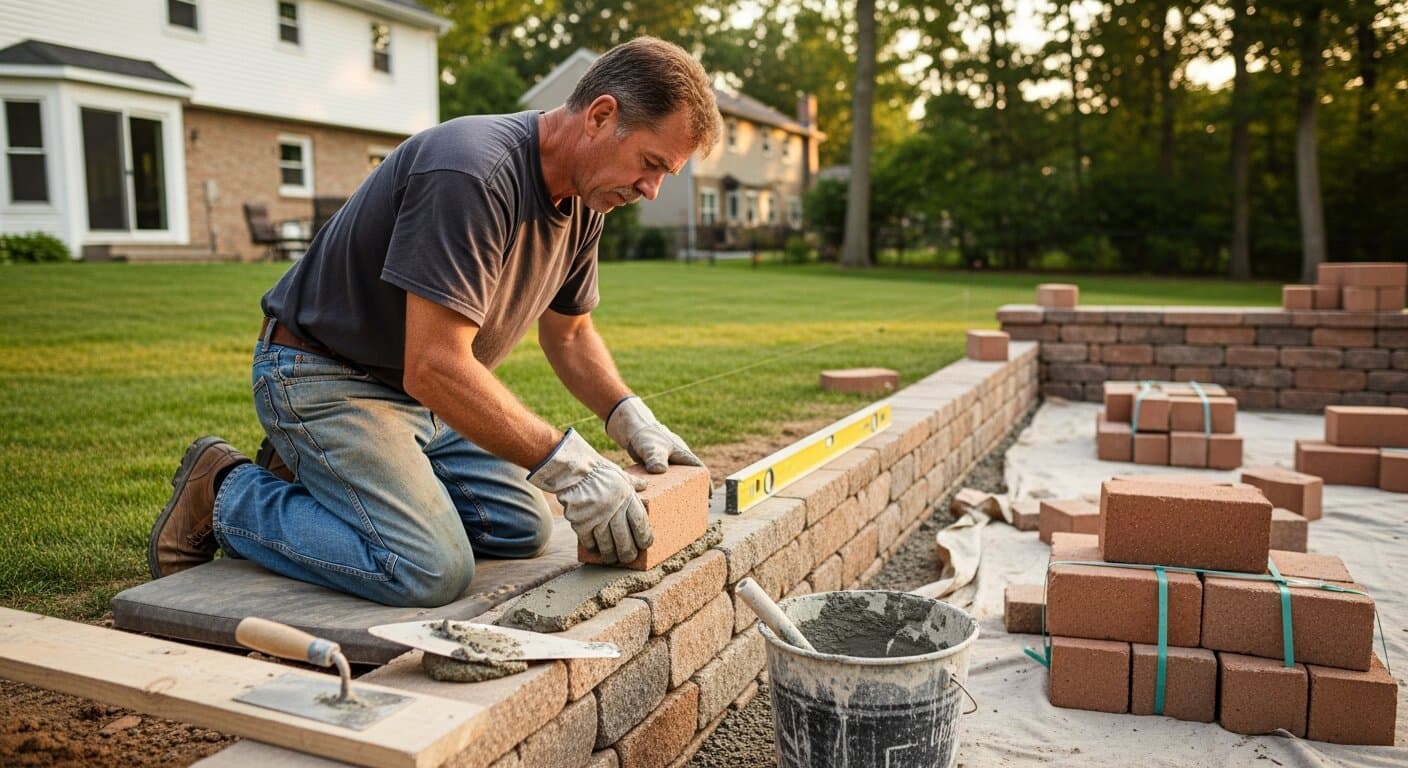
If you run a masonry business, you already know the demand is real. Homeowners across the country want brick fireplaces, stone patios, retaining walls, and tuckpointing repairs — but the contractors who actually win those jobs are often not the best craftsmen. They are the contractors who show up first on Google.
Here is the opportunity: 73% of homeowners searching for masonry services use Google to find a contractor, yet only 28% of masonry businesses have optimized their online presence for search. That gap is where your growth lives.
This guide covers everything you need to know about masonry contractor marketing in 2026 — from getting into the Google Map Pack to running profitable ads, building a review engine, and showing off your work on social media. No fluff, no generic advice. Just what actually works for brick, block, and stone contractors.
Why Masonry Is a Unique Marketing Opportunity
Masonry sits in a sweet spot in the contracting world. Jobs are high-ticket — a retaining wall runs $5,000–$25,000, an outdoor fireplace $8,000–$30,000, a full chimney rebuild $3,000–$12,000 — which means the cost to acquire a customer is easy to justify. At the same time, the trade is severely underrepresented online.
Most masonry contractors still rely on word-of-mouth, yard signs, and the occasional Facebook post. That is not a marketing strategy. It is hope. And hope does not fill your calendar in a competitive market.
Our experience with masonry clients at RankWeld shows that the average brick or stone contractor who invests in a proper digital strategy sees a 3–5x increase in qualified inbound leads within 12 months. The bar is low, and the upside is high.
Local SEO: Getting Found When Homeowners Search
When a homeowner needs tuckpointing or a brick repair, they do not ask friends first. They pull out their phone and search "masonry contractor near me." The first three results they see are the Google Map Pack — three local businesses with reviews, phone numbers, photos, and directions.
Getting into that Map Pack should be your top marketing priority. Here is how:
Optimize Your Google Business Profile
Your Google Business Profile is the foundation of your local SEO. If you have not fully optimized it, you are invisible in the Map Pack regardless of how good your work is.
Primary category: Select "Masonry contractor" as your primary. Add secondary categories like "Stone contractor," "Brick contractor," and "Chimney sweep" if you offer those services.
Services: List every masonry service individually — tuckpointing, brick repair, stone installation, retaining walls, outdoor fireplaces, chimney rebuild, block walls, flagstone patios, and any other services you offer. Google uses this data to match your profile to relevant searches.
Photos: Businesses with 100+ photos get 520% more calls than those with under 10. Upload job photos weekly — before and after shots, in-progress photos, finished projects. Label your photos descriptively (Google reads them).
Reviews: Reviews are a direct ranking factor in the Map Pack. A masonry contractor with 50+ reviews and a 4.7+ rating consistently outranks competitors with fewer or lower-quality reviews. More on this in the review section below.
Posts: Post weekly. Share completed projects, seasonal tips, and promotions. Active profiles rank higher than stagnant ones.
Build Service Pages Targeting Masonry Keywords
Your website needs dedicated pages for each major masonry service, each optimized for local search terms. Do not cram everything onto a single "Services" page.
Build individual pages for:
- Brick repair + [your city]
- Tuckpointing + [your city]
- Stone patio installation + [your city]
- Retaining wall contractor + [your city]
- Outdoor fireplace installation + [your city]
- Chimney rebuild + [your city]
- Block wall installation + [your city]
- Masonry contractor + [your city]
Each page should have 600–1,000 words of real content, your keyword in the title tag and H1, a photo or two of actual work, and a clear call to action (call now or request a quote).
If you serve multiple cities, build location pages for each. "Tuckpointing contractor [Suburb]" is a lower-competition keyword than "[City]" and often converts better because the searcher is looking for someone local to their specific neighborhood.
Learn more about masonry SEO fundamentals in our complete contractor SEO checklist — a step-by-step walkthrough of every ranking factor that matters for local trades.
Google Local Services Ads: The Fastest Way to Get Masonry Leads
If you want leads now while your SEO builds, Google Local Services Ads (LSAs) are your fastest path to the top of Google search results.
LSAs appear above everything else — above regular Google Ads and above organic results. Your listing shows your business name, star rating, years in business, and the Google Guaranteed badge. Homeowners click the businesses that look most credible, and you only pay when a customer actually contacts you.
For masonry contractors, LSAs are particularly effective because the services are specific and high-intent. Someone searching "tuckpointing contractor near me" is not browsing — they have a problem they need solved.
What you need to run LSAs:
- Google Business Profile (optimized)
- Background check clearance (for all technicians)
- Proof of license and insurance
- At least 5 Google reviews (15+ to compete well)
Budget guidance for masonry LSAs:
| Market Size | Suggested Monthly LSA Budget | Expected Leads/Month |
|---|---|---|
| Small city (under 150K population) | $500–$1,000 | 8–15 leads |
| Medium city (150K–500K) | $1,000–$2,500 | 12–25 leads |
| Large metro (500K+) | $2,500–$5,000+ | 20–45 leads |
Keep in mind that lead costs vary by service. Chimney and fireplace leads tend to cost more ($60–$120 each) because competition is higher. Tuckpointing and brick repair leads typically run $35–$75.
Google Ads for Masonry: Targeting High-Value Project Searches
Beyond LSAs, traditional Google Ads give you more control over which keywords you target and how much you bid. For masonry contractors, this is especially valuable because you can separate campaigns by project type and profitability.
Highest-converting masonry keywords for paid search:
- "masonry contractor near me"
- "brick repair [city]"
- "tuckpointing cost"
- "outdoor fireplace installation [city]"
- "stone retaining wall contractor"
- "chimney rebuild cost"
- "block wall installation [city]"
Key campaign settings for masonry:
Run search campaigns only (not Display or YouTube) until you have mastered the basics. Use exact match and phrase match keywords — broad match keywords in masonry campaigns tend to attract unqualified clicks from people searching for concrete work, landscaping, or construction supplies.
Add negative keywords immediately: "masonry supplies," "masonry tools," "masonry paint," "masonry cleaner," and "DIY masonry" will otherwise drain your budget on clicks that never convert.
Set a geographic radius that matches your realistic service area — typically 20–40 miles from your base. Do not run ads in markets you cannot service within a reasonable drive time.
Social Media & Visual Marketing for Masonry
Masonry is one of the most visually compelling trades. A well-built stone fireplace, a perfectly laid brick walkway, a curved retaining wall with built-in steps — these are projects that stop people mid-scroll.
Instagram is your most powerful platform. Here is the playbook:
- Before-and-after posts perform best. Pair a crumbling brick wall with the finished restoration and watch the saves and shares roll in.
- Reels showing the process — laying stone, pointing mortar, setting a capstone — consistently outperform static photos. Fifteen-second clips showing craftsmanship build trust better than any sales page.
- Tag your location on every post. When someone in your area searches "#masonrycontractor[City]," you want your work to appear.
Facebook is where you run retargeting ads and connect with local community groups. Join "Home Improvement [City]" Facebook groups and provide genuinely helpful answers when homeowners ask masonry questions. When you become the go-to expert in the group, referral traffic follows naturally.
Pinterest is worth setting up but not actively managing. Pin your best project photos to boards like "Outdoor Fireplace Ideas" and "Retaining Wall Inspiration." Pinterest traffic tends to be high-intent homeowners in the planning stage.
Review Strategy: Why Masonry Contractors Live and Die by Reviews
In masonry, reviews are not a nice-to-have. They are a fundamental competitive requirement. When a homeowner is choosing between two masonry contractors with similar prices and similar portfolios, the one with 60 reviews at 4.8 stars wins over the one with 12 reviews at 4.2 stars. Every single time.
The math on reviews and revenue:
Our data from masonry contractor clients shows that moving from under 20 reviews to over 50 reviews on Google increases inbound calls by 40–65% — without changing anything else. Reviews are the highest-leverage, lowest-cost improvement most masonry contractors can make.
How to build reviews consistently:
- Send a text within 24 hours of job completion: "Hi [Name], thank you for letting us work on your home. If you're happy with the project, we'd really appreciate a Google review — it means a lot to our small business. Here's the direct link: [link]."
- Follow up once if they do not respond within 3 days.
- Never offer incentives for reviews — Google prohibits it and can remove your reviews or your entire profile.
- Respond to every review, positive and negative. Responses signal to Google that your business is active, and they signal to future customers that you care.
Learn more about managing contractor reviews to build a five-star reputation that converts searchers into customers.
Your Masonry Website: What It Takes to Convert Visitors Into Leads
Getting traffic from Google is step one. Converting that traffic into phone calls and quote requests is step two — and this is where most masonry websites fail.
The typical masonry contractor website has a generic homepage, a services page with three bullet points, a gallery of unorganized photos, and a contact form buried at the bottom. That website is leaving 80% of its potential leads on the table.
A high-converting masonry website includes:
- A clear headline that states exactly what you do and where: "Expert Masonry Contractor Serving [City] and Surrounding Areas"
- A prominent phone number in the header — visible on both desktop and mobile
- Social proof above the fold — star rating and review count or a specific testimonial
- Photos of actual completed projects in your area (not stock photos)
- Individual service pages as described in the SEO section above
- A simple quote request form on every service page — name, phone, project type, and message
- Fast load time — under 2.5 seconds on mobile. Most job site photo uploads will slow your site if not compressed properly.
See our full list of contractor website features that drive leads to make sure your site has every conversion element.
Referral Partners: Building a Masonry Lead Network
Some of the highest-quality masonry leads come not from Google but from referral partners — other contractors and professionals who encounter homeowners who need your services.
Your best referral sources as a masonry contractor:
- Landscaping contractors — they design outdoor living spaces that need retaining walls, flagstone pathways, and stone edging. Build relationships with the top 3–5 landscaping companies in your area.
- General contractors — they frequently need masonry subcontractors for new construction and renovation projects.
- Realtors — homeowners preparing to sell often need tuckpointing, brick repair, or chimney work to pass inspection. Offer realtors a priority scheduling option.
- Chimney sweep companies — they inspect chimneys but often do not do full rebuilds. A chimney sweep who refers rebuild work to you is a premium lead source.
- Hardscaping contractors — they build outdoor structures that often require masonry work.
Set up a simple referral program: a $100–$200 gift card or referral fee for every job that books. Track where each referral comes from and reward your best partners generously.
Seasonal Masonry Marketing: Timing Your Campaigns
Masonry is a year-round trade, but the types of projects shift by season. Aligning your marketing with seasonal demand keeps your pipeline full.
Summer (June–August): Outdoor living is the driver. Promote stone patios, retaining walls, outdoor fireplaces, and backyard hardscaping. Homeowners are actively spending on their yards and entertaining spaces. This is peak lead season for outdoor masonry.
Fall (September–November): Chimney season begins. Start chimney rebuild and fireplace campaigns in September before homeowners start firing up their fireplaces and discovering cracks. Tuckpointing and brick repair campaigns also perform well — homeowners notice deterioration as they clear leaves and prepare homes for winter.
Winter (December–February): Slower for outdoor work, but still active for indoor projects (basement waterproofing, fireplace hearths, basement finishing with masonry). Keep your Google Ads running at a reduced budget to capture the homeowners who are planning spring projects now.
Spring (March–May): The strongest season for repair work — freeze-thaw cycles damage mortar joints, crack brick, and shift retaining walls. Run campaigns targeting "brick repair," "tuckpointing," and "cracked retaining wall" starting in March.
Tracking Your Masonry Marketing ROI
You cannot improve what you do not measure. For masonry contractors, the three numbers that matter most are:
- Cost per lead (CPL): Total monthly marketing spend ÷ total leads received. Target under $60 for most services, under $100 for high-ticket installations.
- Lead-to-appointment rate: What percentage of leads convert to an in-person estimate? Industry average is 40–60%. Under 30% means your follow-up process needs work.
- Appointment-to-job rate: What percentage of estimates turn into signed jobs? Industry average is 30–50%. Under 25% means either your pricing is off or your estimate presentation needs improvement.
Multiplying these together tells you how many leads you need to hit your revenue goals — which tells you exactly how much to invest in marketing.
Start with a Free Marketing Audit
If you are a masonry contractor who is ready to stop relying on referrals and start building a predictable lead pipeline, the first step is understanding where you stand today. Get a free SEO audit to see exactly how your Google presence compares to your top local competitors — and where the biggest opportunities are.
Our team works exclusively with contractors. We know masonry, we know the trade, and we know what it takes to rank in your market. See how we help contractors grow or request your free audit to get started.
Recommended Service
Marketing Built for Your Trade
We only work with contractors. Every strategy, campaign, and website is built specifically for the trades. See what we can do for your industry.
See All ServicesRelated Articles

Concrete Contractor Marketing: How to Get More Driveway & Patio Leads in 2026
Concrete jobs are high-ticket and highly competitive. Here's how to build a marketing system that keeps your schedule full of driveway, patio, and commercial concrete leads year-round.
Read more
Contractor Lead Generation: 12 Strategies Beyond Angi & HomeAdvisor
Tired of paying $50+ for shared leads on Angi and HomeAdvisor? These 12 contractor lead generation strategies build a pipeline of exclusive leads that you own and control.
Read more
Local SEO for Contractors: How to Dominate the Google Map Pack
The Google Map Pack is where most contractor leads come from. This guide breaks down the exact local SEO strategies you need to rank in the top 3 — from citations and reviews to on-page optimization and content.
Read more
Google Local Services Ads for Contractors: The Complete 2026 Guide
Google Local Services Ads put your contracting business at the absolute top of search — above Google Ads, above the map pack. Here's exactly how to set up, optimize, and dominate LSA in 2026.
Read moreReady to Put This Into Action?
Get a free SEO audit and see exactly where your contracting business stands.