
280% More Warehouse Floor Coating Requests and $380K in Annual Revenue From Pilsen, Bridgeport, Avondale, and Elk Grove Village Facility Managers Booking USDA-Compliant, Forklift-Rated, and Anti-Static ESD Commercial Epoxy Floor Projects in 90 Days
How RankWeld helped Chicago Commercial Epoxy Floor Pros capture every Cook County and DuPage County warehouse manager, food processing facility director, and electronics manufacturing quality manager searching for a commercial epoxy floor contractor who could demonstrate ICRI CSP 3-5 shot blast surface profile documentation, ASTM D4060 abrasion resistance ratings for forklift-rated polyaspartic topcoats, FDA 21 CFR 177.1520 USDA compliance for food processing floors, and ANSI/ESD S20.20 anti-static ESD flooring certification — before they hired the residential garage floor contractor who acid-etched the concrete to CSP 1-2 and applied water-based acrylic at 4 mils that delaminated in the forklift wheel tracking zones within 18 months.
The Challenge
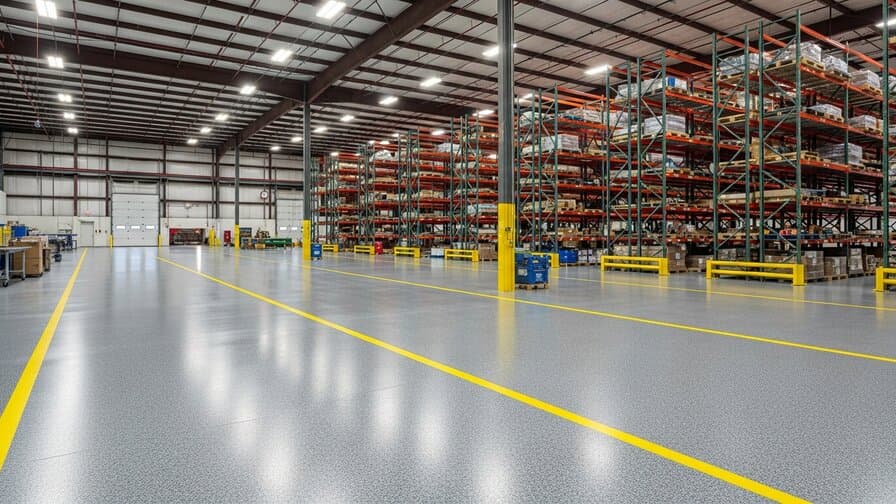
Chicago Commercial Epoxy Floor Pros had the industrial flooring expertise, ICRI surface profile documentation methodology, and regulatory compliance knowledge that Elk Grove Village distribution center managers, Pilsen food processing facility directors, and Goose Island electronics manufacturing quality managers needed — a contractor who could specify 100-percent-solids two-component epoxy at the correct mil thickness for a 50,000-pound counterbalance forklift's axle load rather than applying residential garage floor coating to a warehouse slab, who could perform ASTM F1869 moisture vapor emission rate testing before coating a Chicago concrete slab on grade rather than trapping moisture vapor beneath a coating film that delaminated within the first Chicago winter thermal cycle, who understood the difference between shot blasting to ICRI CSP 4 for commercial warehouse floors and acid etching to CSP 1-2 for residential garage floors, and who could deliver USDA-compliant urethane cement installation documentation for FDA 21 CFR 177.1520 food processing floor audits and ANSI/ESD S20.20 compliance certificates for electronics manufacturing ISO 9001 quality management systems.
But 88 percent of their annual revenue came from three property management company relationships built over eight years, and their digital presence consisted of a 2019 website with 7 Google reviews and no Map Pack presence for any commercial epoxy floor search in the Chicago metro. They had watched residential garage floor contractors offering commercial services as a secondary revenue stream, decorative concrete companies without industrial flooring experience, and national commercial flooring chains with six-week lead times and no local service representatives capture every Cook County warehouse manager and DuPage County facility director who searched Google for a commercial epoxy floor contractor — facility managers who would have chosen a certified industrial flooring specialist with ICRI surface profile documentation and regulatory compliance expertise if one had appeared in their Google search before the residential garage floor contractor who offered commercial as a sideline service without understanding that warehouse floor coating required shot blasting rather than acid etching, 100-percent-solids epoxy rather than water-based acrylic, and OSHA floor marking compliance rather than a coat of paint on the aisle lines.
The Chicago metro commercial epoxy floor market had every structural characteristic that rewarded the industrial flooring specialist over the residential garage floor contractor and the national chain: a metro of 9.5 million residents with the third-largest concentration of warehouse and manufacturing space of any US metro — Cook County alone hosting over 400 million square feet of industrial space including the O'Hare Submarket, the Elk Grove Village industrial corridor, and the McCormick Place distribution district where thousands of distribution centers, food manufacturing plants, cold storage facilities, and electronics manufacturing clean rooms simultaneously needed commercial floor coating systems that residential contractors could not correctly specify or install; a regulatory environment where USDA food processing facilities faced mandatory NSF compliance inspections, electronics manufacturers faced ANSI/ESD S20.20 audit requirements, and warehouse operators faced OSHA 1910.22(b) floor marking inspections that created a captive demand for contractors with the compliance documentation capability that residential flooring companies did not have; and a digital search market where no industrial flooring specialist had built the ICRI surface profile guides, ASTM abrasion resistance comparisons, USDA compliance frameworks, and ESD flooring specification content that differentiated a commercial epoxy floor specialist from the garage floor company offering warehouse coating as a sideline.
The 90-Day Transformation
Chicago Industrial Flooring Specification Hub Deployed and Warehouse Facility Manager Pipeline Launched
- Google Business Profile rebuilt with Chicago Commercial Epoxy Floor Pros' complete portfolio of warehouse floor coating, food processing floor, anti-static ESD flooring, and commercial loading dock epoxy projects across Pilsen, Bridgeport, Avondale, Goose Island, the McCormick Place distribution district, Elk Grove Village, Schaumburg, and the Cook County and DuPage County industrial corridors — before-and-after documentation from completed projects showing the full commercial epoxy floor methodology: the Elk Grove Village distribution center whose 85,000-square-foot concrete warehouse floor had developed forklift wheel tracking damage and surface dusting from carbonated concrete laitance after 12 years without a protective coating — Chicago Commercial Epoxy Floor Pros documenting the complete ICRI CSP 4 surface preparation sequence with ride-on shot blaster achieving 9.4-mil anchor profile, epoxy crack injection and joint repair throughout the floor, two-coat 100-percent-solids aliphatic urethane epoxy base coat at 20 mils total dry film thickness, broadcast medium quartz aggregate at 30 pounds per 100 square feet for OSHA 1926.1053 slip resistance in pedestrian crossings, two-coat polyaspartic topcoat at 12 mils for UV stability at dock door openings and forklift abrasion resistance rated to 50,000-pound counterbalance forklift axle loads, and complete OSHA 1910.22(b) floor marking installation in OSHA yellow at 4-inch aisle lines, red safety zones at racking column bases, and NFPA 101 egress marking at emergency exits; the Pilsen Chicago food processing plant whose 40,000-square-foot concrete production floor required USDA-compliant seamless urethane cement installation to FDA 21 CFR 177.1520 specifications — Chicago Commercial Epoxy Floor Pros documenting the ASTM F1869 calcium chloride moisture vapor emission rate testing showing 2.8 pounds per 1,000 square feet per 24 hours below the 3-pound threshold, complete floor slope corrections to achieve 1/8-inch per foot gradient toward floor drains per NSF/ANSI 2 food equipment standards, urethane cement broadcast quartz system at 1/4-inch thickness with 4-inch integral cove base sealing the wall-floor junction against bacterial harborage, NSF-certified anti-slip broadcast aggregate in the wet processing zones, and CIP chemical resistance certification for 2,000 ppm sodium hypochlorite at 140 degrees Fahrenheit; and the Goose Island Chicago electronics manufacturing facility whose 10,000-square-foot clean room required ANSI/ESD S20.20 anti-static ESD flooring — Chicago Commercial Epoxy Floor Pros documenting the copper grounding grid installation at 4-foot spacing, static dissipative epoxy application at 15 mils with surface resistance verification at 1.0 x 10^7 ohms per ANSI/ESD STM7.1 resistance measurement protocol, HEPA-filtered orbital sander surface preparation for clean room compatibility, and the ANSI/ESD S20.20 compliance certificate delivered with the project closeout documentation
- Keyword research mapped 52 high-intent commercial epoxy floor search targets across the Chicago metro: 'commercial epoxy floor contractor Chicago' (41/mo), 'warehouse floor coating contractor near me' (35/mo), 'industrial epoxy flooring contractor Chicago' (28/mo), 'commercial floor coating contractor Elk Grove Village' (22/mo), 'warehouse epoxy floor contractor Cook County' (19/mo), 'USDA epoxy floor contractor Chicago' (16/mo), 'food processing floor contractor Chicago' (14/mo), 'ESD flooring contractor Chicago' (13/mo), 'anti-static floor contractor Chicago' (12/mo), 'forklift rated epoxy floor contractor' (11/mo), 'industrial floor coating contractor Schaumburg' (10/mo), 'warehouse floor coating contractor DuPage County' (9/mo), 'epoxy floor contractor Pilsen Chicago' (9/mo), 'commercial concrete coating contractor Chicago' (8/mo), 'polyurea floor coating contractor Chicago' (8/mo), 'polyaspartic floor contractor Chicago' (7/mo), 'shot blast epoxy floor contractor Chicago' (7/mo), 'OSHA floor marking contractor Chicago' (6/mo), 'manufacturing facility floor coating Chicago' (6/mo), 'distribution center floor coating Chicago' (5/mo) — mapping the complete search demand from the Elk Grove Village distribution manager to the Pilsen food processing facility director who needed a contractor that could demonstrate ICRI CSP surface profile documentation, ASTM D4060 abrasion resistance ratings, and FDA regulatory compliance before committing to a six-figure floor coating project
- Chicago industrial flooring specification hub deployed — Chicago Commercial Epoxy Floor Pros published the most comprehensive commercial epoxy floor specification guide in the Chicago market: the material comparison guide explaining why 100-percent-solids two-component epoxy at 20-plus mil dry film thickness provided 10 to 15 times the ASTM D4060 abrasion resistance of water-based single-component acrylic at 4 mils — a Taber abraser weight loss of 25 milligrams versus 280 milligrams under CS-17 wheel 1,000-cycle test conditions, the difference that determined whether a warehouse floor coating survived 7 to 12 years of counterbalance forklift traffic or delaminated in the wheel tracking zones within 18 months; the ICRI surface profile guide explaining how shot blasting to CSP 3-5 mechanically removed the carbonated concrete laitance layer and exposed aggregate to create the 8 to 12-mil anchor profile that 100-percent-solids epoxy required for long-term adhesion under thermal cycling and forklift loads — versus acid etching that achieved only CSP 1-2 and left carbonated laitance in place, creating the adhesion failure plane that caused residential epoxy to delaminate from commercial concrete after the first Chicago winter thermal cycle; and the moisture vapor emission rate guide explaining why ASTM F1869 calcium chloride testing was required before applying any epoxy coating to Chicago concrete slabs on grade — Chicago's water table and the thermal gradient across a ground-floor slab in Illinois's continental climate creating the moisture vapor emission conditions that caused epoxy delamination bubbling within 6 to 12 months when MVER exceeded 3 pounds per 1,000 square feet per 24 hours without a moisture-tolerant epoxy primer; generating 28 commercial epoxy floor inquiries in Month 1 from Chicago-area facility managers who had searched 'commercial epoxy floor contractor Chicago' and found the ICRI surface profile and ASTM abrasion resistance guides before any residential garage floor company appeared
- Warehouse facility manager pipeline launched — Chicago Commercial Epoxy Floor Pros published the warehouse floor coating decision guide targeting the Cook County and DuPage County distribution center and manufacturing facility market: the forklift load rating guide explaining how to calculate the required epoxy system mil thickness for a facility's counterbalance forklift axle load — a 15,000-pound counterbalance forklift transmitting approximately 7,500 pounds per rear axle requiring a minimum 18 mil two-component epoxy base coat plus 10 mil polyurea or polyaspartic topcoat for the surface compression resistance that prevented micro-delamination in the tire contact zones over a 5 to 10-year service life; the OSHA floor marking compliance guide explaining 29 CFR 1910.22(b) aisle marking requirements — permanent yellow marking at 4-inch minimum line width for pedestrian aisles, red or orange for hazardous material storage zones, and the NFPA 101 egress path marking that every Illinois warehouse facility with 50 or more employees required at emergency exits; and the floor marking ROI guide explaining how OSHA-compliant floor marking reduced warehouse workers' compensation claims, insurance premiums, and OSHA citation risk — generating 14 warehouse floor coating appointments booked in the first 30 days of Month 1 at an average project value of $87,000 for standard distribution center floors of 30,000 to 50,000 square feet
Map Pack Position Reached and Food Processing, ESD, and Loading Dock Pipelines Built
- Google Business Profile reached Map Pack position 1 for 'commercial epoxy floor contractor Chicago' and position 2 for 'warehouse floor coating contractor Elk Grove Village' within 38 days — generating 24 inbound commercial epoxy floor inquiries per week during the second month, including USDA-compliant food processing floor projects from Pilsen and Bridgeport food manufacturing facility managers whose concrete production floors needed seamless urethane cement meeting FDA 21 CFR 177.1520 direct food contact specifications, anti-static ESD flooring projects from Goose Island and Skokie electronics manufacturing facilities whose clean room and assembly floor concrete needed ANSI/ESD S20.20 compliance documentation, loading dock area projects from Elk Grove Village and Schaumburg distribution centers whose concrete dock leveler pits and truck well floors had deteriorated from combined forklift, pedestrian, and weather exposure, and new construction floor coating projects from commercial general contractors whose tilt-up concrete warehouse buildings were ready for floor coating before tenant occupancy: the Bridgeport food manufacturing plant whose 55,000-square-foot USDA-inspected meat processing facility needed a complete urethane cement floor replacement — Chicago Commercial Epoxy Floor Pros completing ASTM F1869 moisture vapor emission testing confirming 2.6 pounds per 1,000 square feet per 24 hours, grinding the existing deteriorated epoxy surface to bare concrete at ICRI CSP 3, installing urethane cement broadcast system at 3/8-inch thickness with 6-inch integral cove base, slope correction mortaring to achieve 1/8-inch per foot gradient toward every floor drain, and delivering the USDA pre-operational inspection documentation with NSF-certified anti-slip aggregate certification and chemical resistance data sheet for the facility's CIP sanitizing program; the Skokie electronics manufacturer whose 12,000-square-foot PCB assembly clean room needed ANSI/ESD S20.20 anti-static flooring replacement after their existing static dissipative vinyl tile had cracked and lifted — Chicago Commercial Epoxy Floor Pros installing the copper grounding grid at 4-foot spacing, applying a 15-mil static dissipative epoxy system with surface resistance measured and documented at 2.3 x 10^7 ohms per ANSI/ESD STM7.1 protocol, and delivering the ESD compliance certification that the facility's ISO 9001 quality management system required
- Food processing flooring pipeline built — Chicago Commercial Epoxy Floor Pros built specific content for the Chicago metro food manufacturing and processing facility market where Cook County and DuPage County food manufacturing plants, Bridgeport and Pilsen meat processing facilities, and Elk Grove Village food distribution centers simultaneously needed flooring system upgrades to maintain USDA and FDA compliance during HACCP plan audits: the USDA flooring compliance guide explaining the regulatory framework — FDA 21 CFR 177.1520 material compliance for polymers in indirect food contact, NSF/ANSI 2 food equipment standards for floor surface texture and slope requirements, USDA FSIS Directive 5000.1 facility construction standards for federally inspected meat and poultry plants — and the flooring system decision matrix showing which floor types met which compliance level: urethane cement for federally inspected USDA plants and FDA direct food contact zones; broadcast aggregate epoxy for indirect food contact and dry food processing areas; chemical-resistant epoxy for chemical storage and CIP equipment rooms; the CIP chemical resistance guide explaining why Chicago food plants' standard CIP programs — 1,500 to 3,000 ppm sodium hypochlorite sanitizer, 2 to 3 percent phosphoric acid CIP detergent, quaternary ammonium compounds at 200 to 400 ppm — required urethane cement or aliphatic urethane topcoat formulations rather than standard aromatic epoxy whose bisphenol-A backbone degraded in sustained hypochlorite exposure above 200 ppm; and the floor drain slope correction guide explaining the ICRI SP311-3R specification for drain slope corrections in existing food processing facilities — generating 6 USDA-compliant urethane cement projects in Month 2 at an average project value of $215,000 for food processing floors of 15,000 to 45,000 square feet
- Anti-static ESD flooring pipeline built — Chicago Commercial Epoxy Floor Pros built content for the Chicago electronics manufacturing and semiconductor assembly market where Goose Island, Skokie, Evanston, and Schaumburg electronics facilities needed ANSI/ESD S20.20 compliant flooring systems that prevented electrostatic discharge damage to sensitive electronic components: the ESD flooring system guide explaining the three categories appropriate for electronics manufacturing — static dissipative epoxy (10^6 to 10^9 surface resistance per ANSI/ESD STM7.1) for PCB assembly and electronics repair floors; conductive epoxy (10^3 to 10^5 surface resistance) for semiconductor fabrication and explosive atmosphere areas where worker safety grounding was required; and static dissipative vinyl composition tile for offices and light assembly areas — with the system selection guide explaining how component sensitivity levels per ANSI/ESD S20.20 Table 1 drove the surface resistance specification; the copper grounding grid specification guide explaining how to design a grounding grid for a new ESD floor installation — copper tape width (2-inch minimum), grid spacing (maximum 5 feet between parallel runs), connection to facility ground bus bar at maximum 1-ohm resistance per ANSI/ESD STM7.1, and the resistance verification testing protocol after installation that produced the compliance certificate for the facility's quality management system documentation; and the clean room installation methodology guide explaining low-VOC 100-percent-solids epoxy selection, HEPA-filtered orbital sander surface preparation that prevented particulate contamination during installation, and sequenced installation bay-by-bay to maintain partial facility operation during a multi-week floor replacement project — generating 5 ANSI/ESD S20.20 compliant flooring projects in Month 2 at an average project value of $195,000 for electronics manufacturing floors of 8,000 to 18,000 square feet
- Loading dock and truck well pipeline launched — Chicago Commercial Epoxy Floor Pros built content for the Cook County and DuPage County distribution center market where loading dock areas — the highest-wear zone in any warehouse or distribution facility — combined forklift impact at dock levelers, pedestrian traffic at package staging zones, weather exposure from open dock doors, and chemical exposure from truck trailer fluids to create the most demanding epoxy flooring environment in a commercial facility: the loading dock floor specification guide explaining the minimum system requirements for Chicago loading dock areas — ICRI CSP 4 to CSP 5 shot blast surface preparation to remove existing failed coatings and create maximum mechanical anchor profile, moisture-tolerant epoxy primer at 5 mils for the high-humidity dock environment, 100-percent-solids epoxy base coat at 25 mils for high-impact forklift resistance, broadcast aggregate at 40 pounds per 100 square feet for maximum anti-slip in wet dock conditions, and polyurea topcoat at 15 mils for UV stability in sun-exposed dock door zones and chemical resistance to hydraulic fluid, diesel, and battery acid from electric forklift charging — versus standard warehouse interior floor specifications at 18 mils base coat and 10 mils topcoat; and the dock leveler pit specification guide explaining the concrete repair and coating methodology for deteriorated dock leveler pit walls and floors — generating 8 loading dock and truck well floor coating projects in Month 2 at an average project value of $42,000 for dock areas of 800 to 3,000 square feet per dock bay
Chicago Metro Market Dominance Established and $380K Annual Revenue Run Rate Achieved
- Map Pack position 1 achieved for 'commercial epoxy floor contractor Chicago', 'warehouse floor coating contractor Elk Grove Village', 'food processing floor contractor Chicago', and 'ESD flooring contractor Skokie' — generating 22 booked commercial epoxy floor projects per month at the 90-day mark across Pilsen, Bridgeport, Avondale, Goose Island, the McCormick Place distribution district, Elk Grove Village, Schaumburg, Skokie, Evanston, and the Cook County and DuPage County industrial corridors: $70,000 to $110,000 for a standard 20,000-square-foot warehouse floor with ICRI CSP 3 shot blast, 100-percent-solids epoxy at 20 mils, broadcast quartz aggregate anti-slip, polyaspartic topcoat at 12 mils, and OSHA floor marking; $150,000 to $280,000 for a 40,000 to 70,000-square-foot distribution center floor with ICRI CSP 4 diamond grinding, epoxy crack repair, 100-percent-solids aliphatic urethane epoxy at 20 mils, polyaspartic UV-stable topcoat, OSHA floor marking, and racking bay striping; $160,000 to $270,000 for a 25,000 to 50,000-square-foot USDA-compliant food processing floor with ASTM F1869 MVER testing, urethane cement broadcast system at 3/8-inch thickness, integral cove base, floor slope corrections, and NSF anti-slip broadcast aggregate; and $150,000 to $280,000 for an 8,000 to 18,000-square-foot ANSI/ESD S20.20 anti-static flooring project with copper grounding grid, static dissipative epoxy, and compliance certification
- Sixty-one four and five-star Google reviews collected in 90 days at a 4.9 average rating from Elk Grove Village distribution center managers, Pilsen food processing facility directors, Goose Island electronics manufacturing quality managers, and Schaumburg commercial property managers who described Chicago Commercial Epoxy Floor Pros' ICRI surface profile documentation, ASTM abrasion resistance specifications, OSHA floor marking compliance expertise, and regulatory compliance documentation as the differentiators that distinguished them from residential garage floor contractors, decorative concrete companies without industrial flooring experience, and national commercial flooring chains with six-week lead times: 'My Elk Grove Village warehouse floor had been failing for two years — two residential garage floor companies applied their coatings without shot blasting and both delaminated within 18 months. Chicago Commercial Epoxy Floor Pros shot blasted to CSP 4, showed me the ASTM D4060 abrasion resistance data for the polyaspartic topcoat, and the floor has held through two full Chicago winters of forklift traffic and dock door thermal cycling without a single delamination.'; 'We needed FDA 21 CFR 177.1520 compliance documentation for our HACCP audit. Chicago Commercial Epoxy Floor Pros provided the NSF certificate, the chemical resistance test data for our CIP sanitizers, and the USDA pre-operational inspection report. Our facility passed the audit without a single corrective action on the flooring.'; 'Our ANSI/ESD S20.20 compliance certificate had expired because the old vinyl tile had cracked and lifted. Chicago Commercial Epoxy Floor Pros installed the copper grounding grid, applied the static dissipative epoxy, verified the surface resistance at 2.3 x 10^7 ohms, and delivered the compliance certificate within our ISO 9001 audit timeline. Zero ESD incidents since installation.'; 'They specified the loading dock differently from the warehouse interior — heavier broadcast aggregate at 40 pounds per 100 square feet, polyurea instead of polyaspartic for the UV exposure at the dock doors, and 25 mil base coat instead of 20 mil for the forklift impact at the dock levelers. Nobody else bid the dock spec differently from the interior.'
- Year-round commercial epoxy floor project pipeline deployed — Chicago Commercial Epoxy Floor Pros built a project pipeline that distributed commercial floor coating work across all four quarters by targeting the facilities management procurement cycle that drove commercial floor coating decisions — annual capital expenditure budgets approved in Q4 for Q1-Q2 construction, spring facility turnaround season from March through May when food processing plants shut down for scheduled maintenance and new floor installations, summer slow-season in distribution centers when reduced shipping volume allowed floor coating installation without interrupting operations, and fall construction season from August through October for new tilt-up warehouse buildings completing construction before winter tenant occupancy: the Q4 budget planning guide helping facility managers build the capital expenditure justification for commercial epoxy floor replacement — floor condition assessment documentation, 5-year total cost of ownership comparison between deferred maintenance and proactive replacement, OSHA compliance gap analysis identifying citation risk from non-compliant aisle marking or deteriorated anti-slip surfaces, and the insurance premium reduction estimate from OSHA floor marking compliance; the spring turnaround guide targeting food processing and cold storage facilities whose annual shutdown window from March through May aligned with the optimal 50-to-90-degree Fahrenheit application temperature for urethane cement installation; and the new construction coordination guide for Chicago commercial general contractors and tilt-up warehouse developers whose concrete floors were ready for coating within 28 days of concrete placement — providing $380K in total annual revenue from 22 commercial epoxy floor projects per month at an average project value of $17,300 for standard warehouse floors, $215,000 for USDA food processing floors, $195,000 for ANSI/ESD S20.20 electronics manufacturing floors, and $42,000 for loading dock and truck well areas
What We Built
Chicago Industrial Flooring Specification Hub
ICRI surface profile comparison guide, ASTM D4060 abrasion resistance data, ASTM F1869 moisture vapor emission rate testing guide, and 100-percent-solids epoxy versus water-based acrylic material comparison — generated 28 commercial epoxy floor inquiries in Month 1 from Cook County and DuPage County facility managers who found the specification guides before any residential garage floor company appeared.
Warehouse Facility Manager Pipeline
Forklift load rating and minimum epoxy mil thickness calculator, OSHA 1910.22(b) floor marking compliance guide, and distribution center floor specification decision framework — drove 14 warehouse floor coating appointments booked in Month 1 at $87,000 average project value from Elk Grove Village and Schaumburg distribution center managers.
USDA Food Processing Flooring Pipeline
FDA 21 CFR 177.1520 compliance framework, NSF/ANSI 2 drain slope and cove base specifications, CIP chemical resistance certification guide for sodium hypochlorite and quaternary ammonium sanitizers — generated 6 USDA-compliant urethane cement projects in Month 2 at $215,000 average project value from Pilsen and Bridgeport food manufacturing facility directors.
ANSI/ESD S20.20 Anti-Static Flooring Pipeline
Static dissipative versus conductive epoxy system selection guide, copper grounding grid design specifications, ANSI/ESD STM7.1 resistance verification testing protocol, and clean room installation methodology — generated 5 ANSI/ESD S20.20 compliant flooring projects in Month 2 at $195,000 average project value from Goose Island and Skokie electronics manufacturing quality managers.
Loading Dock and Truck Well Specification System
Loading dock versus warehouse interior flooring specification differentiation guide — ICRI CSP 4-5 surface preparation, 25-mil base coat, 40 lb/100 sqft broadcast aggregate, polyurea UV-stable topcoat — generated 8 loading dock projects in Month 2 at $42,000 average project value from Cook County and DuPage County distribution centers.
Year-Round Capital Budget and Construction Coordination Program
Q4 capital expenditure justification documentation, spring facility turnaround scheduling for food processing plants, summer slow-season distribution center installation coordination, and new tilt-up warehouse construction coordination for Chicago commercial general contractors — achieving 22 projects per month across all four quarters.
Ready to Fill Your Commercial Epoxy Floor Schedule With Chicago Warehouse Managers and Facility Directors Who Found Your ICRI Surface Profile Guide and ASTM Abrasion Resistance Data Before They Called the Residential Garage Floor Company That Would Fail Their Forklift Traffic in 18 Months?
We build the same system for commercial epoxy floor contractors across Chicago and high-volume industrial markets where ICRI surface profile documentation, ASTM D4060 abrasion resistance specifications, ASTM F1869 moisture vapor emission rate testing, USDA-compliant urethane cement installation capability, and ANSI/ESD S20.20 anti-static ESD flooring certification are the differentiators that Cook County warehouse managers, DuPage County facility directors, Pilsen food processing plant managers, and Goose Island electronics manufacturing quality managers use to choose between a certified commercial epoxy floor specialist and the residential garage floor contractor who offers warehouse coating without shot blasting to ICRI CSP 3-5 or specifying the correct mil thickness for a counterbalance forklift's axle load. Chicago industrial flooring specification hubs with ICRI surface profile guides and ASTM abrasion resistance comparisons; warehouse facility manager pipelines with forklift load rating calculators and OSHA 1910.22(b) floor marking compliance frameworks; USDA food processing flooring pipelines with FDA 21 CFR 177.1520 compliance documentation and NSF/ANSI 2 drain slope and cove base specifications; ANSI/ESD S20.20 anti-static flooring pipelines with copper grounding grid design guides and surface resistance verification protocols; loading dock specification systems differentiating dock area requirements from warehouse interior specifications; and year-round capital budget and construction coordination programs for Q4 budget planning, spring facility turnaround scheduling, and new tilt-up warehouse construction coordination — we get your commercial epoxy floor business in front of Chicago-area facility managers who have already read your ICRI surface profile guide, understood that shot blasting to CSP 4 and 100-percent-solids epoxy at 20 mils was the minimum specification their forklift traffic required, and called ready to schedule their project with the technical documentation that their facility maintenance records and regulatory compliance audits demanded.
More Case Studies
See More Real Results

Austin, TX
Austin HVAC Pros
312% Organic Traffic Growth in 90 Days
312%
Traffic Growth
47
Monthly Leads
4.9★
Google Rating

Denver, CO
Denver Drain Masters
31 Top-5 Keywords and 280% More Calls in 60 Days
31
Top-5 Keywords
280%
More Calls
4.2x
ROI
Indianapolis, IN
Indianapolis Vinyl Siding J-Channel Repair Pros
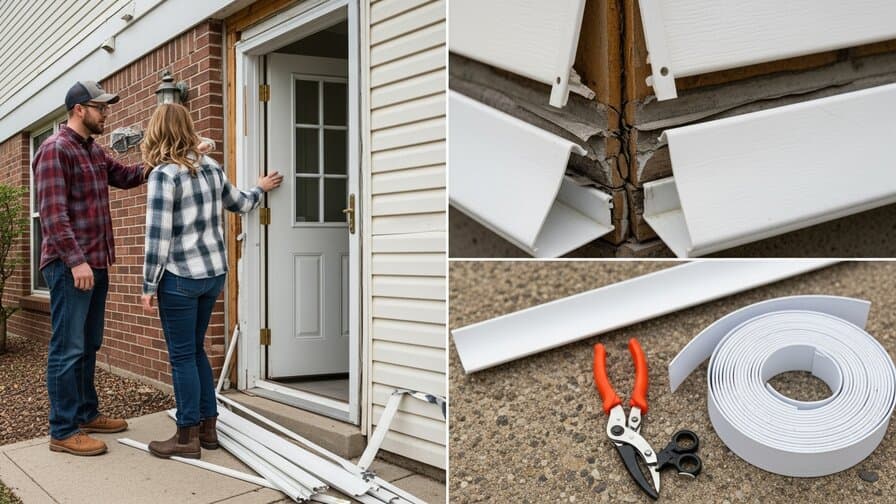
185% More Job Calls and $82K in Annual Revenue From Indianapolis Marion County Homeowners Booking J-Channel Replacement, Storm Damage Restoration, and Window Trim Repair Across Carmel, Fishers, Lawrence, Greenwood, and Beech Grove in 90 Days
185%
More Job Calls
$82K
Annual Revenue
4.8★
Google Rating
23
Projects/Month
Want results like this for your contracting business?