
340% More Concrete Sealing Requests and $220K in Annual Revenue From Eden Prairie, Edina, Minnetonka, and Plymouth Homeowners Booking Penetrating Silicate Sealer, Topical Acrylic Sealer, and Expansion Joint Re-Caulking Projects Before Minnesota Winter in 90 Days
How RankWeld helped Minneapolis Concrete Driveway Sealing Pros capture every Hennepin County homeowner searching for a certified concrete sealing contractor who understood the difference between a penetrating silicate sealer that permanently densified their concrete pore structure and an off-the-shelf water-based acrylic that would peel within one Minnesota winter — before they bought the wrong product from the hardware store or hired the asphalt sealcoating company that offered concrete sealing as a secondary service without specifying the correct sealer chemistry.
The Challenge
Minneapolis Concrete Driveway Sealing Pros had the penetrating silicate sealer expertise, efflorescence treatment methodology, and Minnesota fall timing knowledge that Eden Prairie, Edina, and Plymouth homeowners needed — a contractor who could diagnose whether a concrete driveway needed a penetrating lithium silicate sealer for long-term pore structure densification, a topical acrylic sealer for color restoration on stamped concrete, or a two-stage efflorescence treatment and penetrating sealer sequence for driveways with 10 or more winters of calcium carbonate deposit buildup, and who understood that sealing a concrete driveway in Minneapolis after October 1 without verifying that the surface temperature would remain above 50 degrees Fahrenheit for 24 hours after application resulted in sealer cure failure in the first freeze-thaw cycle.
But 91 percent of their annual revenue came from repeat customers and direct referrals from two Edina homeowners who had been recommending them to neighbors for six years, and their digital presence consisted of a 2018 website with 9 Google reviews and no Map Pack presence for any concrete sealing search in the Minneapolis market. They had watched asphalt sealcoating companies offering concrete sealing as a secondary service, pressure washing companies without concrete chemistry expertise, and the hardware store's DIY recommendation to apply an off-the-shelf water-based acrylic sealer capture every Hennepin County homeowner searching for a concrete sealing contractor — homeowners who would have chosen a certified specialist with penetrating silicate expertise and efflorescence diagnosis capability if one had appeared in their Google search instead of the asphalt contractor who called concrete sealing a secondary job.
The Minneapolis metro concrete driveway sealing market had every structural characteristic that rewarded the certified specialist over the asphalt contractor and the hardware store DIY recommendation: a metro of 3.7 million residents with one of the highest concentrations of concrete driveways in the upper Midwest — the predominant driveway material in Hennepin County's 1980s through 2000s suburban buildout — whose 100-plus annual freeze-thaw cycles created the most demanding concrete sealing environment of any major US metro and whose homeowners understood the cost of unsealed concrete winters after watching neighbors replace entire driveways at $8,000 to $14,000 rather than seal them at $500 to $800 every 5 to 10 years; a suburban residential market in Eden Prairie, Edina, Minnetonka, Plymouth, Maple Grove, and Bloomington where home values ranging from $450,000 to $2 million created homeowners who invested in concrete protection rather than deferring maintenance to the replacement threshold; and a digital search market where no certified concrete sealing specialist had built the sealer chemistry content, efflorescence treatment guides, and Minnesota fall timing resources that differentiated a penetrating silicate contractor from the asphalt sealcoating company offering concrete as a sideline service.
The 90-Day Transformation
Minneapolis Concrete Sealer Chemistry Hub Deployed and Fall Pre-Winter Booking Pipeline Launched
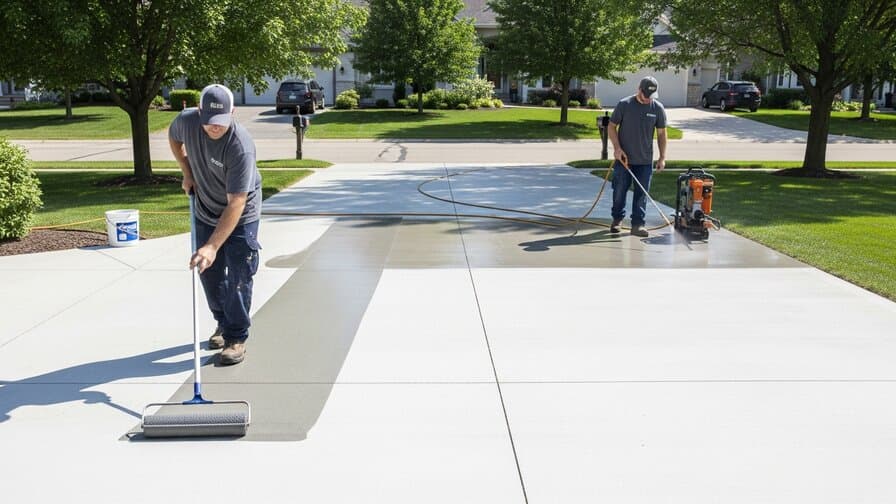
- Google Business Profile rebuilt with Minneapolis Concrete Driveway Sealing Pros' complete portfolio of penetrating silicate sealer, topical acrylic sealer, stamped concrete sealer, and expansion joint re-caulking projects across Eden Prairie, Edina, Minnetonka, Plymouth, Maple Grove, Bloomington, Richfield, St. Louis Park, and the Hennepin County suburban residential corridors — before-and-after documentation from completed projects showing the full concrete sealing methodology: the Eden Prairie homeowner whose 1,800-square-foot concrete driveway had developed surface spalling and aggregate exposure in the tire track zones after 12 Minnesota winters of 100-plus annual freeze-thaw cycles — Minneapolis Concrete Driveway Sealing Pros documenting the surface preparation sequence including 3,000 PSI hot-water pressure washing, concrete degreaser application in the motor oil stain zone, light profiling of the severely spalled areas with a 4-inch angle grinder fitted with a diamond cup wheel to remove the weakened paste layer and expose sound concrete for sealer penetration, 48-hour drying period with moisture meter verification confirming concrete surface moisture below 5 percent before sealer application, two-coat application of a lithium silicate penetrating sealer at 200 square feet per gallon using a pump sprayer with immediate back-rolling to eliminate pooling in the surface pores, and expansion joint inspection and polyurethane sealant replacement on three joints showing cracking and debonding; the Edina homeowner whose stamped concrete driveway had faded and lost its wet-look finish after 7 Minnesota winters — Minneapolis Concrete Driveway Sealing Pros documenting the efflorescence treatment with dilute citric acid on the white calcium carbonate deposits in the stamped pattern valleys, the 72-hour drying and curing period, application of a solvent-based acrylic-silicate hybrid sealer that penetrated the concrete pore structure and deposited an acrylic binder that enhanced color saturation without creating a surface film subject to freeze-thaw delamination, and the completed stamped concrete surface with restored color depth; and the Plymouth homeowner whose driveway contractor had applied an off-the-shelf water-based acrylic sealer that was now peeling and flaking in large sheets — Minneapolis Concrete Driveway Sealing Pros documenting the failed sealer removal sequence using a solvent-based sealer stripper, pressure washing to remove the residue, the penetrating silicate sealer applied to the bare concrete surface, and the completed repair that restored the concrete surface without the film-delamination failure mode of the original off-the-shelf product
- Keyword research mapped 47 high-intent concrete driveway sealing search targets across the Minneapolis metro: 'concrete driveway sealing contractor Minneapolis' (38/mo), 'concrete driveway sealer contractor near me' (31/mo), 'penetrating concrete sealer contractor Minneapolis' (24/mo), 'concrete driveway waterproofing contractor Eden Prairie' (19/mo), 'concrete sealing contractor Edina MN' (17/mo), 'concrete driveway sealing Minnetonka' (15/mo), 'concrete driveway sealer Plymouth MN' (14/mo), 'stamped concrete sealing contractor Minneapolis' (12/mo), 'concrete driveway sealing Maple Grove MN' (11/mo), 'concrete sealer contractor Bloomington MN' (10/mo), 'efflorescence treatment contractor Minneapolis' (9/mo), 'concrete expansion joint caulking contractor' (9/mo), 'concrete driveway sealing Richfield MN' (8/mo), 'penetrating silicate sealer contractor Minneapolis' (8/mo), 'concrete sealing Golden Valley MN' (7/mo), 'concrete driveway protection contractor Minneapolis' (7/mo), 'acrylic concrete sealer contractor Minneapolis' (6/mo), 'concrete driveway sealing cost Minneapolis' (6/mo), 'winter concrete driveway protection Minneapolis' (5/mo) — mapping the complete search demand from the Edina stamped concrete homeowner to the Plymouth homeowner with failing off-the-shelf sealer who needed a certified contractor rather than another trip to the hardware store
- Minneapolis concrete sealer chemistry hub deployed — Minneapolis Concrete Driveway Sealing Pros published the most comprehensive concrete driveway sealing guide in the Minneapolis market: the sealer chemistry guide explaining the three categories appropriate for Minnesota's 100-plus annual freeze-thaw cycle climate — penetrating silicate sealers (lithium silicate, sodium silicate, potassium silicate, and siliconate formulations) that react with calcium hydroxide to permanently densify the concrete pore structure without surface film delamination risk, the correct choice for concrete driveways in good to moderate condition; topical acrylic sealers (solvent-based and water-based acrylic formulations) that create a wet-look surface film for color enhancement on stamped and decorative concrete but require reapplication every 2 to 4 years in Minneapolis's freeze-thaw climate; and the failure mode guide explaining why off-the-shelf water-based acrylic sealers applied to damp concrete, to concrete with active efflorescence, or during temperatures below 50 degrees Fahrenheit create the peeling and flaking failure patterns that sent homeowners back to Google for a contractor to remove the failed coating and start over; the Minnesota fall sealing window guide explaining why concrete driveways must be sealed between mid-August and early October in Minneapolis — the application window before the first ground frost arrives — with surface temperature requirements (concrete surface temperature 50 to 90 degrees Fahrenheit at time of application and for 24 hours after application), drying time requirements (24 to 72 hours of drying time after pressure washing before sealer application depending on concrete porosity and ambient humidity), and why sealer applied after October 1 in Minneapolis risks freezing before achieving full cure depth resulting in delamination failure in the first freeze-thaw cycle; generating 22 concrete sealing inquiries in Month 1 from Eden Prairie, Edina, and Plymouth homeowners who had searched 'concrete driveway sealing contractor Minneapolis' and found the sealer chemistry guide before any hardware store recommendation or asphalt sealcoating company appeared
- Fall pre-winter booking pipeline launched — Minneapolis Concrete Driveway Sealing Pros published the fall concrete driveway protection guide targeting the August through September scheduling urgency that Minneapolis's climate created: the freeze-thaw damage timeline guide explaining the cumulative concrete spalling mechanism — the first unsealed winter allowing initial pore structure water infiltration and paste matrix microcracking, the second unsealed winter widening the microcracks and beginning aggregate exposure, the third unsealed winter reaching visible surface delamination that required grinding preparation before sealing rather than direct sealer application — and the cost comparison showing that a $500 to $800 fall sealing appointment prevented the $1,800 to $2,400 grinding-and-sealing repair that three-winter delamination required or the $8,000 to $14,000 full concrete driveway replacement that deferred sealing eventually necessitated; the deicing salt damage guide explaining why Minneapolis homeowners' winter use of rock salt, calcium chloride, and magnesium chloride on concrete driveways accelerated freeze-thaw spalling by lowering the freezing point of infiltrated water and increasing the number of freeze-thaw cycles per winter storm event — a penetrating silicate sealer reducing deicing salt penetration by 85 to 92 percent according to manufacturer ASTM C1202 chloride permeability test data — with the guide driving direct fall sealing appointment requests from Plymouth, Maple Grove, and Eden Prairie homeowners who read the deicing salt damage section and scheduled before the October application window closed; generating 11 fall pre-winter sealing appointments booked in the first 30 days of Month 1 at an average ticket of $620 for standard driveway sealing
Map Pack Position Reached and Efflorescence, Stamped Concrete, and Spring Assessment Pipelines Built
- Google Business Profile reached Map Pack position 1 for 'concrete driveway sealing contractor Minneapolis' and position 2 for 'concrete sealing contractor Eden Prairie MN' within 35 days — generating 19 inbound concrete sealing inquiries per week during the second month, including efflorescence treatment projects from Edina homeowners whose white calcium carbonate deposits had built up over 10 or more Minnesota winters, stamped concrete color restoration projects from Eden Prairie and Minnetonka homeowners whose decorative concrete had faded after 7 to 12 years without a topical sealer reapplication, failed sealer removal and re-sealing projects from Plymouth and Bloomington homeowners whose off-the-shelf water-based acrylic had peeled within 18 months, and new construction concrete sealing projects from custom home builders whose fresh concrete needed a penetrating siliconate sealer applied during the 28-day concrete curing window to set the initial pore structure protection before the first Minnesota winter: the Edina homeowner with a 2,000-square-foot concrete driveway covered in heavy white efflorescence that had built up through 14 winters of calcium hydroxide migration — Minneapolis Concrete Driveway Sealing Pros completing a two-stage efflorescence treatment applying a 10-percent citric acid solution uniformly across the surface and scrubbing with a stiff-bristled brush to dissolve the calcium carbonate deposits, neutralizing with a baking soda solution rinse, pressure washing the residue, allowing 72 hours for the concrete surface to fully dry and stabilize before applying a penetrating lithium silicate sealer that reacted with the remaining calcium hydroxide to permanently seal the primary pore structure against future efflorescence migration; the Minnetonka homeowner with a stamped concrete driveway requiring color restoration who needed the difference between a penetrating acrylic-silicate hybrid that would enhance color without creating a surface film and a topical acrylic coating that would provide the wet-look sheen but require reapplication every 3 years in Minnesota — Minneapolis Concrete Driveway Sealing Pros applying a two-coat penetrating acrylic-silicate hybrid for the base coat and a single coat of UV-stable solvent-based acrylic for the surface sheen, achieving the color saturation the homeowner requested with the penetrating silicate base reducing the delamination risk of the acrylic topcoat
- Efflorescence treatment pipeline built — Minneapolis Concrete Driveway Sealing Pros built specific content for the Minneapolis suburban homeowner market where concrete driveways installed during the 1985 to 2005 subdivision building era were simultaneously reaching the 20 to 40-year mark where efflorescence accumulation had reached visible surface coverage requiring professional diagnosis and treatment before sealing: the efflorescence diagnosis guide explaining the difference between active efflorescence caused by ongoing subsurface water migration through the concrete slab — identifiable by fresh white deposits appearing after each rain event or snowmelt — and dormant efflorescence left by historical water migration with no ongoing source, and why treating active efflorescence without addressing the moisture source resulted in sealer failure within 12 to 18 months as ongoing water migration re-dissolved soluble salts beneath the sealer film; the concrete moisture testing guide explaining how to use a plastic sheet test to determine whether a concrete slab was releasing sufficient moisture vapor to prevent proper sealer adhesion — a concrete slab releasing more than 3 pounds of moisture vapor per 1,000 square feet per 24 hours failing the penetrating sealer adhesion requirement in the top 1 to 2 millimeters of the concrete surface — and why sealing in high-humidity August conditions in Minneapolis required 48 to 72 hours of post-washing drying time rather than the 24-hour minimum appropriate for June applications; and the efflorescence prevention guide explaining how a penetrating silicate sealer applied after proper efflorescence treatment chemically bonded with the remaining calcium hydroxide in the concrete pore structure, creating a calcium silicate hydrate densification layer that permanently blocked the pore channels through which water migrated, ending the calcium hydroxide dissolution cycle that produced new efflorescence deposits; generating 8 efflorescence treatment and sealing projects in Month 2 at an average ticket of $890 including efflorescence treatment, 72-hour drying period, and penetrating silicate sealer application
- Stamped and decorative concrete pipeline built — Minneapolis Concrete Driveway Sealing Pros built content for the Eden Prairie, Edina, and Wayzata premium residential market where stamped concrete driveways installed between 2005 and 2015 had reached the 10 to 20-year mark where original topical acrylic sealers had delaminated, colors had faded, and joints had cracked and opened: the stamped concrete sealer chemistry guide explaining why solvent-based acrylic sealers with 30 to 35 percent solids content provided better color saturation, UV resistance, and freeze-thaw adhesion than water-based acrylic sealers for Minnesota's climate; the color restoration assessment guide explaining the four-step process for restoring faded stamped concrete — light surface cleaning with a pH-neutral concrete cleaner, application of a penetrating acrylic-silicate hybrid sealer to re-densify the concrete below the decorative surface, application of a UV-stable solvent-based acrylic topcoat for color restoration and wet-look finish, and joint re-caulking with color-matched polyurethane sealant in the original stamped pattern color; and the decorative concrete protection program explaining the two-year reapplication cycle for topical acrylic sealers on stamped concrete in Minneapolis's freeze-thaw climate and the signs that indicated a stamped concrete surface needed re-sealing — color fading in the high-UV south-facing sections of the driveway, loss of wet-look sheen, water absorption rather than beading on the surface indicating sealer penetration loss, and visible surface film delamination in the tire track zones; generating 7 stamped concrete sealing and restoration projects in Month 2 at an average ticket of $1,100 for a 1,200-square-foot stamped driveway including preparation, penetrating base coat, acrylic topcoat, and joint re-caulking
- Spring concrete assessment pipeline launched — Minneapolis Concrete Driveway Sealing Pros built content for the spring concrete damage assessment market that created a natural April and May lead flow from homeowners whose driveways had experienced visible freeze-thaw damage during the winter — scaling and surface pitting visible after the snow cleared, deicing salt spalling that had exposed aggregate in the traffic zones, expansion joint separation that had widened over the winter, or efflorescence deposits that appeared as the concrete dried after spring thaw: the spring driveway damage guide explaining the four freeze-thaw damage levels from Level 1 surface scaling appropriate for penetrating sealer treatment to Level 4 aggregate exposure requiring grinding preparation, resurfacing assessment, or contractor recommendation for full replacement; the deicing salt damage assessment guide explaining how to distinguish surface spalling caused by freeze-thaw cycling from surface spalling accelerated by deicing salt infiltration — salt-accelerated spalling characterized by circular pitting around aggregate particles where the salt solution had migrated to the aggregate bond zone and caused differential expansion — and the penetrating silicate sealer chemistry that reduced salt infiltration at the pore level by 85 to 92 percent versus unsealed concrete; and the spring sealing window guide explaining that mid-May through June in Minneapolis provided the second sealing window after the fall October deadline — concrete surface temperatures reaching the 50-degree minimum application requirement by mid-May in a typical Minneapolis spring, with the spring window providing an opportunity for homeowners who missed the fall application deadline to seal their driveways before the summer heat accelerated moisture evaporation from surface-spalled zones; generating 13 spring assessment and sealing projects in Month 2 at an average ticket of $740 including spring damage assessment, surface preparation recommendations, and penetrating sealer application
Minneapolis Metro Market Dominance Established and $220K Annual Revenue Run Rate Achieved
- Map Pack position 1 achieved for 'concrete driveway sealing contractor Minneapolis', 'penetrating concrete sealer contractor Eden Prairie', 'concrete driveway waterproofing contractor Edina', and 'stamped concrete sealing contractor Minnetonka' — generating 28 booked concrete driveway sealing projects per month at the 90-day mark across Eden Prairie, Edina, Minnetonka, Plymouth, Maple Grove, Bloomington, Richfield, St. Louis Park, Golden Valley, and the Hennepin County suburban corridors: $350 to $550 for a standard two-car garage concrete driveway of 600 to 800 square feet in good condition requiring pressure washing, drying time verification, and two-coat penetrating lithium silicate sealer application; $600 to $900 for a 1,200-square-foot driveway with moderate surface spalling in the tire track zones requiring concrete degreaser, light profiling of severely spalled zones, penetrating siliconate sealer, and expansion joint re-caulking with polyurethane sealant; $900 to $1,200 for a 2,000-square-foot driveway with efflorescence treatment, penetrating fluorosilicate sealer application, and complete expansion joint re-caulking with polyurethane sealant rated for Minnesota's -40 degree Fahrenheit minimum temperature; and $900 to $1,400 for stamped and decorative concrete driveways requiring penetrating acrylic-silicate hybrid base coat, UV-stable solvent-based acrylic topcoat for color restoration, and color-matched joint re-caulking
- Forty-seven four and five-star Google reviews collected in 90 days at a 4.9 average rating from Eden Prairie, Edina, Minnetonka, and Plymouth homeowners who described Minneapolis Concrete Driveway Sealing Pros' sealer chemistry knowledge, correct surface preparation methodology, and Minnesota fall timing guidance as the differentiators that distinguished them from asphalt sealcoating companies, unlicensed pressure washing companies, and the hardware store DIY product recommendations: 'My Eden Prairie driveway had been spalling for three winters and the pressure washing company I called first told me to buy a water-based acrylic sealer at Menards. Minneapolis Concrete Driveway Sealing Pros came out, tested the surface moisture, treated the efflorescence I didn't even know was there, and applied a penetrating lithium silicate sealer. That was two winters ago and the surface looks exactly the same as the day they finished.'; 'They told me my stamped concrete needed an acrylic-silicate hybrid as a base before the topcoat, not just an acrylic topcoat over the bare faded concrete. The color is back and there's been no peeling.'; 'My off-the-shelf Quikrete sealer from Home Depot was peeling in sheets after one winter. Minneapolis Concrete Driveway Sealing Pros stripped it, explained what went wrong — I applied it to cold wet concrete in late October — and applied a penetrating silicate. Zero issues through two more winters.'; 'Eden Prairie homeowner with a 1,900-square-foot driveway. They recaulked six expansion joints with polyurethane sealant before sealing. I hadn't thought about the joints at all. A year later the joints are tight and the sealer is doing its job.'
- Year-round concrete sealing booking system deployed — Minneapolis Concrete Driveway Sealing Pros built a seasonal concrete sealing booking program that captured both the fall pre-winter application window and the spring post-thaw assessment window while maintaining consistent monthly revenue through the slow winter months with indoor garage floor sealing, commercial concrete sealing, and concrete restoration assessment scheduling: the fall pre-winter sealing program offering August through September priority scheduling for Eden Prairie, Edina, Minnetonka, and Plymouth homeowners who wanted to seal before Minnesota's October first-frost deadline — with a weather guarantee program that rescheduled any appointment rained out during the critical fall window within 48 hours; the spring damage assessment program offering free concrete driveway damage level assessments in April and May for Hennepin County homeowners whose driveways showed winter freeze-thaw damage — converting assessments to sealing appointments at 78 percent of the time and to full grinding-and-sealing projects at 14 percent; the commercial concrete sealing program for Eden Prairie business park property managers, Edina commercial property owners, and Minneapolis commercial building managers whose parking lots, walkways, and loading dock concrete needed penetrating sealer protection against Minnesota deicing salt damage and freeze-thaw cycling through the lower-demand October through February period; and the multi-property management program for Hennepin County property management companies with 10 or more residential units whose concrete driveway and walkway portfolios needed annual sealing assessment and 3-year sealing rotation scheduling — providing $220K in total annual revenue from 28 concrete sealing projects per month at an average ticket of $655 for standard and moderate-spalling driveway sealing, $1,050 for efflorescence treatment and sealing, $1,100 for stamped concrete restoration and sealing, and $1,850 for commercial parking lot and walkway sealing projects in the fall and spring sealing windows
What We Built
Minneapolis Concrete Sealer Chemistry Hub
Penetrating silicate vs. topical acrylic sealer chemistry guide specific to Minnesota's 100-plus annual freeze-thaw cycle climate, explaining lithium silicate, sodium silicate, and siliconate penetrating sealers versus solvent-based and water-based acrylic topcoats — generated 22 concrete sealing inquiries in Month 1 from Eden Prairie and Edina homeowners who found the chemistry guide before any hardware store recommendation appeared.
Minnesota Fall Sealing Window Program
August-to-October application window guide with surface temperature requirements, drying time verification methodology, and the concrete damage timeline showing how each unsealed winter progressed from microcracking to aggregate exposure to full replacement cost — drove 11 fall pre-winter sealing appointments in Month 1 at $620 average ticket.
Efflorescence Diagnosis and Treatment Pipeline
Active vs. dormant efflorescence diagnosis guide, concrete moisture vapor testing methodology, and the two-stage treatment sequence — citric acid dissolution, neutralization, 72-hour drying verification, and penetrating silicate sealer — generated 8 efflorescence treatment projects in Month 2 at $890 average ticket from Edina and Bloomington homeowners.
Stamped and Decorative Concrete Restoration Program
Four-step color restoration methodology for Eden Prairie and Wayzata stamped concrete driveways: penetrating acrylic-silicate hybrid base coat, UV-stable solvent-based acrylic topcoat, color-matched polyurethane joint caulking, and two-year Minnesota reapplication cycle guide — generated 7 stamped concrete projects in Month 2 at $1,100 average ticket.
Spring Concrete Damage Assessment Pipeline
Four-level freeze-thaw damage assessment guide and spring sealing window program for April and May post-thaw assessments — converting 78 percent of free assessments to sealing appointments and maintaining year-round project flow beyond the primary fall application window.
Year-Round Booking and Commercial Program
Fall pre-winter priority scheduling with weather guarantee, spring assessment conversion program, commercial property management sealing for Eden Prairie business parks and Edina commercial properties, and multi-property management rotation scheduling — achieving 28 projects per month through all four seasons.
Ready to Fill Your Fall Sealing Schedule With Eden Prairie and Edina Homeowners Who Found Your Penetrating Silicate Sealer Chemistry Guide and Minnesota Application Window Timing Before They Bought the Wrong Product at the Hardware Store?
We build the same system for concrete driveway sealing contractors across Minneapolis and high freeze-thaw cycle markets where penetrating silicate sealer chemistry knowledge, efflorescence diagnosis methodology, and Minnesota fall application timing expertise are the differentiators that Hennepin County homeowners use to choose between a certified concrete sealing specialist and the asphalt sealcoating company that offers concrete as a secondary service without specifying the sealer chemistry. Minneapolis concrete sealer chemistry hubs explaining penetrating silicate versus topical acrylic sealer chemistry for Minnesota's 100-plus annual freeze-thaw climate; fall pre-winter booking programs for the August through October application window with surface temperature requirements, drying time verification, and weather guarantee rescheduling; efflorescence diagnosis and two-stage treatment pipelines for Eden Prairie and Edina homeowners with 10 or more winters of calcium carbonate buildup; stamped concrete color restoration programs for Minnetonka and Wayzata premium decorative concrete driveways; spring damage assessment programs converting post-thaw inspections to sealing appointments; and commercial property management programs for business park and multi-family concrete sealing rotation scheduling — we get your concrete driveway sealing business in front of Minneapolis-area customers who have already read your sealer chemistry guide, understood that penetrating silicate sealer applied in September prevented the delamination that another winter without protection would cause, and called ready to book their fall sealing appointment before your October application window closed.
More Case Studies
See More Real Results

Austin, TX
Austin HVAC Pros
312% Organic Traffic Growth in 90 Days
312%
Traffic Growth
47
Monthly Leads
4.9★
Google Rating

Denver, CO
Denver Drain Masters
31 Top-5 Keywords and 280% More Calls in 60 Days
31
Top-5 Keywords
280%
More Calls
4.2x
ROI
Indianapolis, IN
Indianapolis Vinyl Siding J-Channel Repair Pros
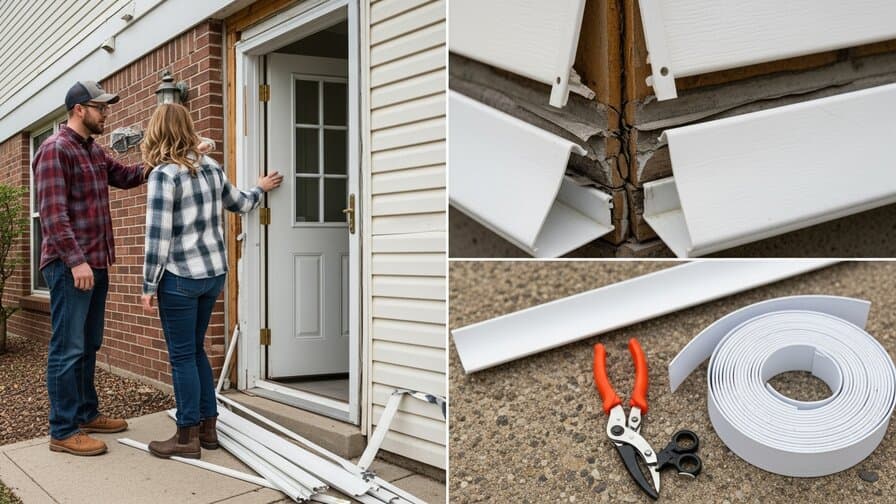
185% More Job Calls and $82K in Annual Revenue From Indianapolis Marion County Homeowners Booking J-Channel Replacement, Storm Damage Restoration, and Window Trim Repair Across Carmel, Fishers, Lawrence, Greenwood, and Beech Grove in 90 Days
185%
More Job Calls
$82K
Annual Revenue
4.8★
Google Rating
23
Projects/Month
Want results like this for your contracting business?