Irrigation Contractor Marketing: Grow Your Sprinkler Business with Digital Marketing
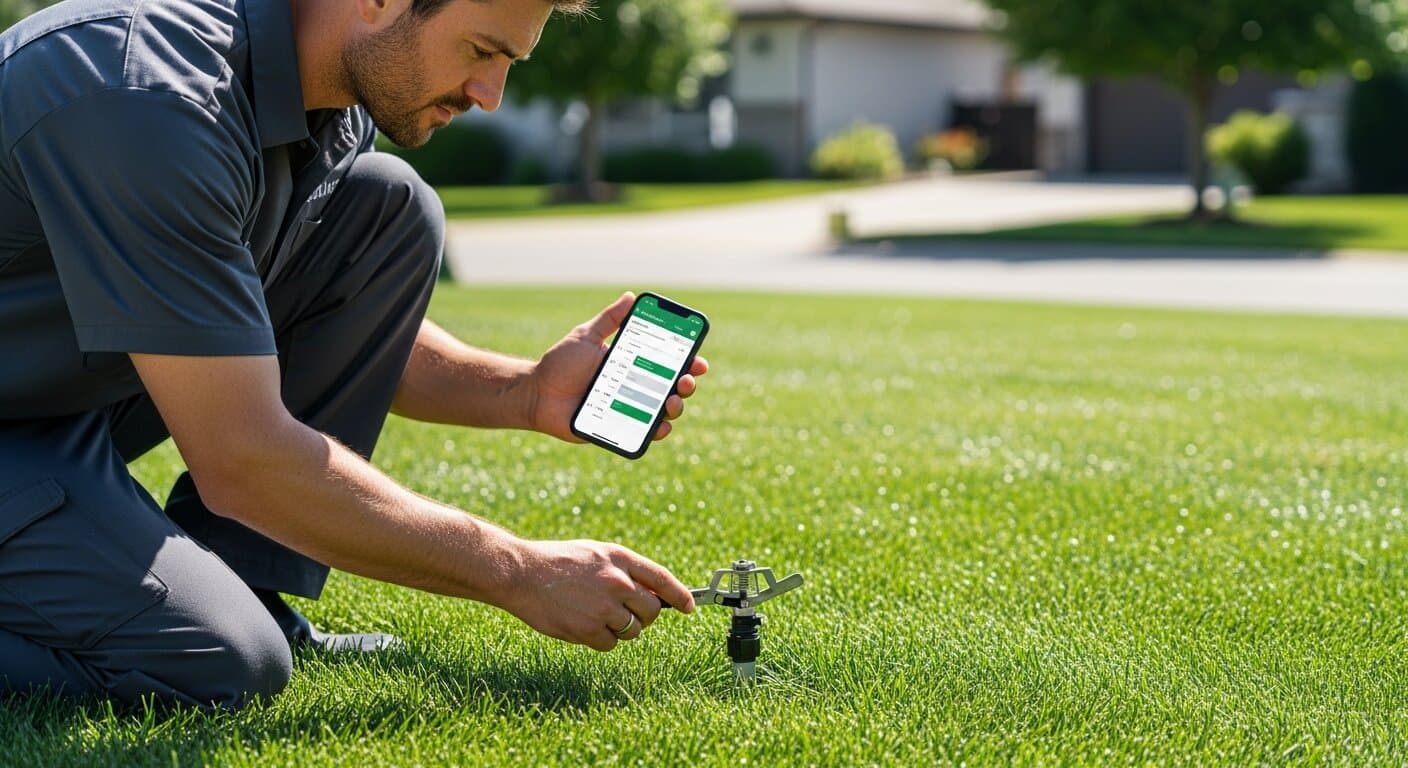
Running an irrigation or sprinkler system business means dealing with extreme seasonality, strong competition from national lawn care franchises, and customers who do not always understand the value of professional installation versus a big-box DIY kit. It is a trade that rewards smart marketing more than almost any other in the home services space.
The irrigation contractors who dominate their local markets are not necessarily the ones with the best installers — though quality matters. They are the ones who show up first when a homeowner searches for a sprinkler contractor, who have dozens of five-star reviews, and who turn every installation customer into a recurring service agreement that generates revenue all year.
This guide covers the complete irrigation contractor marketing playbook: from owning local search results to running Google Ads during peak installation season, building a service agreement program that stabilizes your revenue, and marketing to commercial clients who become multi-year anchor accounts.
Understanding the Irrigation Contractor Market
Before diving into tactics, it helps to understand what makes marketing an irrigation business different from other trades.
High lifetime value, high switching cost. Once a homeowner trusts you to install their irrigation system, they are likely to stick with you for annual winterization, spring startup, backflow testing, and repairs for years. The lifetime value of a residential irrigation customer can easily reach $5,000–$15,000 over a 10-year relationship. That means acquiring a new installation customer is worth a significant upfront investment.
Extreme seasonality creates a pre-season marketing window. In most US markets, new system installations happen April through June and sometimes September. Winterization spikes in October-November. The key insight: homeowners who will need an irrigation system next spring are researching contractors right now, in winter. Marketing aggressively in January and February, when most competitors have gone quiet, is one of the highest-leverage tactics in the business.
Service agreements are the competitive moat. Irrigation contractors who lock customers into annual maintenance plans create a recurring revenue base that independent installers cannot easily poach. A contractor with 300 active service agreements has $60,000–$90,000 in annual recurring revenue before the first installation of the season. That stability funds more aggressive marketing investment.
Commercial is underutilized. Many irrigation contractors default to residential-only marketing and leave a significant opportunity untouched. HOAs, apartment complexes, commercial properties, and municipalities all need irrigation services and tend to value reliability and contract stability over price alone.
Step 1: Local SEO Is Your Most Valuable Long-Term Asset
The first place most homeowners look for an irrigation contractor is Google. When someone searches "sprinkler system installation near me" or "irrigation contractor [city]," your business needs to appear in the Map Pack — those three listings that dominate the top of local search results.
Contractor SEO for irrigation companies starts with your Google Business Profile:
- Primary category: "Irrigation service" — the most accurate Google Business category for sprinkler and irrigation contractors
- Secondary categories: "Landscaping service" or "Lawn care service" if applicable to your business
- Services list: New system installation, spring startup, winterization/blowout, drip irrigation, smart controller installation, backflow testing, repairs — list them all
- Photos: Upload job photos weekly during season. Show completed systems, smart controllers, lush lawns before and after installation, truck and crew photos
- Reviews: Your GBP star rating and review count are ranking factors. Every review you collect improves both your visibility and your conversion rate with prospects
Beyond your GBP, your website needs location-specific service pages: "Irrigation Contractor in [City]," "Sprinkler System Installation in [Town]." Each page targets local searches and gives Google a ranking signal for that specific area.
For the full contractor SEO strategy, read our comprehensive guide — but for irrigation contractors, the pages that generate the most leads are:
- Homepage optimized for your primary city and core service
- Service area pages for each city and town you serve
- Dedicated pages for each major service (installation, winterization, smart controllers, drip irrigation, backflow)
- FAQ page targeting "how much does irrigation installation cost in [city]" — one of the most searched queries in this category
We have seen irrigation contractors triple their organic lead volume in 12 months simply by adding location pages and service-specific content to a previously thin website.
Step 2: Google Ads Timed to the Buying Season
While SEO builds long-term lead flow, Google Ads for contractors captures high-intent buyers right now. For irrigation, timing your campaigns to the actual purchase window is the difference between a great ROI and wasted budget.
Run installation campaigns March through June. This is when homeowners are actively planning and buying. Spending heavily on installation keywords in July or August in most northern markets is wasted — the window is closing. Refocus budget toward repair and adjustment keywords mid-summer.
Run winterization campaigns October through mid-November. This is a high-volume, high-urgency search window. Homeowners searching "sprinkler winterization near me" in October need service in the next 2-4 weeks. These leads convert at exceptional rates because there is a real deadline.
High-converting keywords for irrigation contractors:
- "Sprinkler system installation [city]"
- "Irrigation contractor near me"
- "Lawn irrigation installation"
- "Drip irrigation installation"
- "Smart sprinkler system installation"
- "Sprinkler winterization near me"
- "Irrigation startup service"
Negative keywords that protect your budget:
- "DIY," "how to," "kit," "plans," "free"
- Specific part brands and numbers ("Rain Bird," "Orbit," "Hunter heads")
- Informational terms: "irrigation cost calculator," "types of irrigation systems," "sprinkler ideas"
Cost benchmarks by campaign type:
| Campaign Type | Avg. CPC | Est. Conversion Rate | Cost Per Lead |
|---|---|---|---|
| High-intent installation keywords | $4–9 | 12–20% | $25–65 |
| Winterization / startup (seasonal) | $2–5 | 15–22% | $10–30 |
| Competitor / branded keywords | $3–8 | 15–25% | $15–50 |
| Broad match / informational | $2–5 | 3–8% | $30–100+ |
Run a dedicated remarketing campaign to website visitors who viewed your installation or pricing pages but did not call or submit a form. These warm leads convert at three to five times the rate of cold traffic at a fraction of the click cost.
Step 3: Google Local Services Ads for Maximum Lead Quality
Google Local Services Ads (LSAs) — the "Google Guaranteed" listings at the very top of search results — are the most efficient paid channel for most irrigation contractors. You appear above all paid text ads, pay only when a verified customer calls or messages you, and carry Google's trust badge.
To qualify: submit your business license, proof of insurance, and pass a background check. Once approved, your listing shows your average star rating, years in business, and services offered.
In most mid-sized US markets, LSA lead costs for irrigation contractors run $20–55 per verified lead — considerably lower than traditional PPC for equivalent search intent. The Google Guaranteed badge is particularly valuable in a trade where homeowners worry about hiring someone who will tear up their lawn and disappear.
LSAs work best with a strong review profile. An irrigation contractor with 80 reviews at 4.8 stars will significantly outperform a competitor with 15 reviews at 4.5 stars in the same LSA auction, even with identical budgets. Review collection and LSA performance are directly linked.
For a deeper comparison of LSAs versus traditional Google Ads, see our guide on Google Local Services Ads for contractors.
Step 4: Build Service Agreements Into Your Marketing Strategy
The irrigation contractors who grow fastest are not just running great marketing for new installations — they are systematically converting every customer into an annual service plan that generates predictable revenue.
Why service agreements transform your marketing economics:
When a customer is worth $220/year in recurring revenue instead of a one-time $85 blowout, your acceptable customer acquisition cost goes from $30 to $150+. That changes what marketing channels are profitable for you. Companies with strong service agreement programs can outspend competitors on acquisition and still win on total profitability.
Structure your service plan to be a no-brainer purchase:
- Bundle spring startup ($85 value) + mid-season check ($65 value) + fall winterization ($100 value) for $220/year total
- Offer plan members priority scheduling — no one wants to wait in line for a blowout in late October
- Include a small repair credit ($50–75) to reduce churn from customers who have a minor issue and feel they are not getting value
Market your service agreement through multiple channels:
- Include it as the default "yes" in every new installation proposal — make opting out the choice, not opting in
- Promote it by email to your existing customer list every January before the season
- Train your technicians to mention the plan during every spring startup and winterization visit
- Add a service plan landing page to your website and link to it from your Google Business Profile
Irrigation contractors with 200 or more active service agreement customers have a predictable revenue base of $44,000–$66,000 per year before the first installation of the season. That stability changes how aggressively you can market and hire.
Step 5: Reputation Management and Online Reviews
Most homeowners hiring an irrigation contractor will check Google reviews before calling anyone. An irrigation company with 50 or more reviews at 4.7 stars or above gets called first in most markets — it is that direct.
Build a review collection system into your daily operations with review management best practices:
- After every completed installation: send a personal text with a direct link to your Google review page. "Hi [name], really enjoyed working on your irrigation system today. Would you mind leaving us a quick Google review? It makes a big difference for our small business."
- After every spring startup and winterization service: send the same ask. Irrigation contractors who serve customers three times per year have three opportunities to collect reviews annually — most contractors squander two of them
- Respond to every review publicly within 24 hours. Thank positive reviewers specifically. Address negative reviews calmly and professionally — prospects read your responses as much as they read the reviews
For the full system, see our guide on how to get more Google reviews as a contractor. Irrigation is one of the few trades where you can systematically out-review competitors through sheer customer touchpoint frequency.
Step 6: Website Optimization for Irrigation Lead Conversion
Every marketing channel you run — Google Ads, LSAs, referrals, organic search — sends traffic to your website. If your website does not convert that traffic into phone calls and form submissions, you are paying for marketing that does not work.
A high-converting irrigation contractor website needs:
- Mobile-first design with fast load time. Over 70% of home service searches happen on mobile. Your site must load in under three seconds and have large, tap-friendly buttons and phone numbers
- Clear service area. Tell visitors exactly which cities and zip codes you serve on your homepage and every service page. Customers leave sites that make them guess
- Transparent pricing context. You do not need exact prices, but providing ballpark ranges ("residential systems typically start at $2,800 for a standard quarter-acre lot") filters unqualified leads and builds trust with qualified ones
- Project gallery and case studies. Show completed irrigation systems, healthy lawns attributed to your work, and smart controller installations. Real photos of real work in real neighborhoods convert better than stock photos
- Online estimate request form. Ask for project type, property size, timeline, and contact info. Short forms convert better than long ones — keep it to four or five fields maximum
Our contractor website design service includes all of these elements, built specifically for home service businesses that need to convert on both desktop and mobile.
Step 7: Content Marketing That Generates Leads for Years
Content marketing — blog posts, FAQ pages, and video — builds your authority in local search and generates leads from homeowners researching their options. For irrigation contractors, the content that performs best is genuinely educational:
High-value content topics your customers are actively searching:
- "How much does a sprinkler system cost in [city]?"
- "When should I winterize my sprinkler system in [state]?"
- "Drip irrigation vs. sprinkler system: which is right for my yard?"
- "Signs your irrigation system needs repair"
- "How to choose a smart irrigation controller"
- "How long does a sprinkler system installation take?"
Each of these is a real search query made by potential customers in your market. A blog post or FAQ page that answers it thoroughly can rank and generate inbound leads for years with no ongoing ad spend.
Video content builds exceptional trust for irrigation contractors:
- Before and after lawn transformations with irrigation installation
- Installation time-lapses (homeowners find these fascinating and share them)
- "How to spot a failing sprinkler head" — educational content that demonstrates expertise
- Smart controller setup guides — shows your technical knowledge and positions you for premium-priced upgrades
Video content works on YouTube (where homeowners research home improvement projects), Instagram, and Facebook. It also dramatically increases time on site when embedded in your website pages, which is a positive signal for SEO.
Step 8: Commercial Irrigation Marketing
If you want to grow faster and smooth out residential seasonality, targeting commercial irrigation clients is one of the highest-leverage moves available to most irrigation contractors. Yet most focus entirely on residential and never touch commercial.
Commercial clients — HOAs, apartment complexes, commercial office properties, municipalities, school districts — typically offer:
- Significantly larger systems and higher per-project revenue
- Multi-year maintenance contracts
- Predictable annual scheduling with advance notice
- Less price sensitivity than residential homeowners
Channels for commercial irrigation marketing:
- Direct outreach to property managers. Identify commercial properties in your service area that have irrigation systems (look for the heads when you drive by). Send a direct letter or call introducing your company, noting the specific property, and offering a free audit of their current system
- HOA networking. HOA management companies often oversee dozens of properties across a metro area. Getting on an HOA management company's vendor list can generate multiple contracts from a single relationship
- Landscaping company partnerships. Many landscaping companies prefer to subcontract irrigation installation or refer irrigation repair customers rather than hire the expertise in-house. Becoming the preferred irrigation partner for several landscaping companies can generate substantial commercial referral volume without any advertising
- Government and municipal bids. School districts, parks departments, and municipalities regularly put irrigation maintenance out for bid. Registering as a vendor and submitting competitive proposals can open revenue streams that competing contractors have never pursued
Seasonal Marketing Calendar: Irrigation Contractors
Timing your marketing to match how customers actually buy is one of the most impactful optimizations you can make:
| Month | Marketing Priority | Budget Focus |
|---|---|---|
| January | Early-bird booking campaigns | Email list, light SEO content |
| February | Pre-season ramp up | Increase ad spend, service agreement promos |
| March | Peak marketing investment | All channels at full budget |
| April | Peak installation season | All channels, prioritize lead conversion speed |
| May | Peak installation season | Full budget, LSAs prioritized |
| June | Winding down installations | Begin repair and adjustment promotions |
| July | Repairs and system checks | Repair-focused keyword campaigns |
| August | Slow season | Review building, content creation |
| September | Winterization preview | Begin winterization landing pages and campaigns |
| October | Peak winterization | All channels focused on winterization |
| November | Wind down + renewal | Service agreement renewals, spring pre-booking |
| December | Planning | Annual analysis, next year strategy, ad build-out |
The contractors who consistently out-earn their peers are running campaigns in January and February — when most competitors have gone silent. Pre-season marketing fills the spring calendar before demand peaks and pricing pressure drops.
What Irrigation Contractor Marketing Costs (and What It Returns)
Here is how to think about your marketing budget at different revenue levels:
Small operator (under $500K annual revenue):
- Google Business Profile + local SEO: $400–700/month
- Google LSAs: $300–600/month
- Total: $700–1,300/month
Mid-size operator ($500K–$2M annual revenue):
- SEO + website maintenance: $800–1,500/month
- Google Ads (installation + winterization campaigns): $1,000–2,500/month
- Google LSAs: $500–800/month
- Total: $2,300–4,800/month
Growing regional company ($2M+ annual revenue):
- Full SEO + content marketing: $1,500–3,000/month
- Google Ads: $3,000–7,000/month
- Google LSAs: $500–1,000/month
- Paid social / retargeting: $500–1,000/month
- Total: $5,500–12,000/month
For a detailed breakdown of cost-per-lead benchmarks across marketing channels, read our contractor cost-per-lead guide.
Build Your Irrigation Marketing Engine Before Next Season
The irrigation contractors who dominate their local markets are not working harder during the installation rush — they are marketing smarter during the months before it. A fully optimized Google Business Profile, targeted seasonal Google Ads campaigns, a consistent review collection system, and service agreements locking in recurring revenue create a business that is genuinely different from the contractor relying on spring yard signs and Angi leads.
When you are ready to build a complete marketing system that generates consistent leads, qualifies them for you, and converts at a higher rate, get your free SEO audit from RankWeld. We specialize in home service contractors and know exactly how to position your irrigation business to own local search in your market — without buying the same lead that four of your competitors also received.
Recommended Service
Marketing Built for Your Trade
We only work with contractors. Every strategy, campaign, and website is built specifically for the trades. See what we can do for your industry.
See All ServicesRelated Articles
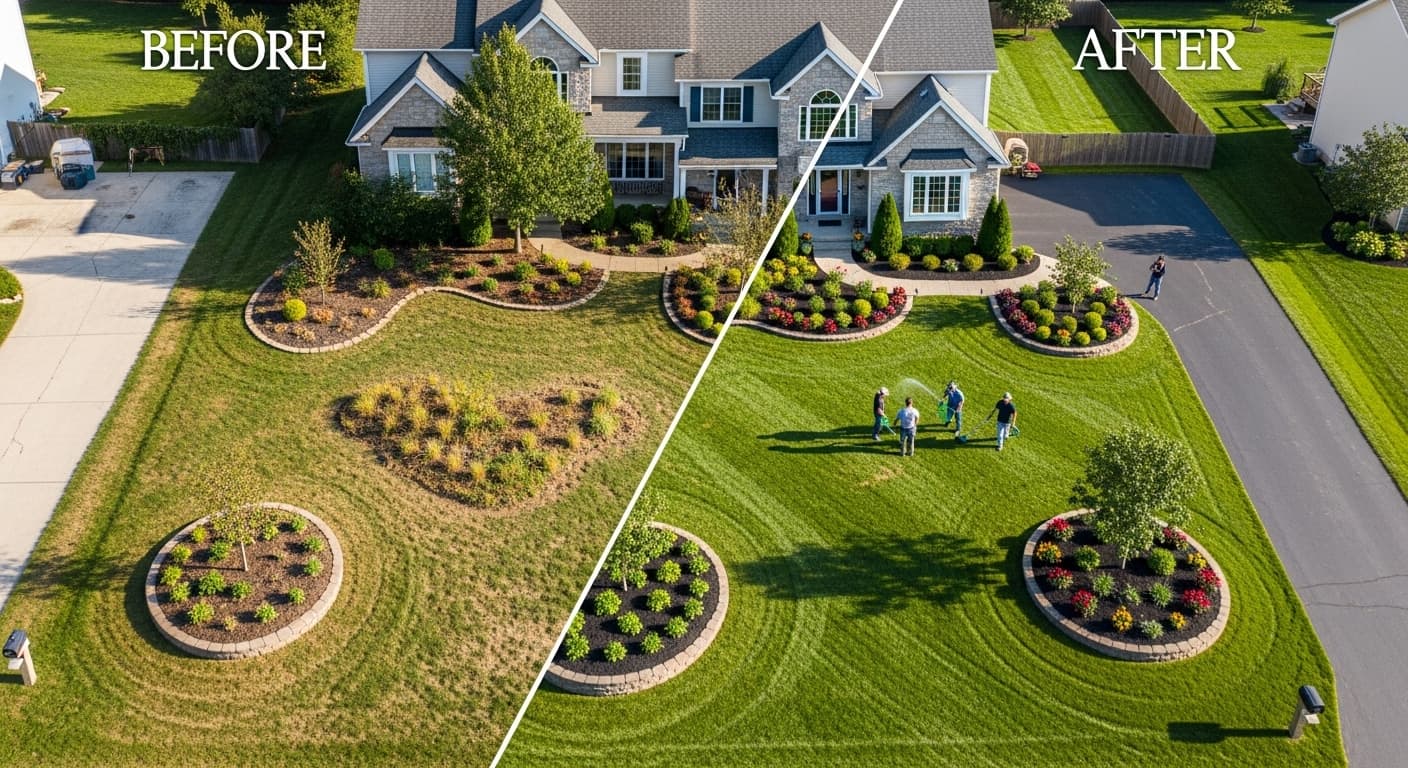
Landscaping Marketing: How to Stand Out in a Crowded Market
The landscaping market is crowded. Here is how to differentiate your company, rank on Google, and build a lead generation system that keeps your crews booked.
Read more
Google Local Services Ads for Contractors: The Complete 2026 Guide
Google Local Services Ads put your contracting business at the absolute top of search — above Google Ads, above the map pack. Here's exactly how to set up, optimize, and dominate LSA in 2026.
Read more
Local SEO for Contractors: How to Dominate the Google Map Pack
The Google Map Pack is where most contractor leads come from. This guide breaks down the exact local SEO strategies you need to rank in the top 3 — from citations and reviews to on-page optimization and content.
Read more
Google Ads vs SEO for Contractors: Which Is Better for Your Budget?
Should you spend your marketing budget on Google Ads or SEO? The answer depends on your timeline, budget, and business goals. Here's a detailed breakdown with real numbers to help you decide.
Read more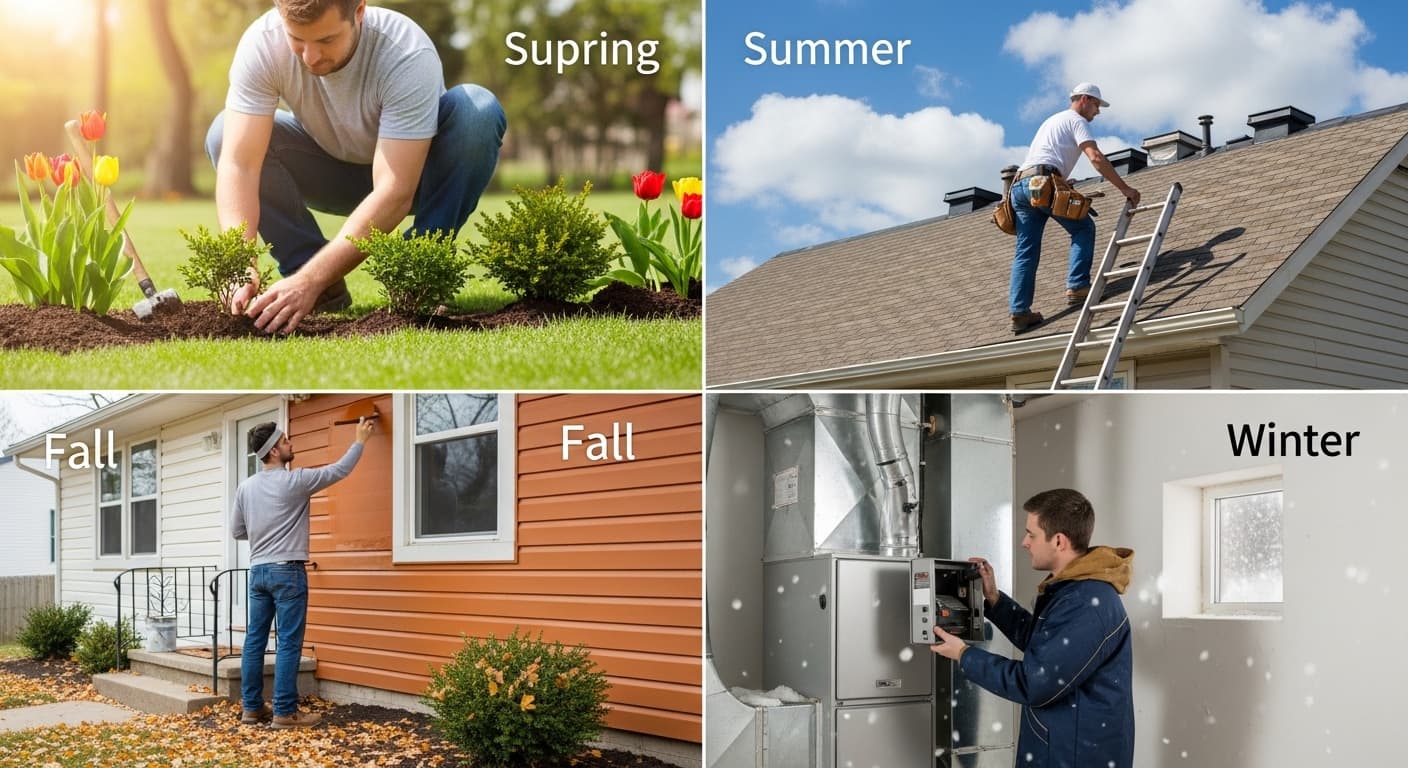
Seasonal Marketing for Contractors: How to Stay Busy Year-Round
Every contractor dreads the slow season. Here's how to use seasonal marketing to fill your calendar year-round, with quarter-by-quarter strategies for every trade.
Read moreReady to Put This Into Action?
Get a free SEO audit and see exactly where your contracting business stands.